 ™
™The Month L.A. Ran Hot and the Deadlines Slipped
Looking back at August 2026: record heat, a $12.5 billion Lakers sale that went to court, a missed Boyle Heights cleanup deadline, a strange mayor’s race.
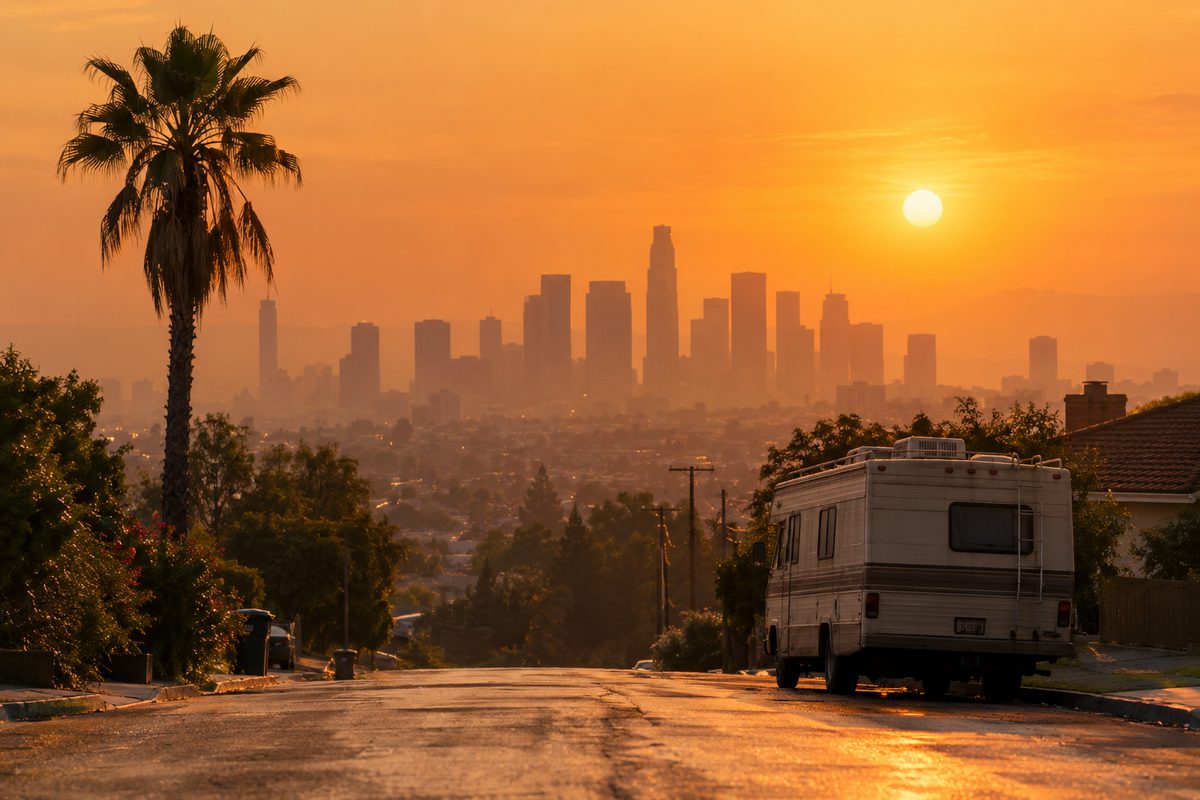
August in Los Angeles was hot, and I mean the number, not the mood. The National Weather Service's forecast for downtown, issued Aug. 22, climbed five days in a row and never turned around: 93 that Saturday, 99 by the Wednesday, Woodland Hills at 109. By Aug. 24, downtown had averaged 88.4 degrees since July 1. The old record for that stretch was 88.1, set in 1886. Edison warned 3,100 customers in the county that it might cut their power on purpose to keep a fire from starting. That was the weather. Here is what the city did in it.
The Lakers were sold for $12.5 billion, and the family that ran them for decades went to court over the last slice. Bob Iger and Josh Kushner bought Mark Walter’s majority stake in a deal Iger says took three days. Walter had owned the team since October 2025, at a $10 billion valuation. Jerry Buss paid $67.5 million in 1979. Then five of the six Buss siblings voted to sell the family’s remaining 17.82 percent, and Jeanie Buss, who needs 15 percent to keep her seat among the league’s owners, filed a 97-page petition in Los Angeles Superior Court on Aug. 26 to void the vote. The whole fight turns on two family documents signed eight years apart. A hearing is set for Nov. 5, two weeks into the season.
In Boyle Heights, a deadline came and went. A fire on June 17 left 88 million pounds of food rotting inside a Lineage cold-storage warehouse, and the mayor gave the company 45 days, to Aug. 14, to get it out. The night before, at a community meeting, she said what everyone already knew: the work was not done. Air regulators had written 19 violation notices in 19 days, and their order ran 87 conditions, not one of them a fine; the hearing board that signed it could not have fined anyone if it wanted to. Then a fire department dispatch log turned up recording an “active amonia leak” on the roof at 3:12 p.m. on day one, 35 minutes after the first 911 call, while the company and the fire chief were saying no ammonia got out. One company reading near homes hit 13,000 parts per billion on July 10. The state says 4,500 can hurt you. The neighborhood filed nearly 4,000 complaints. A deadline that carries no consequence is not a deadline. It is a press release with a date on it.
The mayor’s race got strange. Karen Bass finished the June primary at 34 percent to Nithya Raman’s 29, and they meet in November. In August the mayor’s campaign posted a poll showing her up nearly 12 points, then deleted it after the firm that made it said the whole thing was a “short term social experiment” and not a poll at all. Raman lost her chair of the council’s homelessness committee and called it payback. The money is lopsided: spending for Bass ran about 3 to 1 over Raman overall, and 36 to 1 among the committees with no limits, with the police union at $1.2 million against Raman and Airbnb at $750,000 for Bass. And a records review found Bass had missed 25 of 47 meetings of the homelessness agency’s board since putting herself on it, past the point where the bylaws say a member can be removed. The agency chose not to send the notice.
Homelessness was the argument under all of it, and the numbers got argued too. On Aug. 13 a federal judge ordered about $241 million in federal homelessness money for the region unstuck, writing that the suspension would “result in deaths” and put 11,000 people back on the street. Two weeks later the City Council voted, without a single no, to have the homeless count reviewed, after one South L.A. census tract went from fewer than 20 unhoused people to 277. I read the method. Volunteers counted 17,721 tents and vehicles; a multiplier of 1.86 turned them into 33,009 people. About half the regional estimate is people no volunteer saw. That is the method the federal government requires. It is also why a council president can look at his own block and say the number cannot be right. Along the way the council erased 12 anti-camping zones in Echo Park and Silver Lake, and the mayor ordered police to stop writing criminal citations to street vendors under that same anti-camping law, calling the ones already written “issued in error.”
Two years out, the Olympics still ran on promises. The council approved its cost deal with LA28 on Aug. 12, 10 to 4, with the city still on the hook if the Games lose money and security still outside the organizers’ $7.1 billion budget. The police chief’s own estimate for his department’s people alone was $1.15 billion; Washington has set aside $1 billion for all of security. Metro asked the federal government for $2 billion, half of it for nearly 1,750 temporary buses, and got a line for $875 million in a bill that has not passed. Rep. Ted Lieu said the plainest sentence anyone said all month: “Then you’re just gonna have more traffic.” LA28’s big number, 12 million registered for tickets, turned out to count free sign-ups. Tickets actually sold: more than four million.
The bills came due elsewhere. LAUSD opened the year about $2 billion short, with 378,000 students projected, $3.6 billion in cuts planned over three years and furloughs for everybody floated for 2027-28. Paramount told its executives it would start leaving California on Oct. 1 unless the state talks settlement on the Warner Bros. suit, which is also the day a $7 million-a-day fee starts running; the county’s economists put the merger’s cost here at $1.26 billion in wages and 10,365 job-years. And State Farm’s lawyers admitted to a judge that seven case citations in a Carson homeowner’s suit did not exist. An AI tool made them up.
Some things opened. Palisades Village came back on Aug. 15, nineteen months after the fire, with 70 percent of its shops and more than $100 million in repairs. The Vision Theatre in Leimert Park, under construction since 2011 and nearly $40 million later, got its ribbon cut on Aug. 20, with a 729-seat room and a first season set for February 2027. The county opened its public housing waitlist for the first time since April 2024, at 16 sites, against about 300 vacancies a year. That last number is the one to remember. The Dodgers got Tarik Skubal on Aug. 1, got swept in Chicago, and still led the West by eight. Tim Curry died at his home here on Aug. 26, at 80. Two potholes got filled in days because somebody posted a video, in a city that mostly stopped repaving whole streets in 2025.
Here is what I take from August. This city sets a lot of deadlines. Aug. 14 for the warehouse. Oct. 1 for Paramount. Oct. 1 of last year for the Olympic deal, which the council approved ten months late. Most of them slipped, and nothing happened when they did. The one deadline that held all month was the one nobody at City Hall set: the heat came on the day the forecast said it would, and it did not leave. I would like the people who run this place to be at least as reliable as the weather. That is not a high bar. In August it was a bar nobody cleared.
The month, in ten stories
- Lakers Sold for $12.5 Billion in a Deal Bob Iger Says Took Three Days
- Five Buss Siblings Voted to Sell 17.82% of the Lakers. Jeanie Buss Went to Court.
- Lineage Will Miss LA’s Aug. 14 Deadline to Clear 88 Million Pounds of Rotting Food
- LAFD Log Records an “Active Ammonia Leak” on Day One of the Warehouse Fire
- Bass Posted a Poll Showing a 12-Point Lead. Its Author Says the Poll Was Fake.
- A Federal Judge Puts $241 Million Behind L.A.’s Homelessness System
- Volunteers Counted 17,721 Tents and Vehicles. The Count Turned Them Into 33,009 People.
- LA’s Olympic Backstop Is a $270 Million Fund the City Can Only Reach After LA28 Is Paid
- Weather Service Sees No L.A. Heat Break. Downtown Is Forecast to Hit 99.
- Caruso’s Palisades Village Reopens 19 Months After the Fire, With 70% of Shops Back
Comments 0