 ™
™
Volunteers Counted 17,721 Tents and Vehicles. The Homeless Count Turned Them Into 33,009 People.
The City Council voted unanimously Wednesday to have LAHSA review a count that put 277 unhoused people in one South L.A. census tract. The arithmetic that gives a tract its number is already published, and it is not a tally.
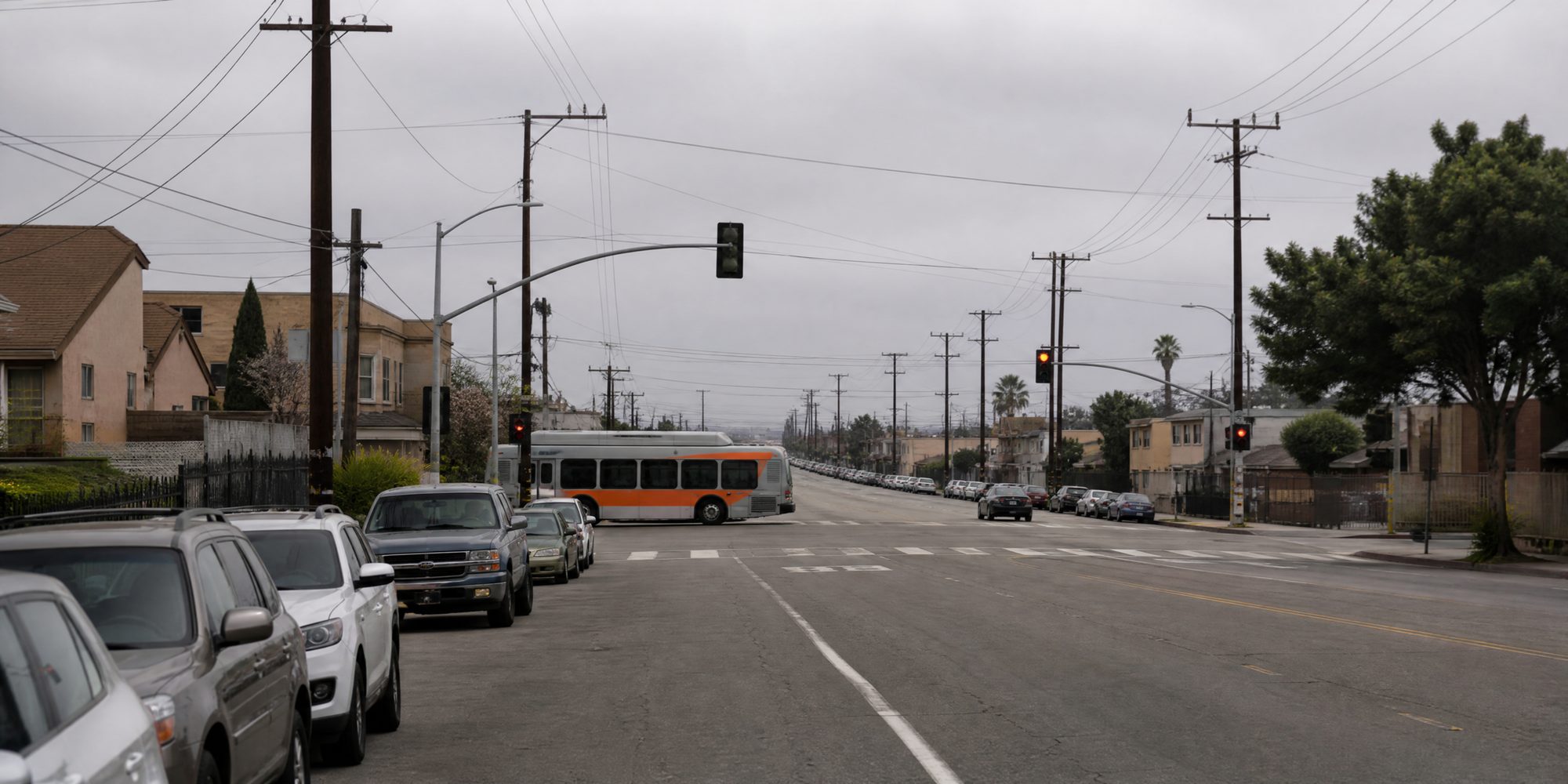
The Los Angeles City Council voted unanimously on Wednesday to have the Los Angeles Homeless Services Authority review this year's point-in-time homeless count. LAist reported that Council President Marqueece Harris-Dawson told the meeting the figures for parts of his district had glaring problems and did not match what he and others had observed. One census tract in West Park Terrace went from fewer than 20 unhoused people in recent years to 277 in 2026, and District 8, which covers much of South Los Angeles, came back 128% above 2025. "We'd notice 25 new homeless people, much less two hundred and fifty," he said, per LAist.
The instrument that produced that 277 is not a secret. LAHSA published the 2026 count's supporting documents on July 24 and last updated the page on August 20, six days before the vote. Among them is a 154-page methodology report written by researchers at USC, UCLA and the University of Washington, and a 33-slide results deck. Between them they answer most of what the council asked.
What the count counted
The street count is a visual-only tally, the USC report states: volunteers record people they can see, and they record the cars, vans, RVs, tents and makeshift shelters "assumed to be housing homeless individuals." Volunteers covered all 2,310 census tracts in the Los Angeles Continuum of Care, which is divided for counting purposes into 3,434 tract subtracts.
This January they saw 11,037 individuals and 11 family units with 47 members — 11,084 people. They also saw 17,721 vehicles, tents and makeshift shelters: 2,992 cars, 2,799 vans, 4,968 RVs, 3,248 tents and 3,714 makeshift shelters.
Objects become people afterward, at a desk. LAHSA's slide deck shows the step in one frame. Take the 11,084 people not in dwellings. Take the 17,721 dwellings, apply a dwelling multiplier of 1.86, and get 33,009 estimated people in dwellings. Add them: 44,093 unsheltered adults for the region.
The rest of the estimate is firmer. The shelter count is a 100% enumeration of every emergency shelter, transitional housing site and safe haven in the system — "therefore, there is no sampling or sampling error," the report says — and it found 22,608 people. A separate youth count uses respondent-driven sampling. Summed, the region's 2026 estimate is 68,576 people, plus or minus 1,282. That figure excludes Glendale, Long Beach and Pasadena, which run their own counts; add them and the countywide number is the 73,040 that led July's coverage.
Which means about 48% of the regional estimate, by our division, is people no volunteer saw. They are the count's estimate of how many people were inside the things it did see.
That is not a scandal. It is the method HUD requires, and the deck says so on its second slide: the count "combines direct data like shelter bed occupancy with observational estimates and statistical sampling," and is "an imprecise estimate but essential." The imprecision is published. The city's own data summary puts the total at 45,194 people — 16,079 sheltered, 29,115 unsheltered — with a stated precision of ± 836.
How a tract gets a number
The multiplier is where the year's movement lives, and it moved. Dwellings fell across the region, from 18,616 in 2025 to 17,721, a 4.8% decline; in the city they fell 2.3%. RVs fell 21.0% region-wide, tents 5.9%, cars 0.9%. Makeshift shelters rose 17.6%, from 3,158 to 3,714 — in the city, 23.0%, from 1,823 to 2,242. Fewer objects, differently sorted. The dwelling multiplier came in at 1.86, and the deck reports it has risen 16% since 2023.
None of that is estimated at the tract. The USC report is explicit that occupancy is worked out at the service planning area level, the county's eight geographic divisions, with separate samples for each dwelling type. Everything smaller is derived: "For geographies other than the CoC and SPA, the estimated SPA counts were distributed according to the geographic unit's share of each CVRTM within the SPA" — CVRTM being cars, vans, RVs, tents and makeshift shelters.
In plain English: a neighborhood's figure is its service area's figure, sliced by how many of that area's vehicles, tents and makeshift shelters were counted inside the neighborhood. If a tract's share of the objects goes up, its share of the people goes up with it. Nothing about the tract is measured independently.
SPA 6, the South service planning area, came back at 14,289 people this year, up 5.2%, with its unsheltered estimate up 7.7%, from 8,161 to 8,792. LAHSA's own footnote lists which service-area changes were statistically significant in 2026 — increases in SPA 4 and SPA 7, decreases in SPA 1 and SPA 5 — and SPA 6 is not among them. A district drawn across much of the same ground came back 128% higher. The USC report notes that most council districts contain portions of two or three service planning areas, so District 8's figure is assembled from more than one slice. It is still slices.
The distribution has swings in the other direction too, produced the same way. Councilmember Nithya Raman's office announced on July 24 that unsheltered homelessness in Council District 4 fell 49% between 2025 and 2026, and that dwellings there fell 41%. The second number is counted. The first is the second one's consequence.
What a review can fix, and what it can't
Two of the complaints raised Wednesday are about enumeration, not estimation, and those a review can settle. Councilmember Bob Blumenfield described a glitch that initially left some shelter residents out of his district's figures, including people in Project Homekey sites, and said LAHSA takes months to resolve such things; Councilmember Imelda Padilla said shelter numbers from her district were also missing, LAist reported. The shelter count has no sampling error because it is a list. A name missing from a list is a defect with a fix.
The tract figure is a different animal, and LAHSA said as much a month before the vote. Slide 4 of the July 24 deck reads: the count "is an estimate best interpreted as a snapshot of homelessness at the regional level. It is not as useful for measuring neighborhood-level homelessness." Agency spokesperson Ahmad Chapman told LAist this week that the count "produces reliable regional-level estimates," and that LAHSA's Risk Management Department would look for operational or technical issues and report back to the city.
Meanwhile the same instrument stands accused of the opposite error. A RAND study published October 15, 2025 and reported by LAist put professional counters on the street the same nights as LAHSA's volunteers in three neighborhoods and found the official count captured 74% of the unsheltered population in 2024 and 68% in 2025 — 81% in Hollywood, 76% in Venice, 61% in Skid Row. One count is being asked to explain an overcount in South Los Angeles and an undercount in Skid Row, and both readings can be true of an estimate assembled this way.
The stakes are not academic. More than $300 million a year is allocated using these figures, including roughly $220 million from the federal housing department and about $96 million from Measure A, per LAist's account of the RAND findings; the county's own July 24 statement on the count puts jurisdictional partners' Measure A share at nearly $97 million.
The raw material for the review is already posted. LAHSA's data page links a file of 2026 raw counts by census subtract whose own filename carries an August 6 date. Its Local Data Dashboard, which publishes the direct volunteer tallies by council district and neighborhood council — and which, LAHSA notes, excludes the estimated people inside dwellings entirely — is described on the agency's dashboards page, read Thursday, as showing the 2024 and 2025 counts.
Harris-Dawson said he expects the review to produce a number reflective of the reality on site. The people who built the count wrote down what kind of number it produces, and published it in July.
Comments 0