 ™
Eaton Fire Smoke Brought Back Pre-1980s Lead Levels, Caltech Says
Scientists estimate nearly 7 million people were exposed to lead at 80 times typical levels, measured against today's unusually clean air.
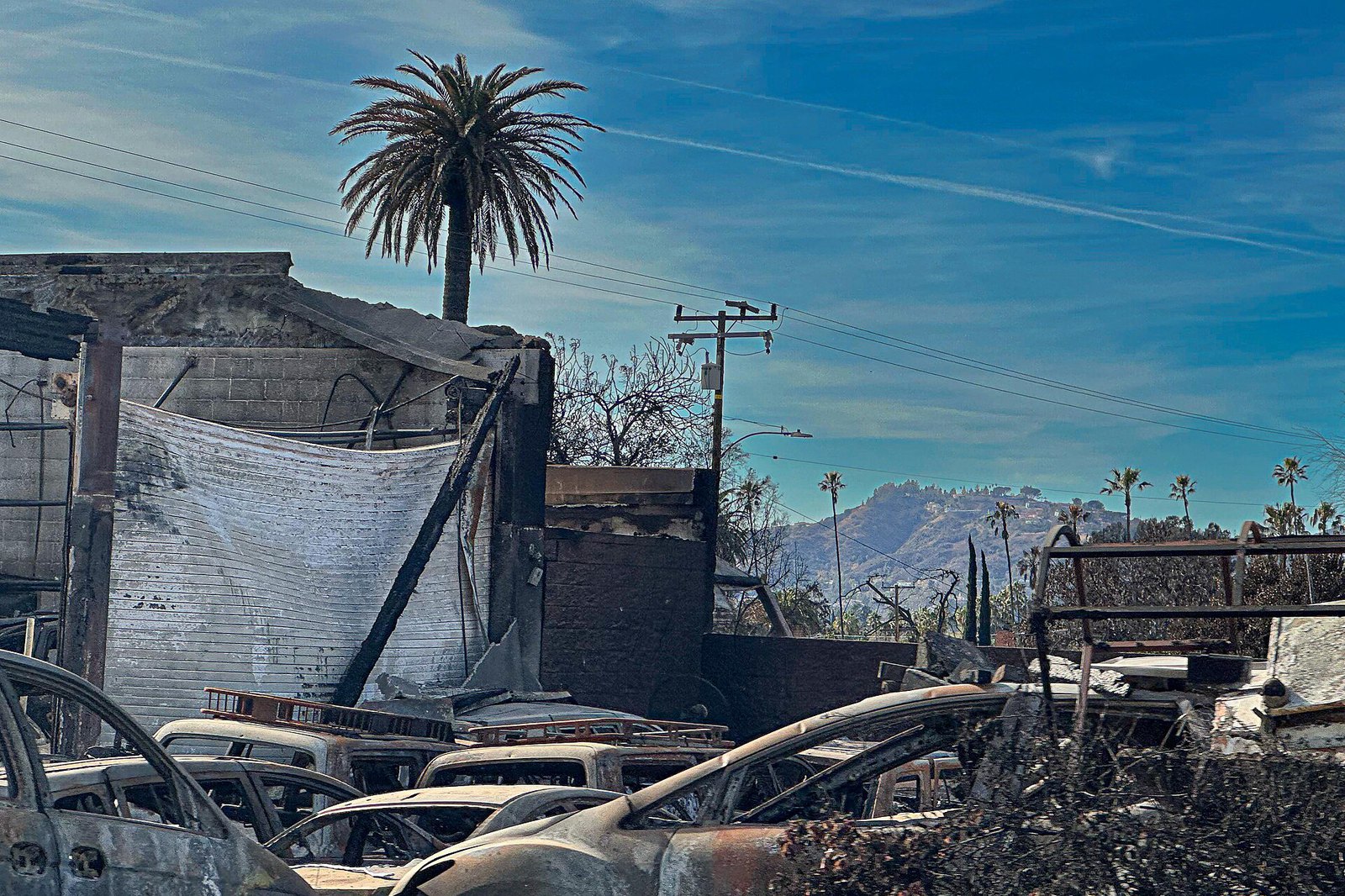

As Altadena burned, an air monitor in Pico Rivera, about 11 miles south, logged lead in the smoke at levels Los Angeles hadn't breathed since the leaded-gas era.
Caltech scientists now estimate that nearly 7 million people across the L.A. metro area were exposed to lead at 80 times typical levels, averaged over 24 hours. That was at the Eaton Fire's peak, when it was burning the most buildings. The finding comes from a paper published Oct. 28 in Science Advances, according to Caltech, and Secret Los Angeles reported it Sunday.
The number that matters more is the one underneath it. "Typical" means today's air, and today's air holds very little lead. Caltech's researchers note that lead levels in the L.A. basin have dropped about 99% since the early 1980s, when the region was phasing out leaded gasoline. By their own account, the fire's spike was dramatic against that modern baseline and roughly what counted as normal here before the 1980s.
The spike was also brief. The fire started the evening of Jan. 7, 2025. Lead jumped on Jan. 8 and 9 across the San Gabriel Valley and eastern L.A., peaking straight downwind of Altadena.
The team followed it with a simple tracer. Burning plants give off potassium, so the researchers tracked how much lead rode along with it. On the worst days, the smoke held about one part lead to five parts potassium. By Jan. 11 it was about one to 50, and by Jan. 12 one to several hundred, as the fire left the neighborhoods for the Angeles National Forest.
That chemistry is why the scientists call this an urban fire, not a wildfire. Set against smoke from the 2024 Airport Fire, a vegetation fire measured at a sister station in Rubidoux, the Eaton plume was more than 50 times richer in lead and three times richer in arsenic.
The likely culprit is old paint. In an April 2025 release, L.A. County Public Health said soil tests at intact homes downwind of the Eaton Fire turned up lead above screening levels more often than expected. The county said the lead most likely came from burned houses coated in lead paint, widespread before 1979.
The county also cautioned that L.A. soil has plenty of other lead sources. Caltech's team says Eaton's strong lead signal may be one of a kind, because so many older Altadena homes burned.
What two days of that air does to a person is the open question. The researchers say scientists don't yet know the health effects of short, high-concentration exposures like this one.
Dr. Howard Hu, a preventive medicine professor at USC's Keck School of Medicine who has studied lead since the 1990s, told CBS Los Angeles that the dose decides it. "For a single day of exposure, if you didn't get violently ill at that time, I think most people would be okay," he told the station. Exposure that lasts weeks, months or years worries him more, he said.
For anyone who wants to check, the county said in that April 2025 release that it was offering free, confidential blood lead tests through 1-800-LA-4-LEAD. Lead hits children and pregnant people hardest, the county said.
For Haroula Baliaka, the Caltech doctoral student who led the study, the lesson is about how far the danger travels. "We evacuate for fire, but we don't evacuate for smoke exposure," she said in the university's release.
Source: secretlosangeles.com, retrieved November 2, 2026. Other sources: caltech.edu, Los Angeles County, CBS News.
From the Handbook: Eaton and Palisades Fire Claims: The Four Deadlines
Comments 0