 ™
™Santa Monica Homes Take About Six Years From Application to Move-In, RAND Finds
Santa Monica permitted 37 new units in a full year, against a state target of 8,895 homes it must plan for.
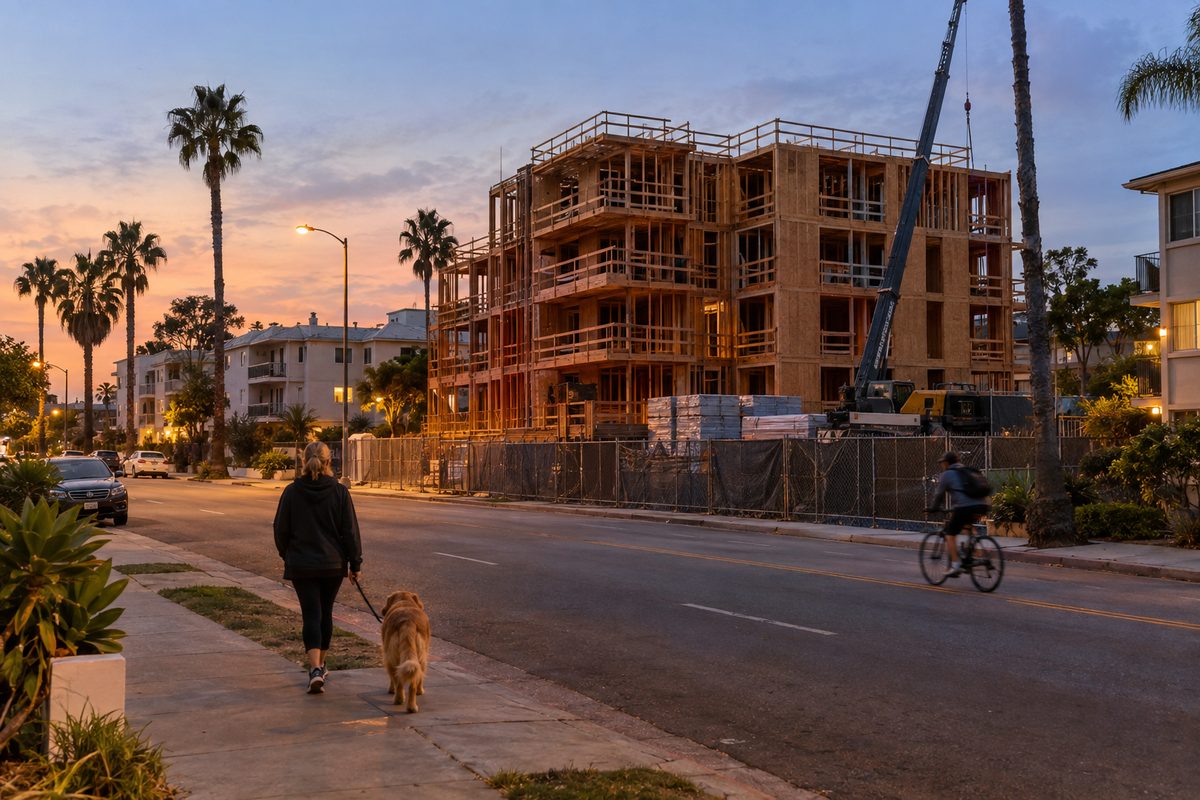
A new home in Santa Monica takes about six years to get from application to move-in, a RAND Corporation study found.
Across the West Los Angeles Area Planning Commission's area, similar projects average 4.9 years. Most of the difference builds up while a project waits for approvals and permits, the two stages researchers said Santa Monica largely controls. The city has spent the last few years loosening its housing rules, and the study found that hasn't yet turned into more construction.
The Santa Monica Daily Press reported the findings on Oct. 1. Three RAND researchers, Jason M. Ward, Roland Neil and Lizhong Liu, wrote the study. They worked from city permit records, state housing progress reports and Los Angeles County assessor data. The report's title is “Santa Monica's Recent Economic and Social Trends: A Case Study with Regional Comparisons.”
Where the six years go
RAND split the average project into three waits:
- 403 days to win entitlement, the planning approval
- 726 more days to get a building permit
- 965 more days to reach a final permit, which is usually a certificate of occupancy
Projects in the coastal zone, a strip that runs four to eight blocks inland, wait longer. Santa Monica doesn't have a fully certified Local Coastal Program, so builders there need the California Coastal Commission's sign-off as well as the city's. Entitlement in the zone took 701 days, compared with 396 for projects outside it. The step from entitlement to a building permit took 12% longer.
The denominator
The state has told Santa Monica to plan for 8,895 new units by 2029, more than five times what it had been asked to plan for before. Through 2023, it had permitted about 1,034 of them, roughly 11.6% of the goal. In all of 2024, state data show, it permitted 37.
The affordable count is thinner: 265 units by the end of 2023, or 4.3% of the affordable goal. A much bigger pile sat in between. Another 3,296 market-rate units and 878 affordable ones had cleared approval and were still waiting on permits.
The comparison with the neighbors doesn't flatter the city either. RAND measured Santa Monica against eight jurisdictions, including Culver City, West Hollywood, Long Beach and Pasadena, and only Beverly Hills built fewer new homes per resident from 2018 to 2025.
There was a rush on paper in 2022. While Santa Monica lacked a state-approved housing plan, from February to October that year, developers filed 16 builder's remedy applications covering 4,260 units. A May 2023 settlement let those projects refile on a fast track, but many of the units still haven't shown up in permit counts.
What changed, and what didn't
In 2023 the city threw out its old tier system. It lifted its caps on building height and floor area and shifted more projects to administrative approval. A pilot program lets builders pay fees or put affordable units off-site, and it's been credited with bringing several stalled projects back to life.
The changes kept coming. The Globe reported on Sept. 18 that the city had advanced upzoning to dodge state law.
One experienced land-use attorney told the researchers, “I would rather propose a housing project in Santa Monica than literally any other jurisdiction in the entire state of California.”
Others described a slower road. Interviewees said the architectural review board seemed to disregard an urban designer's earlier sign-off on the same project. They said sanitation and public works make expensive demands late in construction, and that every permit gets sent to every department whether it has a stake or not.
That lost time has a price. A developer told RAND that a two-month delay “could cost $600,000 at the peak of the construction loan,” and an architect said a new building only works financially if a one-bedroom rents for $3,500 to $4,500 a month.
Interviewees also blamed Measure GS for many stalled projects. The measure takes 5.6% of any Santa Monica property sale at $8 million and up, and the report put that bite at more than 30% of a typical project's expected return. A separate RAND study linked a comparable Los Angeles tax to a big falloff in apartment building.
City staff pointed to forces outside City Hall: high interest rates, volatile material prices, labor shortages and flat rents. They also said experienced inspectors often leave for private-sector jobs.
The authors set limits on their own work. The study describes trends and doesn't test whether the reforms worked. It left out affordable housing developers, and its timelines may include months when builders, not the city, held things up before breaking ground. The researchers interviewed 14 of the 19 people they invited.
RAND's fixes are aimed at City Hall: certify the coastal program on a public timetable so builders can get coastal permits from the city alone, and build an open data portal that shows how long each application sits with the city versus the applicant. It also urged the city to court builders and investors who still think of Santa Monica as “a place to avoid.”
Source: smdp.com, retrieved October 3, 2026.
Comments 0