 ™
™The Eaton and Palisades Fire Report Should Name Who Owns Every Fix
A 724-page state review traced Altadena's late alerts and the Palisades chaos to specific agencies, so each fix needs an owner and a date.
West Altadena, the historically Black part of town, lost 18 of the Eaton fire's 19 dead. Sheriff's deputies had seen flames there hours before the evacuation order came. Those deaths happened on specific streets. The decisions that left those streets waiting were made in specific offices.
On Friday, California got a long-awaited independent review of the Jan. 7 fires in Altadena and Pacific Palisades, which together killed 31 people and destroyed more than 16,000 structures. It doesn't hang either disaster on a single mistake. I'd push it in another direction: every failure it lists needs an agency's name beside it, and a date by which that agency has fixed it.
Gov. Gavin Newsom commissioned the 724-page report, and the Fire Safety Research Institute, part of UL Research Institutes, wrote it, the Los Angeles Times reported. My argument rests on the Times' account of the findings, not on a read of every page.
The report's framing leans hard on conditions. Derek Alkonis, a senior research program manager at the institute, said at a Thursday briefing that the whole system was "just boiling — primed and ready to release all of that stored-up energy come January 7th," the Times reported. He meant wind, dryness and fuel, and he's right about those. My worry was that "the system" would end up as the culprit, because a system is a defendant that never has to show up.
Then the findings turn out to be far more specific than the framing. They read like an org chart.
Altadena waited on a command that didn't know
In Altadena, a county paramedic squad at Glenrose and West Loma Alta Drive reported a snowfall of embers and buildings on fire. The squad wasn't assigned to the incident, so nothing it saw reached the commanders at the Rose Bowl. The Los Angeles County Fire Department, which ran the fire, never formally built evacuations into its command, the report found.
Commanders finally moved after a radio report at 2:19 a.m. The order for most of west Altadena went out at 3:25 a.m. on Jan. 8, over four hours after the earliest 911 call from west of Lake Avenue. The last zone wasn't alerted until 5:50 a.m., and county command "was unaware that the fire had progressed through west Altadena until the daylight hours," the report found.
The Palisades started a week early
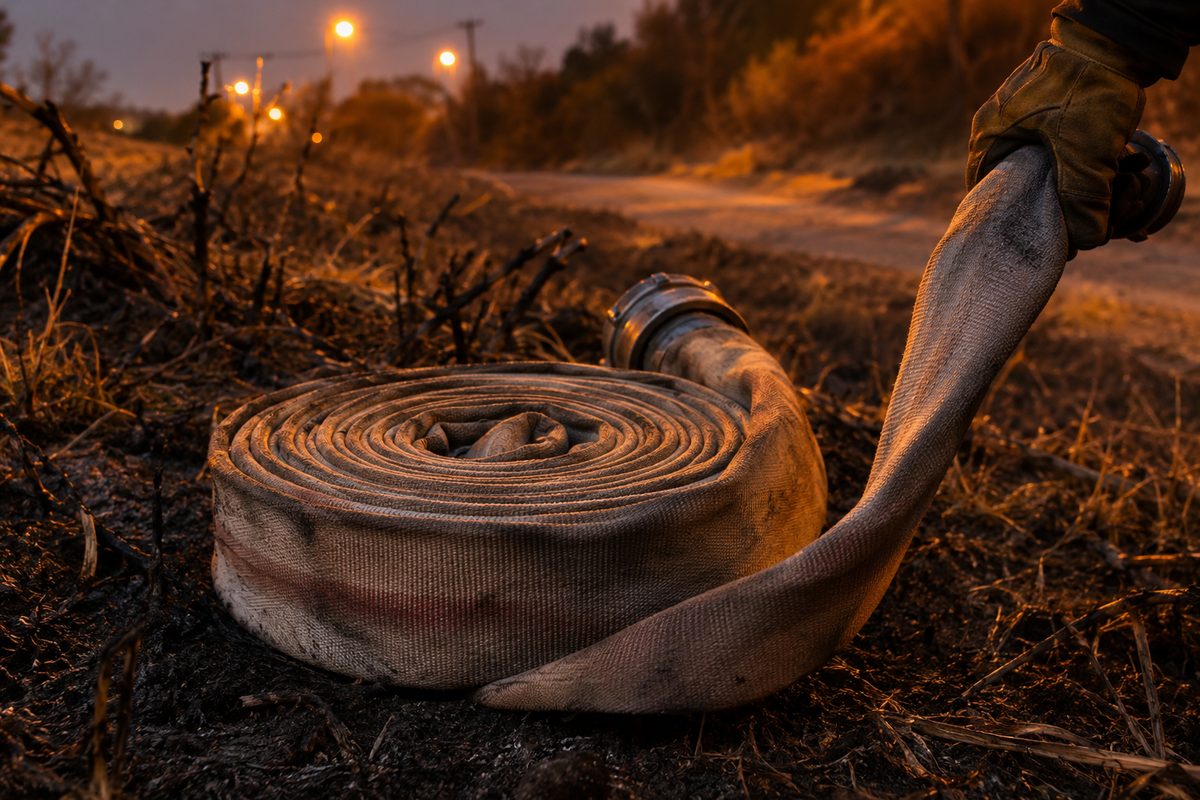
The Los Angeles Fire Department contained the small Lachman fire in Topanga State Park on Jan. 1. Crews were ordered to pull their hose the next day, even after a captain and a firefighter paramedic raised worries about smoke and a hot spot. The review found no sign the department went back as dangerous weather closed in, and it found the department had no comprehensive rules for mopping up wildland fires.
When that ground burned again on Jan. 7, the city's response came apart in ways you can trace to a desk. The LAFD put its first command post at Fire Station 23, in the fire's path, and command moved three times. The LAPD ran evacuations on its own track, and the two departments didn't learn until late that night that they were working off different maps. Up to 26 units went out without command knowing.
The owners are already in the report
I'd publish a one-page ledger beside those 724 pages, with a date on every line:
- L.A. County Fire: put evacuations inside incident command, and send field reports like that paramedic squad's to the people who order evacuations.
- LAFD: write the wildland mop-up rules it doesn't have, including a patrol of fresh burn scars before red-flag weather.
- LAFD and LAPD: one command and one evacuation map.
- California State Parks: redo the draft Topanga wildfire plan with the fire agencies it left out.
This works, and the report shows it. County Fire has already said it folded FireGuard, a federal satellite program the report says commanders barely touched, into its process. And once the California Department of Forestry and Fire Protection took over the Palisades command a day after the fire began, some responders said "coordination and consistency greatly improved." A single clear owner helped almost at once.
The strongest case against me is a serious one. Fires pushed by that kind of wind really are systemic, and a blame hunt can drive agencies toward lawyers and silence. The report itself asks the LAFD to build a culture where firefighters feel safe flagging hot spots and unsafe conditions, and a department bracing for blame won't build that.
My answer is that an owner is an office, not a scapegoat. I don't want a name attached to the hose decision on Jan. 2. I want the department to own the missing procedure that let that call happen, and I want a date when it exists.
The people who lost homes already live on deadlines. Four clocks run on an Eaton or Palisades claim, and two of them stop in January, the Globe reported on Sept. 10. The agencies' fixes deserve clocks of their own.
Start with the line the report makes easiest to see. FireGuard maps printed in the review show the Eaton fire bending west as early as 9 p.m. on Jan. 7. Most of west Altadena got its evacuation order at 3:25 a.m., more than six hours later.
Source: latimes.com, retrieved October 2, 2026.
From the Handbook: Eaton and Palisades Fire Claims: The Four Deadlines
Comments 0