 ™
™UC's Math Problem Fits in 5 Percent of Freshman Courses. The Regents Heard It at UCLA.
The board's own item pairs a record 93 percent first-year retention with a 17.8 percent D-F-withdrawal rate in introductory math.
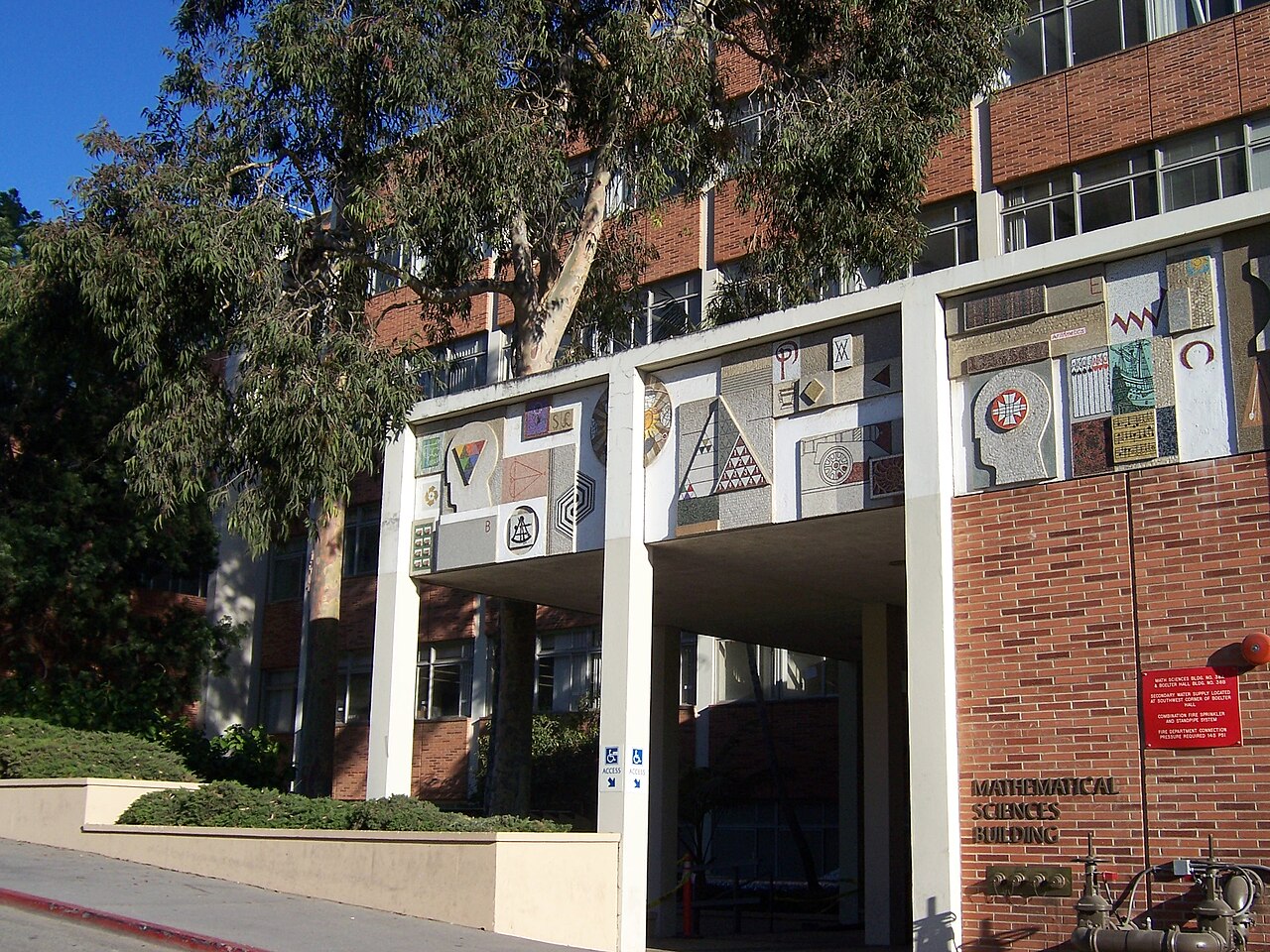
The University of California's Academic and Student Affairs Committee met Wednesday morning in Centennial Ballroom A&B of the Luskin Conference Center, on the UCLA campus, called for 10:45 a.m. on the board's notice. The first item on its open-session agenda was called UC STEM Outcomes and Math Innovation, and it was filed as a discussion. Twenty-six pages of grade data, and nothing to vote on.
The item is the university's answer, in its own numbers, to a year of faculty demands that it bring back the SAT. We read it and its seven appendices. The problem it describes is real, and it is narrower than the argument around it: the courses driving it are five percent of what a UC freshman takes.
What the faculty asked for
More than 2,300 UC faculty in STEM disciplines signed an open letter calling for "the reinstatement of the SAT/ACT mathematics requirement for applicants to STEM majors beginning with the 2027 admissions cycle," along with STEM faculty oversight of readiness standards. About 900 faculty in the social sciences, humanities and professional schools signed a companion letter. UC employs more than 26,000 faculty, Inside Higher Ed reported in July.
The letter's hardest numbers are San Diego's. Citing the UC San Diego Senate–Administration Workgroup on Admissions, it says the number of students whose mathematics skills fall below high school level rose nearly thirtyfold in five years, that 70 percent of those students test below middle school level, and that together they amount to roughly one in twelve of the entering cohort. At Berkeley, the letter says, 20 to 30 percent of first-semester calculus students who took diagnostic testing showed severe preparation deficits — three years running.
What UC's own file says back
By the measures the university has always used, its freshmen are arriving stronger. Enrolling students finished an average of more than 11 advanced high school courses in 10th and 11th grade in 2025, up from nine in 2016. The share arriving with a high school GPA of 4.00 or better went from 52 percent in 2015 to 66 percent in 2025. First-year retention reached 93 percent and the four-year graduation rate 74 percent, both records; the four-year rate was 68 percent for the cohort that entered in 2014. Six-year graduation stands at 86.1 percent.
Across all lower-division courses, first-year students averaged a 3.32 GPA in 2025–26, and 6.7 percent of their grades were a D, an F, a withdrawal or a no-pass — DFWNP, in the university's acronym. In 2020–21 that rate was 5.8 percent.
First-year retention is the highest UC has ever recorded. So is the DFWNP rate in the courses that teach calculus, across the six years this item reports.
The five percent
Calculus 1, precalculus and the preparatory courses that come before them made up 5.0 percent of first-year lower-division enrollment in 2025–26, down from 5.9 percent in 2021–22. Inside that five percent, the average grade fell from 2.95 in 2021–22 to 2.71 in 2025–26, and the DFWNP rate went from 9.2 percent in 2020–21 to 17.8 percent in 2025–26. It nearly doubled in six years.
Nothing else moved like that. Arts and humanities courses ran a 5.2 percent DFWNP rate last year, social sciences 5.8, engineering and computer science 7.0, other STEM subjects 6.8. Interdisciplinary courses came in at 2.9 percent, their lowest in the six years reported. Math courses outside the calculus entry sequence — statistics, data science, everything after Calculus 1 — were 9.4 percent of enrollment at an 8.5 percent rate.
Most students never take the courses in question. Of freshmen who entered in fall 2023, 31 percent took Calculus 1, precalculus or preparatory math in their first two years. Forty-one percent enrolled in something past Calculus 1. The remaining 28 percent took nothing in the calculus pathway at all.
Nine campuses, nine numbers
Appendix II breaks introductory math out by campus. These are 2025–26 DFWNP rates, with the average course grade in parentheses.
- UC Merced — 36.4% (2.03)
- UC Riverside — 20.5% (2.43)
- UC Santa Cruz — 18.9% (2.71)
- UC Davis — 18.4% (2.71)
- UC Irvine — 15.9% (2.87)
- UC San Diego — 15.8% (2.58)
- UC Berkeley — 13.3% (3.06)
- UCLA — 10.7% (3.17)
- UC Santa Barbara — 8.2% (3.26)
The spread is 28 points. Riverside's rate was 8.3 percent a year earlier; it rose 12.2 points in twelve months while the average grade there fell from 3.03 to 2.43. Merced's introductory math is 11.5 percent of its first-year lower-division enrollment, the largest share in the system, and Irvine's is 2.3 percent, the smallest. UCLA's is 4.3 percent, and UCLA's rate has climbed too — it was 6.2 percent in 2020–21. Four campuses, Davis, Riverside, San Diego and Santa Cruz, offer preparatory math ahead of precalculus; UCLA, Berkeley, Irvine, Merced and Santa Barbara do not.
The course the regents came to see
The item's title ends with the words Math Innovation, and much of the innovation it describes is UCLA's. Eight campuses now teach a calculus sequence built for life sciences majors. At UCLA the mathematics department offers one and the Life Sciences division offers another: Life Sciences 30A and 30B, written by life sciences faculty around mathematical modeling of biological systems. DFWNP rates in the UCLA courses, the item says, "have generally remained below the systemwide rate for all calculus courses." The reference line on its chart is 18 percent — the average across all Calculus 1 courses from 2021–22 through 2025–26.
UC Santa Cruz has introduced Math 16A, Mathematics for Life and Environmental Sciences, modeled on the UCLA approach, and the item calls its early results promising. It also cautions that "direct comparison of offerings across campuses is not straightforward," because placement, degree requirements and curricula vary.
The presenter listed for that portion was Eric Deeds, a UCLA professor of integrative biology and physiology and vice chair for mathematics education in the life sciences core education department, who has taught at UCLA since 2019 and won a Chancellor's Distinguished Teaching Award in 2023. The course, Mathematics for Life Scientists, teaches modeling, coding and dynamical systems against problems like pandemics and ecological change.
Where the students come from
The item's own starting point is the state test. In 2025, 57 percent of California 11th graders met or exceeded state standards in English language arts and almost 31 percent did in mathematics — the item's Figure 1, sourced there to the California Department of Education. Both rates have risen over the past few years. Both remain below where they were before the pandemic.
Who acts next
Nobody has scheduled a vote. Regents chair Maria Anguiano said in July that she expects the Academic Senate to submit recommendations "no later than the end of the upcoming academic year, by June 2027," Inside Higher Ed reported. The board's college readiness review — expert presentations, listening sessions, public feedback — runs through May 2027.
At that July meeting, Berkeley physics professor emeritus Robert Littlejohn told the regents that unprepared students face "intense stress, anxiety and ultimately crushing failure, as well as humiliation and damage to their academic record," the Daily Californian reported. UC Student Association president Aditi Hariharan told the same meeting that standardized tests have "compromised accessibility for students with fewer resources," and that pandemic learning loss is the better explanation for the decline in math ability.
The faculty asked for the 2027 admissions cycle. The recommendation that could start one is due in June 2027.
Comments 0