 ™
™A $495 School Tax Needs 50 Percent Plus One. Prop 43 Would Close That Door 59 Days Later.
The court-made rule that let Measure ULA pass with 58 percent, and the county's homelessness sales tax with a simple majority, ends on Jan. 1 if voters approve Proposition 43 — which shares its November ballot with a Santa Monica parcel tax that will be graded under the old rule.
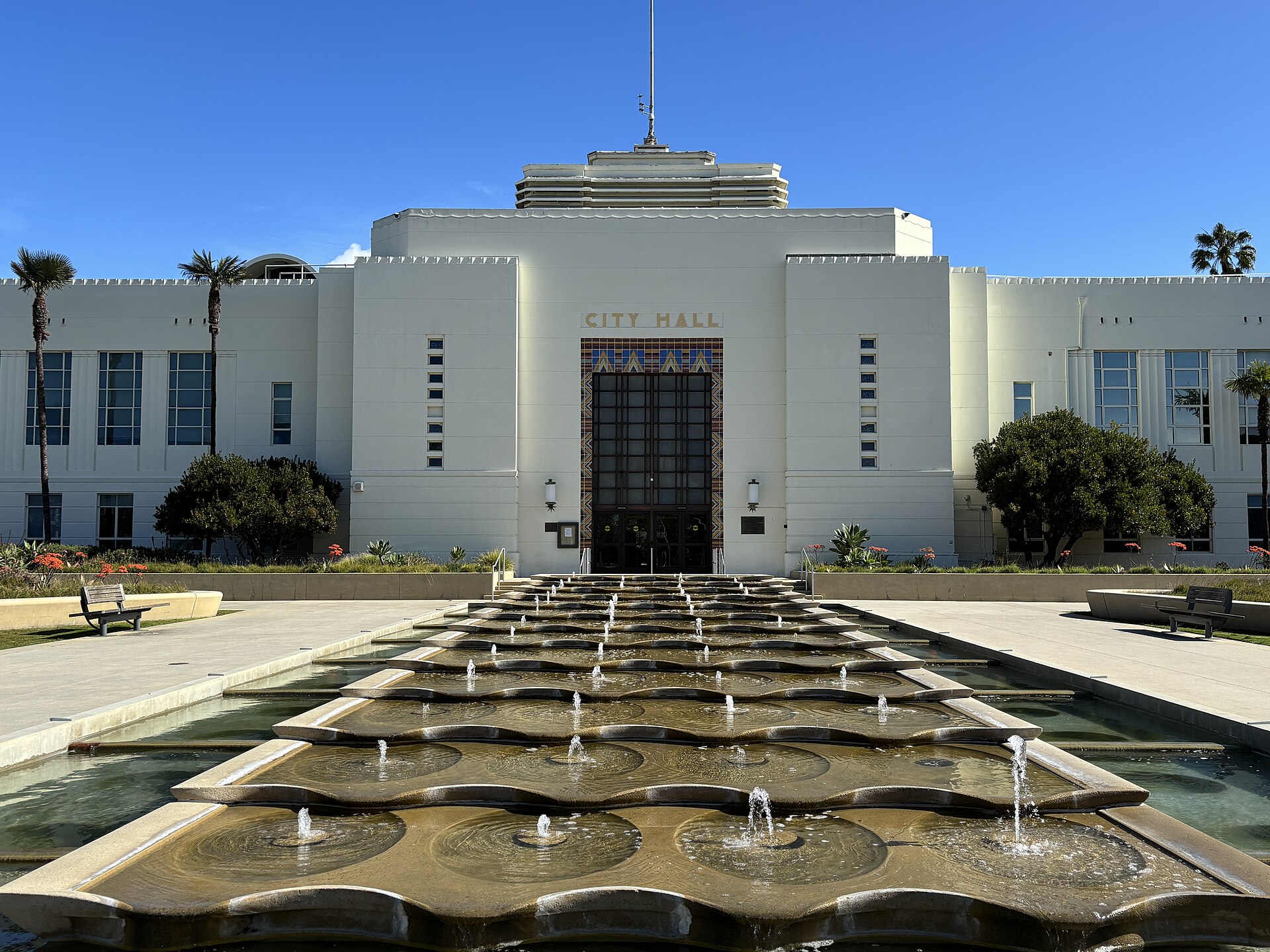
Two items will share the November 3 ballot in Santa Monica. The first is a $495-a-year parcel tax for the public schools, which passes if half the voters plus one vote yes. The second is Proposition 43, which would require a tax like the first one to clear two-thirds. Prop 43's rule starts on January 1, 2027. We counted the days between the election and that date: 59.
Neither campaign has any obligation to mention the other. Both facts are in the public record, and the distance between them is 16.7 percentage points.
The rule, and the four cases that built it
California prices local taxes in two tiers. A tax that funds general government needs a majority; a tax dedicated to a stated purpose — a special tax — needs two-thirds. The Legislative Analyst's Office states the tier plainly in its analysis of Proposition 43: "local taxes that are used for a specific purpose require a two-thirds vote to be approved."
Then the courts found a seam. In 2017 the state Supreme Court decided California Cannabis Coalition v. City of Upland, holding that a constitutional restriction written for "local government" did not reach the electorate's own initiative power. Appellate courts extended the reasoning to the vote threshold itself: City and County of San Francisco v. All Persons Interested in 2020, upholding a business tax passed with 61.34 percent; City of Fresno v. Fresno Building Healthy Communities the same year, upholding a sales tax passed with 52 percent; and Howard Jarvis Taxpayers Association v. City and County of San Francisco in 2021, upholding a special tax that drew 51 percent. The case list and the percentages come from the land-use firm Shute, Mihaly & Weinberger. The state Supreme Court declined to review the appellate decisions, per the California Budget & Policy Center, which left the split standing: a tax written by a city council needs two-thirds, and the identical tax written by residents and qualified by petition needs half.
What the seam carried in Los Angeles
It carried two Los Angeles taxes that now move well over a billion dollars a year between them.
Measure ULA, the transfer tax on property sales above $5 million, passed in 2022 with 58 percent — a figure reported by LAist, republishing CalMatters, which also puts the total raised since the tax took effect in 2023 at roughly $830 million, with nearly $400 million moving in the city's first major funding round.
Measure A, the countywide half-cent sales tax for homelessness, passed in 2024. It was written and campaigned for by homeless service providers and advocates, per LAist's explainer, and it ran on the low bar: "The measure needed a simple majority (50% + 1) to pass," LAist wrote on election night, reporting the campaign's victory claim at nearly 56 percent. The county's own Measure A page says collection began April 1, 2025, and puts the yield at "over $1 billion annually."
Two-thirds is 66.7 percent. Neither measure is within eight points of it. The Budget Center's list of citizen-initiated special taxes approved under the majority rule runs the same way elsewhere in the state: San Francisco's Measure C at 51 percent in 2018, Fresno's Measure P at 52 percent the same year, ULA at 58 percent, and Madera County's Measure T at 52 percent in 2024.
What Proposition 43 does, and the date it does it
Proposition 43 is a legislative constitutional amendment, not a citizens' initiative. It began as ACA 22, authored by Assemblymember Buffy Wicks; the Legislature's own vote record shows it clearing the Assembly 68-2 and the Senate 35-1 on June 25, 2026. The text adds a new Section 4.5 to Article XIII A of the state constitution, and it reaches the voters' initiative power by name.
The LAO's summary is one sentence long: "Under Proposition 43, beginning on January 1, 2027, any new, increased, or extended local special taxes proposed by voters would require a two-thirds vote."
The Budget Center, which opposes the measure, reads the operative date more precisely still: it "would apply to initiatives placed on a local ballot on or after January 1, 2027." Under that reading, every local tax initiative already placed on the November 3 ballot — Santa Monica's among them — is graded under the old rule regardless of how Prop 43 itself does. Nothing in the amendment's text reaches back at taxes voters already approved, either. That reach is what did not survive the deal producing this measure: the transit group Seamless Bay Area, which opposes Prop 43, says the earlier version would have retroactively invalidated past measures approved with less than two-thirds.
One more line, from the constitution itself. A constitutional amendment is adopted, per Article XVIII, Section 4, when "approved by a majority of votes cast thereon." The measure that would impose two-thirds needs half.
The door City Hall did not use
Santa Monica has now watched both thresholds get priced, on the same problem, in the same year.
The city considered sponsoring its own parcel tax. Polling of 499 registered voters conducted October 8-16, 2025 tested two designs — a flat $540 per parcel and a rate of $0.08 per square foot — aimed at roughly $12 million a year, with implementation estimated at $42,000 to $47,000, per the Santa Monica Daily Press. A city-sponsored special tax needs two-thirds.
What is on the ballot instead is the Excellent Santa Monica Public Schools Parcel Tax Measure, filed in January by proponents including state Sen. Ben Allen and school board President Alicia Mignano, per the same paper. Petitioners cleared the 7,038-signature minimum, and the City Council voted 7-0 in July to place it, according to Santa Monica Next. It levies $495 a year on each taxable parcel, adjusts for inflation automatically, carries no sunset date, and needs a simple majority.
Same money, same year, same city. One door opens at 50 percent plus one; the other opens 16.7 points higher. Only one of them was available to the seven people who voted to open it.
What the $495 is replacing
The measure is not new money. Under the master facility use agreement, the city sends the Santa Monica-Malibu Unified School District roughly $12 million a year, and that agreement ends June 30, 2027. "It does not create any new funding; it replaces the source of funding previously provided through the master facility use agreement," district Chief Operations Officer Carey Upton told the Daily Press. The school board endorsed the measure unanimously on August 6 as Resolution No. 26-04; board member Stacy Rouse voted yes while noting, "with humility as a Malibu resident," that she would not carry the burden Santa Monica property owners would, and student board member Parker Kaplan abstained.
The revenue estimates do not agree with each other. The Daily Press puts the yield at about $11 million a year. Proponents, quoted by The Lookout, put it at about $12 million. We ran the arithmetic on the flat rate: at $495 a parcel, $11 million implies roughly 22,200 paying parcels and $12 million implies roughly 24,200. The gap between the two estimates is about 2,000 parcels, which is another way of describing the exemptions — seniors, nonprofits, religious organizations and certain affordable-housing parcels — that neither side has published a count for. Divided the other way, $495 is $1.36 a day.
The two campaigns are arguing about a different set of numbers. Supporters, per The Lookout, say the money protects as many as 73 teaching positions. Opponents in the same account call the cut warnings fearmongering and point to a district that averaged a $14 million surplus over five years and holds $84 million in reserves, and to a city that declared fiscal distress and then reported a surplus. The city's finance numbers are on the record: an October 2025 projection showed a $29.6 million deficit for the coming year, and the city now expects to close the current year with an $8.95 million surplus against a $908.1 million operating budget, the Daily Press reported. Both things can be true at once, and in Santa Monica this year they are.
The tax has no end date. The district does.
There is one more clock in this. In December 2025 the school board voted 7-0 to approve three agreements splitting SMMUSD into separate Santa Monica and Malibu districts, and the Malibu City Council signed off days later, per Santa Monica Next. The property tax revenue sharing agreement starts at an 88 percent Santa Monica / 12 percent Malibu split, guarantees Santa Monica's base 4 percent annual growth, and runs through 2042 with a taper, per The Malibu Times, which reports the separation is not expected before the 2028-29 school year and that special legislation is needed — in part to preserve the existing parcel taxes in both cities.
So the parcel tax on the November ballot would be levied on Santa Monica parcels only, indefinitely, to fund a district that both cities have already voted to dissolve into two. That is not a contradiction; the money follows the schools either way. It is a reminder that "no sunset" is a long time in a district with a scheduled end date.
What to watch on November 3
The order of operations is the story. If the Santa Monica measure gets 51 percent and Prop 43 also passes, the tax stands and the next one like it needs two-thirds. If the measure gets 60 percent, it stands — and the same measure, filed for any ballot after New Year's, would come up six points short. If it lands between 50 and 66.7 percent — where ULA, Measure A and every measure on the Budget Center's list landed — it will have passed inside a band that Prop 43, if approved, closes on New Year's Day.
One caveat worth stating plainly, because the campaigns will not: the LAO's phrasing is "beginning on January 1, 2027," and the Budget Center's is "initiatives placed on a local ballot on or after January 1, 2027." Those readings agree about November 3. Whether they agree about everything after it is a question for the courts, which is how this rule got here in the first place.
Comments 0