 ™
™L.A. Unified Hired as Students Left. Now the State Warns It Could Go Broke.
The state's Fiscal Crisis and Management Assistance Team blames hiring, raises and special-ed costs as the $20.6 billion district loses students.
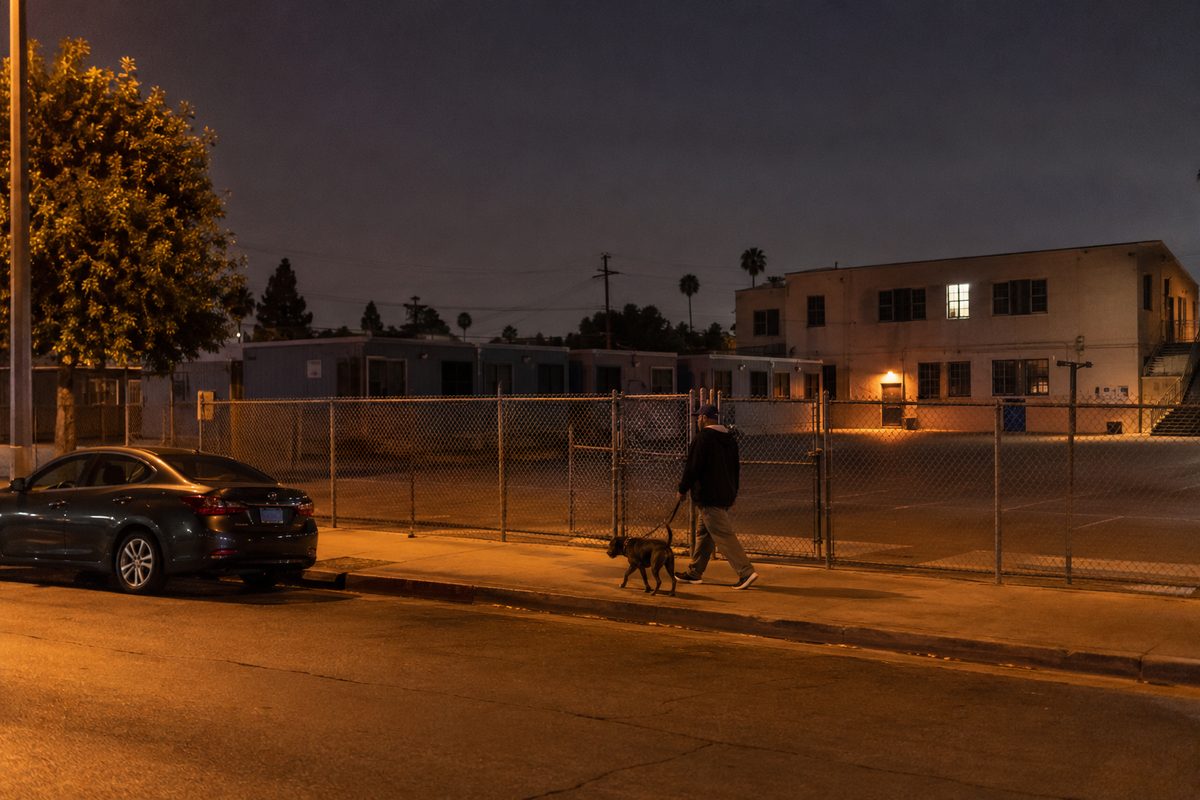
Los Angeles Unified lost more than 70,000 students in five school years and added the equivalent of about 3,800 full-time jobs anyway. Now California's school fiscal-crisis team says the district is at "high risk" of insolvency, the Los Angeles Times reported.
The warning comes from the Fiscal Crisis and Management Assistance Team, the state group that helps California schools head off money trouble, in a report set to go before the L.A. Unified board on Tuesday. The district needs to act quickly, the team says, or it could lose the power to make its own budget calls. Its three-year plan already calls for cutting more than 6,000 jobs from a workforce of roughly 80,000 people, part-timers included.
District officials aren't disputing the numbers. In a statement, L.A. Unified said it's been open about its money problems and that board members already approved what it calls a fiscal stabilization plan, hard choices included.
The team's diagnosis starts with people. By the team's count, as the Times reported, enrollment fell about 16% between 2019-20 and 2024-25, to 369,830 students. Staffing rose about 6.3% over the same years, to 64,148 full-time-equivalent jobs. Much of that hiring was paid for with pandemic relief money meant to help kids catch up, and the money that covered most of those salaries has run out. The team also faulted raises that grew faster than state funding.
"The district has not sufficiently adjusted staffing and facilities use in response to declining enrollment," the report says.
The buildings make the point on their own. The team calculated that L.A. Unified has classroom space for about 718,475 students and enrolled 353,065 in 2025-26, which leaves roughly half its seats empty. Of its 738 campuses, 481 are at 60% capacity or less, and half-empty schools still cost money to run and maintain.
Closing them isn't a clean fix. The Times points to research suggesting that shutting campuses can drive even more families away, and most state and federal school money follows enrollment.
Then there's special education. State and federal dollars pay for only part of the services for students with disabilities, and the district covers the rest. That gap cost L.A. Unified $957.1 million in 2023-24 and $1.49 billion in 2025-26, a jump of more than $500 million in two years, the Times reported. This year's budget assumes the bill will shrink.
The Los Angeles County Office of Education, which oversees the district's finances, has "conditionally" approved L.A. Unified's $20.6 billion spending plan for 2026-27, the Times reported, citing a separate presentation for the board. That's short of a clean sign-off, though better than a rejection. The fiscal team's report says the district still hasn't fully fixed problems the county raised in its oversight letters, and it has missed budget-cut targets before.
The teachers union is pushing back. In a memo to board members, the union said the state team's own data analysis put the district at "moderate risk," and the label only jumped to "high" after county officials made what the union calls subjective judgments about the crisis.
The team's published method leaves room for exactly that kind of jump. A score of 40% or more counts as high risk and 25% to 39% as moderate. But any condition found in its "Budget and Fiscal Status" section, or a material weakness, overrides the score and raises the risk level.
The union also argues the state's math ignores new state revenue, which has usually shown up in recent years. So it backs the board's choice to push cuts as late as it can in the three-year plan, betting many of them won't be needed. It won't accept unpaid furlough days or higher employee health costs for now; those have to be bargained, and if they aren't, the district has to find the same savings somewhere else.
That bet has a price. If the extra money doesn't come and the cuts are still needed at their original size, the delay means they'll be deeper when they finally land.
Source: Los Angeles Times, retrieved October 6, 2026. Other sources: fcmat.org.
Comments 0