 ™
™How to Get 20 Free Metro Rides Every Month
Metro's LIFE program approves you once, and the 20 rides only load each month if you claim them.
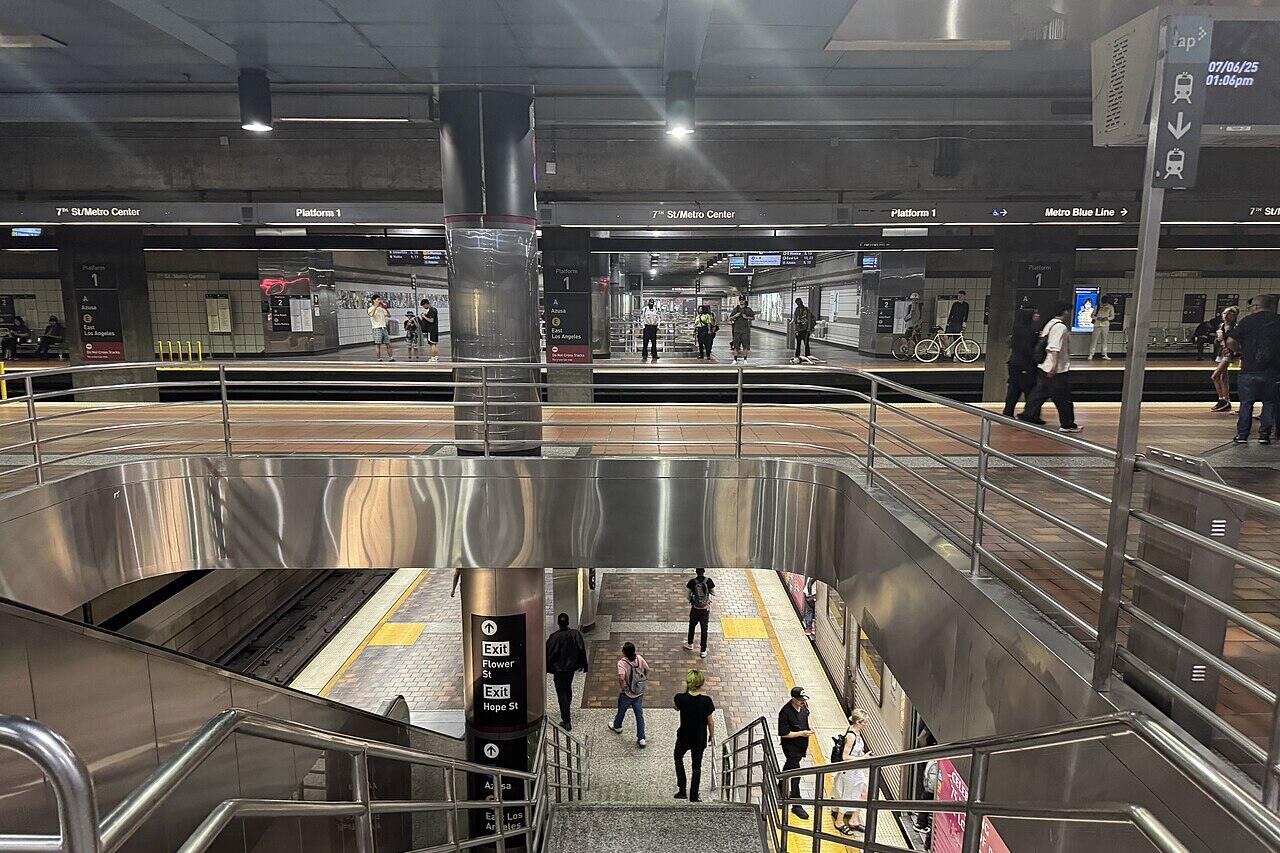
You're wondering how much paperwork this takes. Not much: an EBT card qualifies you on its own, and so does a Medi-Cal plan, a Supplemental Security Income check or a General Relief case. Metro says the application runs in under ten minutes.
The program is called LIFE, for Low Income Fare is Easy, and it's the largest fare discount in Los Angeles County that isn't a student pass. Sign up and the first 90 days are unlimited free rides, on Metro and on 16 other transit agencies in the county. After that it becomes 20 free rides a month, and it keeps running for as long as you stay eligible — no annual renewal, no reapplication.
The rides don't arrive on their own, though. Somebody has to put them on a TAP card every month, and for most of this program's life that somebody was the rider. Metro's own analysis of LIFE, presented to a board committee in June 2025, found that only about a third of enrollees had ever used a free ride at all, and that six months after signing up the share still riding had fallen to 15 percent — Streetsblog California, which covered the presentation, reported that many enrollees didn't know the monthly step existed and that others found it a chore. Metro now lets you switch that step off once and stop thinking about it.
Six questions to a yes, a no, or a maybe
1. Do you live in Los Angeles County? LIFE is a county program, and the half of it that isn't free rides — a discount on somebody else's monthly pass — only works on county operators. Metro lists sixteen: Antelope Valley Transit Authority, Big Blue Bus, BurbankBus, Culver City Bus, Foothill Transit, Glendale Beeline, Glendora Transit, GTrans, LADOT, Lawndale Beat, Long Beach Transit, Montebello Bus Lines, Norwalk Transit, Pasadena Transit, Santa Clarita Transit and Torrance Transit. A no here ends the walk.
2. Do you get CalFresh, Medi-Cal, SSI or General Relief? Then the income test doesn't apply to you at all. Metro's LIFE page takes an EBT card — CalFresh, SNAP or food stamps — or enrollment in Medi-Cal, Supplemental Security Income, General Relief or other public assistance, each on its own. A yes here skips question three. Our guides to October's CalFresh amounts and Medi-Cal's new work requirement cover what it takes to stay in those two. LIFE runs for as long as you remain eligible, so whatever keeps one of them keeps this as well.
3. If you don't, is your household under the income line? Metro publishes four numbers and one rule: $58,300 for one person, $66,650 for two, $74,950 for three, $83,300 for four, and $6,650 more for every person after that, which puts a household of five at $89,950. Those lines have moved a long way in three years. When Metro announced the program's 250,000th enrollment in September 2023, the limit for one person was $44,150 and for a family of four $63,050 — so a household that didn't clear the bar then can sit well under it now.
4. Are you already in GoPass, College U-Pass or an Employer Pass? Then you can't enroll, and you probably shouldn't want to. Metro's benefits guide answers this one flatly: you may not enroll in LIFE if you already have access to transit subsidies through another Metro fare program, and it names GoPass for K-12 and community college students, College U-Pass and Employer Pass. GoPass is unlimited rather than twenty rides, which makes it the better deal for anyone who holds one — our guide to the free student pass and the 14-day rule that voids it covers how to keep it.
5. Do you have a TAP card? Metro loads every LIFE benefit directly onto one: the 90 days, the monthly rides, the pass discount. The application itself doesn't have to happen online. Metro Customer Centers take it at the counter, the agency runs enrollment events, and it names the International Institute of Los Angeles as a place to get help in person.
6. Will you do one small thing every month, or one small thing once? This is the question the other five are in service of. When the 90-day pass ends, the 20 rides have to be added to your card each month — through taptogo.net, the TAP app, TAP customer service or a Customer Center — unless you opt in to have them load automatically on the 1st. Opt in. It's a single switch, and it's the whole difference between a benefit and a card in a drawer.
So: you qualify if you live in the county, clear question two or question three, and aren't already holding one of the passes in question four. You don't if you live outside L.A. County, or if your household is over the line with no qualifying benefit behind it. The gray zones are below, and there are three of them.
What lands on the card, and when
The first 90 days are the generous part: unlimited free rides on Metro and the sixteen other agencies, with nothing to load and nothing to count. Metro added that opening pass to get people moving, and by last November it counted more than 475,000 LIFE registrations, 25 million free rides taken and another 14 million taken on the discounted passes.
After the 90 days, each month brings a choice. Take the 20 free rides, or take a discount on a pass instead: $24 off a regular 30-day or EZ pass, $13 off a college or vocational 30-day pass, $10 off a K-12 30-day pass, $8 off a senior or disabled 30-day pass, and $6 off a regular 7-day pass. The K-12 discount excludes GoPass students, which is question four turning up again.
Unused rides don't expire at the end of the month. They roll over, and a TAP card holds up to eight 20-ride passes at once — 160 rides banked, which is the ceiling worth knowing about if you ride in bursts rather than every day.
What twenty rides is worth, and what it doesn't cover
We ran the numbers against Metro's posted fares. One ride is $1.75, so twenty of them is $35 a month of fare nobody charges you. Against that, Metro already caps what any rider can spend: $5 in a day, $18 in seven days, and every ride after the cap is free. Four and a third weeks at that weekly ceiling is about $78 — our arithmetic, not Metro's — which puts the 20 free rides at a little under half of what a daily rider would otherwise pay in a month.
Put it the other way and it's starker. A commuter making two trips a day, five days a week, is through the 20 rides in ten working days. The benefit is a real discount on a monthly fare bill; it isn't a monthly pass, and the people for whom it reads like one are the people most likely to feel shortchanged in week three.
That's the case for pricing the pass discount instead, and it's also where Metro's own page stops short: it prints the discount, not the price you'd end up paying. The $24 off a 30-day pass is the biggest number on that list, and whether it beats $35 of single rides depends on a pass price the LIFE page doesn't carry.
Three gray zones
The fire door. Metro widened LIFE in January 2025 to residents hit by the wildfires, and said last November that more than 6,300 people had enrolled that way. The eligibility list on the LIFE page doesn't mention it. Anyone in that situation should call the program at 213.922.2378 or write to lifeinfo@metro.net rather than read the list and give up on it.
What counts as "other public assistance." Metro's eligibility list names EBT, Medi-Cal, SSI and General Relief, then ends on that phrase without defining it anywhere on the page. A benefit that isn't one of the four named is worth a phone call before you count yourself out.
What you'll be asked to show. Metro's LIFE page says the application runs in under ten minutes and doesn't list the documents behind it, and the TAP site that handles the application wouldn't open for us. Assume you'll have to prove whatever you claimed — a benefit card, an award letter — and have it in front of you before you start.
If LIFE isn't yours, two doors that don't ask about income
Sixty-two and older. Metro's senior fare is 75 cents weekdays from 5 to 9 in the morning and 3 to 7 in the afternoon, and 35 cents the rest of the time, including all weekend and on federal holidays. The caps are $2.50 a day and $5 in seven days. A Reduced Fare TAP card is the way in, applied for online or at any Metro Customer Center, where it's processed the same day. For a one-off trip you don't need the card: show an official photo ID at a vending machine and buy the discounted fare there. Metro's page for this discount is about age and nothing else — it sends riders with disabilities to Access, its shared-ride service, rather than to a cheaper fare.
Under 21 and in a county school. K-12 students enrolled in an elementary, middle or high school in Los Angeles County pay 75 cents a ride, capped at $2.50 a day and $6 a week, and can apply at any point in the current school term. Where the school is in GoPass, the pass is unlimited and free, which is why Metro sends students there first: more than 500,000 registered during the 2024-25 school year and rode more than 60 million times.
And children under 6 ride free with a fare-paying adult, which takes no card and no application at all. If the fare you're trying to cut is a stroller's, you're already done.
The order to do it in
Find the card that answers question two — EBT, Medi-Cal, SSI or General Relief — before you open the form, because that's the short way through it. Apply on Metro's LIFE page, or walk into a Customer Center with a TAP card and do it at the counter. Then, on the day your 90 free days start, set a reminder for the day they end, and use it to do the one thing that decides whether any of this is still working in March: turn on the automatic load for the 1st of the month.
Comments 0