 ™
™The Free Metro Pass for Students, and the 14-Day Rule That Quietly Voids It
School started August 12. GoPass costs a student nothing, works on Metro and nineteen other transit systems, and stops working for three reasons Metro publishes itself. We also downloaded Metro's own school list and counted it — 1,675 entries are in the program, 1,810 are not.
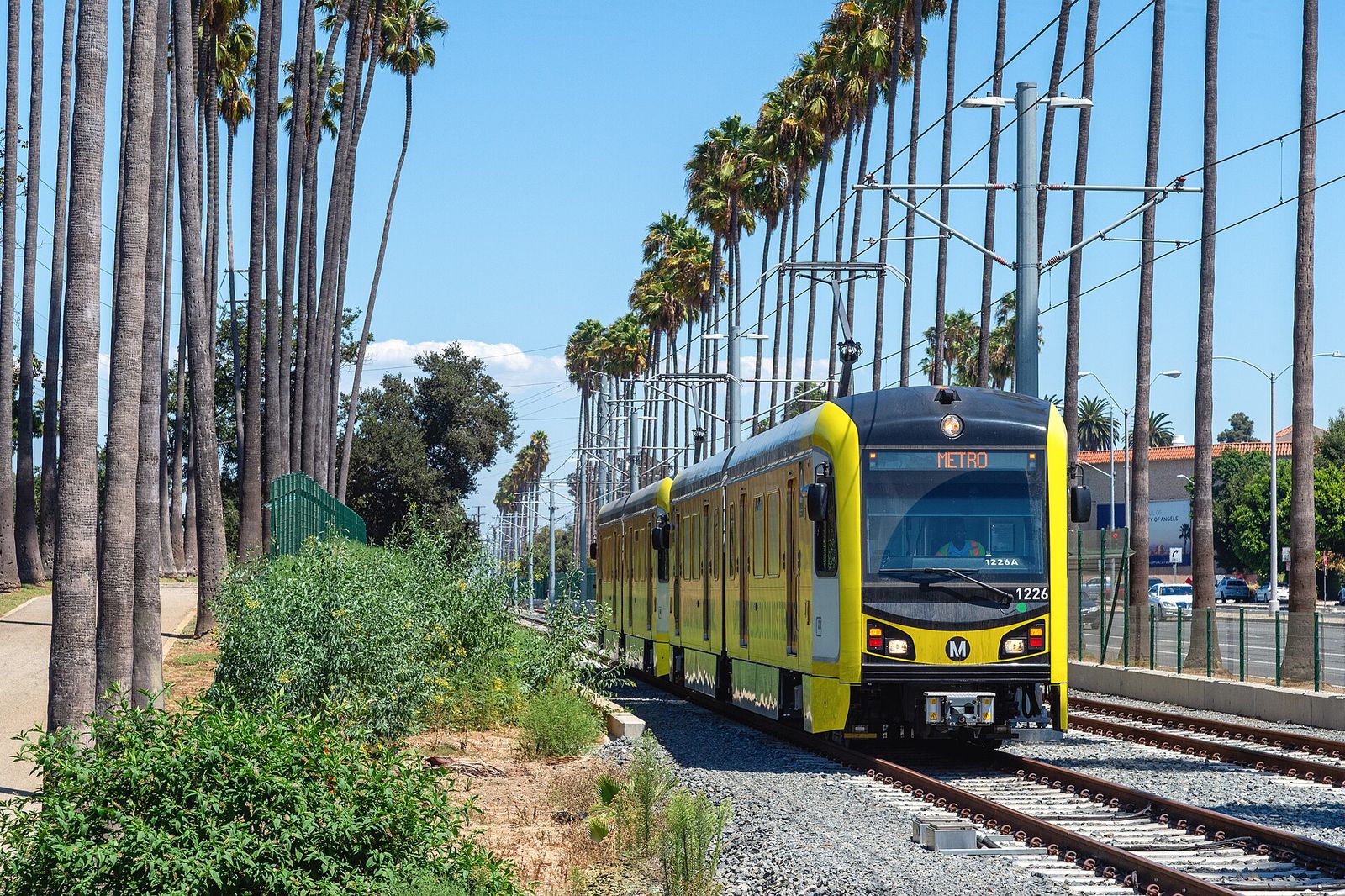
Los Angeles Unified students went back to campus on Wednesday, August 12, per LAist. In a county where Metro counted more than 350,000 students registered for a free transit pass the last time it published a number, a great many small plastic cards went back into circulation that week — some newly issued, some left in a backpack since June. The pass is real and it costs nothing. The rules that switch it on are short, specific, and mostly live in a FAQ no parent has ever opened on a Tuesday night.
So here is the whole thing. We read Metro's GoPass page, its student and college fare pages, its 2023 and 2024 program announcements, and the data file behind its school-lookup tool, and put it in the order a family actually meets it: is your school in, how do you switch the card on, why did it beep, and what do you do if the answer to the first question is no.
First: is your school actually in the program?
This is the question everything else depends on, and it is not answered by "we're a public school." GoPass is a program schools and districts opt into. Metro's 2023 board announcement is explicit that funding the program "relies on cost-sharing agreements with participating schools and school districts" alongside Metro's own money — the language is in the release. A district that has not signed is a district whose students do not get the card.
Metro publishes a lookup — the "Check Your School" button on its GoPass page, which opens the search tool at mygopass.metro.net. Type a school name, get a yes or a no. It is the right tool and you should use it, because it is the only source that is current for your campus. It also only answers one school at a time, which is why nobody has ever seen the shape of the thing.
We pulled the file that powers it. The lookup loads a single JSON list of every school and district Metro tracks, and on August 13, 2026 that file held 3,485 entries — 1,675 flagged as participating and 1,810 flagged as not. A note on the method, because it matters: 163 of those entries are district-level rows rather than individual campuses (71 participating, 92 not), so at the campus level the count is roughly 1,604 in and 1,718 out. Metro does not publish a revision date on the file, and participation changes as districts sign, so treat our count as a snapshot of that morning and the lookup itself as the authority on your own school.
The biggest single block inside the program is Los Angeles Unified, with 802 participating campuses in the file, followed by Long Beach Unified at 89 and LAUSD's own adult and vocational schools at 86. All nine Los Angeles Community College District colleges are in — City, East LA, Harbor, Mission, Pierce, Southwest, Trade Tech, Valley and West LA — as are Santa Monica College, Long Beach City College, Cerritos, Glendale Community College, Mt. San Antonio and Antelope Valley College. Pasadena City College is the conspicuous community-college absence.
The six cities whose buses take a pass their schools don't hand out
Here is the thing the one-school-at-a-time lookup hides. Nineteen other systems honor GoPass alongside Metro. Six of them serve cities whose school districts, in Metro's own file, are marked as not participating.
Burbank Bus takes the pass; Burbank Unified is out. Glendale Beeline takes it; Glendale Unified is out — though Glendale Community College, in the same city, is in. Torrance Transit takes it; Torrance Unified is out. Beach Cities Transit — run by the Transit Division of the City of Redondo Beach — takes it, while Redondo Beach Unified, Manhattan Beach Unified and Hermosa Beach City Elementary are all out. Lawndale Beat takes it; Lawndale Elementary is out. Norwalk Transit takes it; Norwalk-La Mirada Unified is out.
Also outside the program in that file: Beverly Hills, Compton, Downey, Alhambra, Arcadia, Azusa, Baldwin Park, Claremont, Covina-Valley, Duarte, El Segundo, Hacienda La Puente, La Cañada, Las Virgenes, Lennox, Monrovia, Palos Verdes Peninsula, Rowland, San Marino, South Pasadena, Temple City, Walnut Valley and Wiseburn, plus the Santa Clarita Valley districts — Castaic, Newhall, Saugus, Sulphur Springs and William S. Hart Union High. Charter schools split hard: 81 campuses filed under Metro's independent-charter grouping are in and 869 are out, which is the largest concentration of non-participating entries in the file by a wide margin.
Metro's file records participation, not reasons, and we are not going to guess at one. What it is fair to say is that the map of who can use this thing is not the map most families assume, and it does not follow city lines.
The three steps, and the fuse inside them
If your school is in, Metro's own instructions are three steps. They look trivial. Two of them are timers.
1. Get the card from the school. Not from Metro, not from a vending machine, not online — the physical GoPass TAP card is handed out by the participating campus.
2. Register it, then wait an hour. Registration happens at taptogo.net/gopass or by phone at 866.TAPTOGO. Metro's instruction is to "wait 1 hour for your registration to be processed" before attempting to ride. A card tapped in the first hour is a card that fails.
3. Tap it within 14 days. This is the step nobody hears about, and it is the one that strands cards. After registering, the student must tap the card "on a rail gate, rail validator, bus farebox, bus mobile validator, or at any TAP Vending Machine within 14 days to complete activation." Miss the window and the registration does not simply sit there waiting — Metro's own FAQ says you "will need to request a new activation code from your school office." During the school year that is a trip to the front office. In late December it is a locked building.
You're wondering whether a tap at a vending machine counts even if the student isn't traveling. Metro lists the TAP Vending Machine alongside the fareboxes and gates, so yes — the point is to make the card touch the system inside the two weeks, not to take a trip.
Why the card beeped wrong
Metro publishes the three most common failures, and they are worth reading in the order it lists them, because the first one is a September problem specifically.
The activation code was from last year. "Prior school year codes will not work," Metro's FAQ says, flatly. The 2026-27 pass is Year 6 and needs a Year 6 code. A code that came home in a folder last spring registers nothing.
You rode inside the first hour. See step 2.
You blew the 14 days. See step 3. The fix is a new code from the school office; TAP customer care cannot conjure one.
Two passes are valid right now, and one of them dies September 30
This is the single most useful date on this page. Metro is currently running two pass years at once:
The 2025-26 GoPass is valid through September 30, 2026. Last year's card, if it was properly activated, still works until that date, and then not at all.
The 2026-27 (Year 6) GoPass is valid July 1, 2026 through September 30, 2027, a fifteen-month window Metro describes as an "extended three-month bridge period added at no extra cost to districts." Both facts are on Metro's GoPass page.
The practical reading: a student holding a working last-year card has no urgent problem and a hard deadline. Sort out the new card before October, not on the morning it stops working, and do it while the school office is open and staffed — which, in a district that started August 12, it is.
Where it works, and the one place it doesn't
An active GoPass covers Metro bus and rail plus, in Metro's own list, AVTA, Beach Cities Transit, Burbank Bus, City of Commerce Transit, Culver CityBus, Foothill Transit, Glendale Beeline, Glendora Transit, GTrans, LADOT Dash, LA County Shuttles, Lawndale Beat, Long Beach Transit, Lynwood Trolley, Montebello Bus, Norwalk Transit, Pasadena Transit, Santa Monica Big Blue Bus and Torrance Transit. Nineteen entries, unlimited rides, no fare.
The exclusion is a single line and it is easy to miss: the pass "is not valid on Commuter Express services." Commuter Express is LADOT's long-haul commuter network, and it is a different thing from the LADOT DASH buses on the list above — DASH is covered, Commuter Express is not.
Do not tap the credit card
Metro rolled out contactless credit and debit payment across its system, and it has produced a specific, expensive confusion for GoPass families. Metro answers it directly: "GoPass riders should continue to use their GoPass TAP card to receive free, unlimited rides. Using a credit or debit card to pay fare will result in fare being charged to that credit or debit card."
The free ride attaches to the card, not to the student. A teenager who taps a phone wallet out of habit is paying full adult fare — $1.75 a ride, capped at $5 a day and $18 in seven days on Metro's posted fare schedule — while carrying a pass that would have cost nothing. If a card gets forgotten often, the fix is the virtual version: Metro supports a GoPass card on a phone, including in Apple Wallet, through the GoPass Portal.
If the card is lost
Do this now, before it happens: photograph the back of the card. That is Metro's own advice, and it is on the GoPass page for a reason — the replacement path runs through the school, not the transit agency. Contact school administration for a new card, then reactivate at taptogo.net/gopass with a current-year code. Metro's FAQ adds the part that saves a wasted phone call: "TAP Customer Care can assist with system registration but cannot issue replacement cards directly."
Los Angeles Unified families with a question about GoPass or Schoology have a dedicated line, which Metro publishes on the same page: the GoPass LAUSD Hotline, 213-443-1300.
If your school isn't in the program
There is a second-best route, and it has a lead time, which is why it belongs weeks ahead of October rather than in October.
A K-12 student whose school does not have GoPass can apply for a Reduced Fare TAP card. With one, Metro's posted student rates are a 75-cent base fare, a $2.50 daily cap and a $6 cap across seven days — after which, as with every capped fare on the system, the rides are free. Applications go in at a Metro Customer Center in person, or online with a photo and documents. The line that decides your timing is Metro's own: student cards "will be mailed to eligible applicants within 20 business days after verification has been completed." Twenty business days is four school weeks. Apply in the first week of the term, not the first week you need it.
College and vocational students without GoPass sit one rung up: a $1 base fare, with the same $2.50 daily and $6 seven-day caps.
Two more things on that page are worth knowing. Households under the income thresholds can stack the LIFE program, which Metro describes as 20 free rides a month for qualifying county residents. And Metro states that in 2027, reduced-fare participants will be able to tap a credit or debit card and receive the reduced rate — which is exactly the confusion described three sections up, resolved a year from now for one group of riders and not for GoPass holders.
What the pass is worth, in dollars
We ran the arithmetic on Metro's posted caps, and the assumptions are all stated. A K-12 student who already holds a Reduced Fare TAP card never pays more than $6 in any seven days, which is about $312 over a year of unbroken riding — 52 seven-day periods at the cap. That is the ceiling, not the average; a student who rides only on school days will land well under it, because the daily cap of $2.50 only binds on days with three or more taps.
Metro's own figure is older and measures something different. Its April 27, 2023 board release put typical family savings at $288 a year per K-12 student and $516 for a community college student, measured against the reduced-fare student monthly passes Metro sold at the time. Those monthly passes are gone — the system moved to fare capping in the interim — so read those numbers as the program's own historical accounting rather than today's comparison.
The other number in that release is the one that explains why the program exists: Metro cites a study finding that students who receive a free transit pass have "up to 27 percent higher graduation rates." It is Metro's characterization of research Metro participated in, and we are passing it along as that and nothing more.
How this became permanent
Two dates, for anyone deciding how much to trust a program before building a school year around it.
GoPass launched as a pilot in October 2021, funded initially with one-time federal money from the 2021 American Rescue Plan Act, per Metro's own account. It was extended year to year after that — the April 2023 board action put $20 million behind a single additional fiscal year.
On April 25, 2024, the Metro board approved a motion by Mayor Karen Bass, then the board's chair, to make the pilot permanent. The mayor's office announcement put participation at the time at "over 350,000 registered students from 1,570 participating schools in 115 participating school districts," a category that includes public districts, charter networks, community colleges, vocational schools and private schools. Those are April 2024 figures and we have not found a newer official count; the 1,675 participating entries we counted in Metro's lookup file this morning are the closest current proxy we can offer, and they are counted a different way.
The short version, for the front-office visit
Ask for a Year 6 card and a Year 6 activation code. Register it that night. Wait an hour. Tap it within fourteen days, anywhere — a farebox, a gate, a vending machine. Photograph the back before it leaves the kitchen table. Use the card, not the phone's credit card, at the reader. And if the school says it doesn't have GoPass, start the Reduced Fare application right away, because the card arrives twenty business days after they finish checking it.
Every fare, date, rule and phone number on this page was checked against the source linked beside it on August 13, 2026. The school counts come from the JSON file behind Metro's own GoPass lookup at mygopass.metro.net, downloaded and counted the same morning; Metro publishes no revision date on that file, and participation changes as districts join, so the lookup itself governs your own school. This page will be re-verified and updated in place.
Comments 0