 ™
™Jury Duty in L.A.: What the Summons Actually Requires, and the Friday Deadline That Closes Your Options
Five on-call days, $15 a day starting on day two, and 34 cents a mile both ways — rates the Legislature set for service on and after July 1, 2000. Here is the sequence, the seven hardship grounds the rules put in writing, the free ride most jurors never claim, and the one call the court says it will never make.
The envelope is thin, the type is small, and the number that decides your next two weeks is not the one printed largest. It is a deadline: 4:30 p.m. on the Friday before your service week. The court's own notice to summoned jurors puts it in a single sentence — "You will not be able to process a postponement, transfer or excuse request after 4:30 PM on the Friday before your service week" — and everything else in the envelope is negotiable up until that minute and considerably harder after it. You are wondering whether you can just deal with it when the week arrives. You can deal with the week. You cannot move it.
So this is the sequence, in the order it actually happens, with the rule or the statute that sets each step. We read the court's summons instructions and its juror notice, the fee statute, and the five Judicial Council rules that govern how long jury service lasts, when it can be deferred and when it can be excused. Almost nothing below is discretionary, which is good news: a written rule is something you can quote back.
Step 1: Register first, even if you intend to ask out of it
This is the step people skip, and skipping it is what turns a routine excuse into a failure to appear. The court's summons instruction sheet is blunt about the order of operations: complete Step 1 (questions 1 through 12) and Step 2 of Section A, sign Section G, then call (213) 972-0970 or go to the portal at lacourt.org/jury and register — and "Even if you are requesting a transfer, postponement, or do not qualify to serve, you MUST register first." You will need the Juror Identification Number and the Personal Identification Number printed on the form, so do not recycle the paper before you have them.
Orientation is part of registration, not a thing that happens at the courthouse. The juror notice states that orientation "is required by law" before you report, and that it is available through the same portal or phone menu, or by reading the sheet printed on the back of the notice itself.
Step 2: "Five days" means on call, not five days in a courthouse
What the summons says: you are on call for five consecutive days and "must be available to report for service any day during the week," checking your reporting instructions daily by phone or online.
What it means: most of those days you will call, be told not to come, and go to work. The obligation ends the moment any one of five things happens. California Rules of Court rule 2.1002(c) lists them, and the list is the whole term of service: you served on one trial until discharged; you were sent to a courtroom for jury selection and stayed through the end of selection or until the jury commissioner excused you; you came to court but were never sent to a courtroom before the day ended; you served one day on call; or you "served no more than five court days on telephone standby." That last clause is why a week of phone calls with no courthouse visit is a completed obligation and not a reprieve.
If you are selected, the calendar stops belonging to you: the notice states you are required to serve for the length of the trial, and that on days the trial is not in session you receive no jury pay and no credit — "you should report to work as normal."
The three that matter
Register. Everything else in this guide assumes the court knows you exist.
4:30 p.m. Friday. Postponement, transfer and excuse all die at the same minute, the Friday before the week starts.
Call in daily. The reporting instruction changes by the day, and "I checked Monday" is not a defense on Wednesday.
Step 3: Postponing is the easy ask, and the rules prefer it
Most people who want out want out of a date, not out of jury duty, and the rules are built for exactly that. Rule 2.1004(a) says the jury commissioner "should accommodate a prospective juror's schedule by granting a prospective juror's request for a one-time deferral of jury service" — and that if the request is made in writing under penalty of perjury, or through the court's electronic system, the commissioner "should not require the prospective juror to appear at court to make the request in person." A postponement is a form, not an audience.
The preference is stated again where excuses are governed. Rule 2.1008(b) sets out the principles the commissioner applies, and two of them decide most requests: "Deferring jury service is preferred to excusing a prospective juror for a temporary or marginal hardship," and "Inconvenience to a prospective juror or an employer is not an adequate reason to be excused from jury duty, although it may be considered a ground for deferral." Read that second one twice before you write anything, because it tells you which word to use. A busy month is a postponement. It is not an excuse, and asking for the wrong one is how people end up with neither.
Two special cases sit in the same part of the rules. A breastfeeding mother may request that service be deferred for up to a year and may renew the request as long as she is breastfeeding; under rule 2.1006, if the request is in writing under penalty of perjury, the commissioner "must grant it" without requiring her to come to court. And under rule 2.1004(b), peace officers as defined by Penal Code section 830.5 must be given scheduling accommodations on application.
Step 4: The excuses the rules actually grant
An excuse for undue hardship has to be in writing, and rule 2.1008(c) requires two things in it: the facts of the hardship, and "a statement why the circumstances constituting the undue hardship cannot be avoided by deferring the prospective juror's service." That second sentence is the one most requests are missing.
Rule 2.1008(d) then lists the grounds. There are seven, and they are narrower and more specific than the folklore:
No transportation. The juror "has no reasonably available means of public or private transportation to the court."
Excessive distance. Unless a statute or local rule says otherwise, excessive means "reasonable travel time that exceeds one-and-one-half hours from the prospective juror's home to the court." In a county this size that is a real line, not a rhetorical one — and it is measured from your home to that courthouse, which is also the argument for a transfer.
Extreme financial burden. Not merely unpaid time. The rule directs the commissioner to weigh the sources of household income, "the availability and extent of income reimbursement," the expected length of service, and whether serving would compromise your ability to support yourself or your dependents.
Risk to property. An undue risk of material injury to or destruction of property in your care, where alternative arrangements are not feasible.
Physical or mental disability or impairment that would expose you to undue risk of harm. The rule allows the court to require verification — except, in plain terms, for anyone 70 or older: "unless the person is aged 70 years or older, the prospective juror may be required to furnish verification."
Public health and safety. Your services are immediately needed to protect public health and safety and cannot be covered without substantially reducing essential public services.
Care of another person. Actual and necessary care of a sick, aged or infirm dependent, or of a child who needs your personal attention, with no comparable substitute care available or practical.
Then the one that is not a hardship at all, and is the most commonly forgotten: under rule 2.1008(e), a prospective juror who served on a grand or trial jury — or was summoned and appeared for jury service in any state or federal court — during the previous 12 months "must be excused from service on request." Not may. Must, on request. Federal service counts, and so does appearing without being seated. The commissioner may set a longer period of repose, and Los Angeles jurors receive a verification of service at the end showing the dates they appeared, which is the document that proves the 12 months.
A permanent medical excuse is its own rule, 2.1009, and it turns on a defined standard worth knowing before a doctor writes anything: "capable of performing jury service" means being able to pay attention to the proceedings "for up to six hours per day, with a lunch break and short breaks in the morning and afternoon, with or without disability-related accommodations."
Step 5: The money, and why it is $15
The juror notice states the terms plainly: beginning on the second day of service and each day after, jurors receive "a stipend of $15.00 per day, plus $.34 per mile, both ways, for each mile traveled in attending court." The first day pays nothing. Government employees who are paid their regular salary while serving get the mileage only.
Those are not Los Angeles's numbers to set. Code of Civil Procedure section 215 fixes the fee statewide at "fifteen dollars ($15) a day for each day's attendance as a juror after the first day," on and after July 1, 2000, with mileage of 34 cents "for each mile actually traveled in attending and returning from court as a juror after the first day." The rate is the same one a juror was paid in the summer of 2000, and we ran the arithmetic against today's floor: at California's minimum wage of $16.90 an hour, in effect since January 1, 2026, a full day of jury service pays less than one hour of the lowest-paid work the state allows.
California did try the obvious experiment, and not here. Under AB 1981, the Judicial Council ran a two-year pilot that raised the per diem "from $15 to $100 per day" and mileage "from $0.34 to $0.67 per mile roundtrip" in seven counties beginning September 1, 2024: Alameda, El Dorado, Fresno, Imperial, Monterey, San Bernardino and Shasta. Los Angeles County was not among them. San Bernardino was, which meant that for nine months a juror on the second day of service was paid $100 on one side of the county line and $15 on the other.
It ended early. The Superior Court of Alameda County posted on June 5, 2025 that the Judicial Council had notified the courts the increased rates would no longer be funded, asked each court to suspend the pilot and return to "$15 a day and $0.34 per mile for roundtrip travel," and described the program as paused indefinitely after the governor's May budget revision cut the money. LAist reported that the cut saved the state roughly $27.5 million; Alameda County Chief Public Defender Brendon Woods told LAist that against the nearly $14 billion the state spends to incarcerate people, "it's kind of ridiculous that this small amount was being cut." As of September 7, 2026, the Judicial Council's program page still says the pilot's data was collected "for a legislative report to be delivered by September 1, 2026" — a date that has passed — and gives no sign of whether the report went in, on a two-year experiment that was switched off nine months in.
One more thing about the money, from the Judicial Council's own juror FAQ: attendance fees are treated by the IRS as other income, a Form 1099-MISC goes to any juror who earns $600 or more in a year in fees, and mileage reimbursement is not reportable. At $15 a day, reaching that threshold takes 40 paid days of service, which is why almost no Los Angeles juror will ever see one.
Step 6: Parking, and the free ride most jurors never claim
Parking is free, conditionally and in one place: the notice says your badge or summons is required to receive free parking, "which is available only at the lot designated on your summons form." Not the closest lot. The designated one.
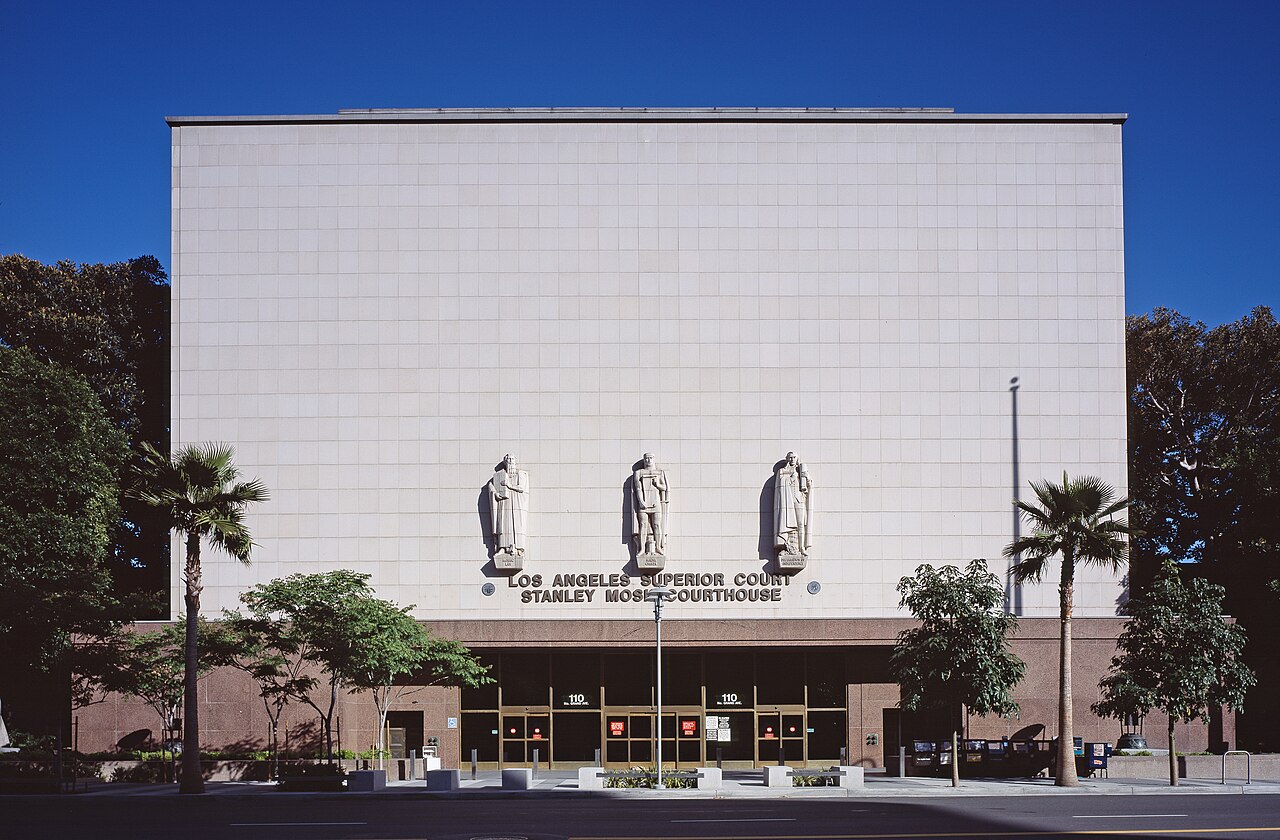
The transit option is the part almost nobody uses, and it is written into the fee statute. Section 215(d) requires that summoned jurors "be provided with access to existing public transit services at no cost," by one of two methods the court chooses: a partnership with the transit operator, or reimbursement "up to a daily maximum of twelve dollars ($12)." Los Angeles runs the first kind. When the court expanded its juror transportation program in November 2021, Presiding Judge Eric C. Taylor announced that jurors at 15 courthouses — including Stanley Mosk, the Foltz Criminal Justice Center, Van Nuys, Long Beach, Compton, Pasadena and Santa Monica — could take a free Metro TAP card or Metrolink tickets instead of mileage, as the Santa Monica Daily Press reported at the time. Two conditions came with it: you waive the 34-cent mileage reimbursement, and it applies when you are ordered back for a second or subsequent day.
You are wondering why you have never heard of it. So did we: the notice mailed with summonses covers the mileage rate and the parking lot and says nothing about a TAP card. Do the arithmetic before you choose — a 12-mile drive each way pays $8.16 a day in mileage, against whatever your own week of rides would cost — and ask in the jury room, because the program is the court's to run and its terms are the court's to change.
Step 7: Your job is protected. Your paycheck is not.
Two different questions, two different answers, and people routinely merge them into one wrong one. Your employer is not required to pay you for jury service. Your employer is also not permitted to punish you for it: under Labor Code section 230, an employer "shall not discharge or in any manner discriminate against an employee for taking time off to serve as required by law on an inquest jury or trial jury," provided the employee gives reasonable notice. The remedy, in the same section, is reinstatement and reimbursement for lost wages and work benefits.
"Reasonable notice" is the whole condition, and it is the reason the court's notice tells jurors to inform their employer as soon as the summons arrives rather than the night before. Tell them in writing. The verification of service the court issues at the end covers the dates you actually appeared.
Step 8: What happens if you throw the summons away
Less than the rumor, and more than nothing. Code of Civil Procedure section 209 sets out a sequence rather than a punishment: a prospective juror who fails to attend or respond gets a second summons, issued no earlier than 90 days after the first failure, then a failure-to-appear notice, then an order to show cause. Only after notice and an opportunity to be heard may the court impose money sanctions, and what the statute sets is a ceiling rather than a price: the sanctions "may not exceed" $250 for a first violation, $750 for a second, and $1,500 for a third and any after that. Contempt, "punishable by fine, incarceration, or both," remains available.
And the clause that answers the question everyone actually asks: paying the sanction "does not relieve the person of his or her obligation to perform jury duty." The fine is not a fee for opting out. It is a fine, and the summons is still there afterward.
Step 9: The call the court says it will never make
Because the sanctions above are real, the scam built on them is convincing. The court's standing warning to the public, signed by Executive Officer and Clerk Sherri R. Carter, describes the pattern: communications claiming a pending case or arrest warrant for failing to appear, demanding money or personal information, sometimes from people claiming to represent law enforcement.
Three sentences from that notice are worth keeping. "Court and jury employees will never contact potential jurors by telephone to request any personal or financial information over the telephone." The court does make automated reminder calls about a court appearance or jury service, but if it does, "the caller will not demand any personal information." And the one that ends the conversation: "The court does not issue warrants for failing to attending jury service" — the typo is the court's, the policy is not. Questions about your service go to the Juror Services Division at (213) 972-0970; the court's separate collection vendor for delinquent court-ordered debt is named in the notice, which is exactly why a caller who refuses to be checked against it should be hung up on.
Bring these
The completed summons form — the notice asks you to bring it to the courthouse, and it is also what gets you into the designated parking lot, along with your juror badge.
Something to do, and nothing to photograph with. Taking pictures inside the jury assembly room, or anywhere else inside the courthouse, is prohibited.
Business casual. The notice requires dress that "observes the dignity of the courtroom," and rules out shorts, tank tops, flip flops, bare midriffs and clothing with inappropriate images or language.
Your employer's notice, already sent. Labor Code section 230 protects an employee who gave reasonable notice, and reasonable notice is easier to prove when it has a date on it.
The part worth remembering
Nearly every hard edge in this process has a written rule behind it, and the rules lean toward the juror more than the envelope suggests: a one-time postponement should be granted, without an appearance; twelve months of repose must be granted on request; travel time over ninety minutes is a stated ground; a caregiver's obligation is a stated ground; and the court that summoned you owes you a free transit ride or twelve dollars a day toward one. What the rules do not do is chase you. Every one of those protections has to be claimed, in writing, before 4:30 p.m. on the Friday before your week.
Fees, rules, deadlines and procedures above were checked on August 17, 2026 against the Superior Court of Los Angeles County's own juror notice and summons instructions, the California Code of Civil Procedure, the Judicial Council's Title 2 Rules of Court, and the Judicial Council's AB 1981 pilot materials. The juror transportation program described in Step 6 was announced in November 2021 and its terms are the court's to change; confirm at the jury room. The linked sources win over this page, which is re-verified and updated in place at this address.
Comments 0