 ™
™L.A. Now Charges $441 to Register a Short-Term Rental, and Its FAQ Says $89
The city caps home-sharing at 120 days a year, bars rent-stabilized units, and charges $3.30 for every night booked.
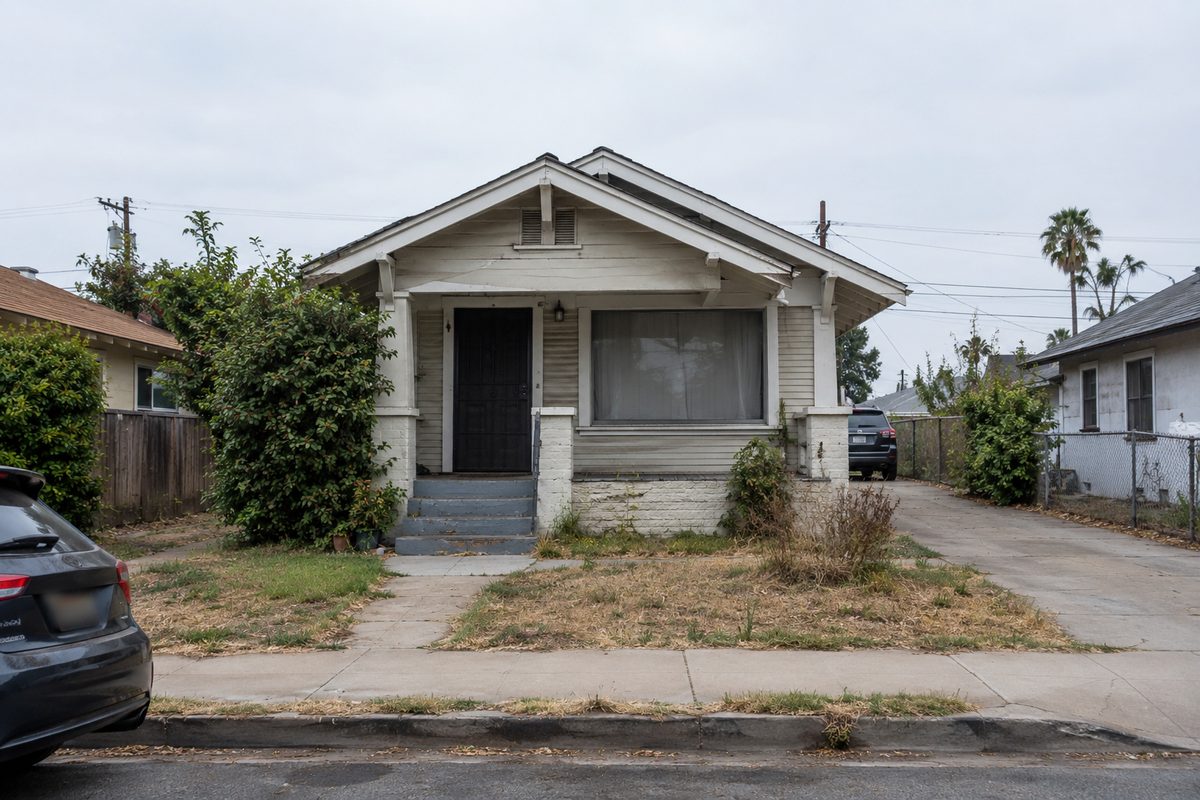
You're wondering whether the $89 fee you read about is still the price. It isn't. Registering a short-term rental in the City of Los Angeles costs $441, the figure printed at the “Home-Sharing Application or Renewal” line of Ordinance No. 188796, the citywide planning-fee update whose own stamp gives an effective date of February 23. The Home-Sharing background-and-FAQ sheet the Planning Department still has posted says $89, $850 and $5,660. All three of those numbers are out of date.
The fee is the easy part. The harder part is which homes can't be registered at all, for reasons that have nothing to do with the host. Those rules sit in the Home-Sharing Administrative Guidelines, 33 pages of them, in a second edition the Planning Department issued July 14 and revised and made effective September 28. What follows is the eligibility half of that document, plus the fee tables from the adopted ordinance, as questions you can answer about your own address.
Answer them in order. Each of the first eight can end the matter on its own, and each one names the rule it comes from. Do this before you pay, because the $441 is non-refundable even when the city's own portal has already told you that you look ineligible.
Question 1: Do you live there more than six months a year?
The guidelines define Primary Residence as “the sole residence where the Host lives for more than six months of the calendar year and from which the Host conducts Home-Sharing,” at a physical address with a Certificate of Occupancy authorizing residential use. Sole is the operative word. The whole ordinance exists to keep short-term rentals attached to somebody's actual home, and the city says so in its statement of intent: it means to prevent “the large-scale conversion” of long-term housing into short-term rentals.
If no: stop. A second home, an investment condo, the unit of a duplex you own but don't sleep in — none of them can be registered, in any configuration, at any price. The department's FAQ works the duplex example through for you: if you own a duplex and live in one unit, that unit is your primary residence and the second one isn't, “even if they own it.”
If yes: go to question 2. And note the arithmetic that follows from “sole”: each primary residence gets one registration, no person may hold more than one at a time anywhere in the city, registrations can't be transferred or assigned, and two people who share the same primary residence can't each hold one. Three roommates on one lease are one registration, or none.
Question 2: Is the unit rent-stabilized, or under an affordability covenant?
Then it's out. The guidelines bar any unit subject to Chapter 15 of the municipal code — the Rent Stabilization Ordinance — and any unit subject to affordable housing covenants or income restrictions under city, state or federal law, as determined by the Los Angeles Housing Department. There's a second bar beside it: a home in a building converted from rent-stabilized multi-family units to single-family use can't be registered until five years after the conversion date.
You can check the first part yourself. The city's Zone Information and Map Access System — ZIMAS, at zimas.lacity.org, which is where the guidelines send applicants — carries RSO status under its “Housing” tab. The catch is that ZIMAS answers for the property and not always for the individual unit, and the guidelines say applicants “may be required to obtain” a Letter of Determination from the Housing Department to settle it. That letter is a separate errand at a separate department, and the guidelines don't say how long it takes.
If the Housing tab is clear: go to question 3.
Question 3: Is it an accessory dwelling unit?
This one is worth reading in both languages, because the date in it is doing more work than it looks like.
What the rule says: an accessory dwelling unit whose complete building permit application and paid plan check fees went in on or after January 1, 2017, “can only be registered for Home-Sharing if it has a Certificate of Occupancy for the ADU issued by” the Department of Building and Safety “and is the Person's Primary Residence.”
What it means: you can short-term rent a newer backyard unit only if the backyard unit is the home you live in. Live in the front house, and a unit permitted in 2017 or later is off the table no matter how good its paperwork is — the front house is your primary residence and the ADU isn't, and the rule follows the residence. The date is the trap. The same application filed in December 2016 falls under a different rule than one filed in January 2017.
An ADU that hasn't been issued a Certificate of Occupancy can't be registered at all, whatever its permit date. An older ADU falls under the general rule for accessory residential space, which the guidelines say may be eligible either as its own primary residence or as a portion of the main unit, provided the main unit is the applicant's primary residence.
Question 4: Is the space approved for someone to sleep in?
Registration covers a bedroom or a whole unit inside a structure the Department of Building and Safety approved for residential use. The guidelines list what doesn't count, and the list is specific: an attic, a garage, a recreation room, a storage room, a storage shed, a temporary structure, a trailer, a vehicle. The prohibitions section adds a tent by name.
A garage, pool house, cabana or workshop gets in only if it “has been legally converted and approved for residential use.” Legally is doing the work there. A conversion somebody did in 1998 without pulling a permit is not a legal conversion, and the listing is a public document with an address on it.
Question 5: Does your zone allow housing at all?
Home-sharing is permitted only in zones where residential use is permitted by right. Residential uses are generally prohibited, the guidelines note, in M for manufacturing, OS for open space and PF for public facility. If you live in a converted downtown or Arts District industrial building, this question is not a formality.
ZIMAS carries the zone under “Planning and Zoning.” The guidelines add a warning worth taking at face value: because ZIMAS “may not reflect the most up-to-date information,” applicants are encouraged to confirm the classification with the department's public counter. A free phone call beats a non-refundable $441.
Question 6: If you rent, will your landlord sign the city's form?
Tenants can register — the guidelines define a Tenant host and lay out their route — but not on their own. An applicant who isn't the property owner has to submit a Property Owner Authorization to Conduct Home-Sharing form, and the guidelines require “the exact form provided by the Department,” not a letter, not an email, not a lease clause that seems to cover it. The owner is whoever appears in Los Angeles County Assessor records, which is not always the person who collects the rent.
If the answer is no, that's the end of it, and there is nobody to appeal to. The guidelines say it plainly: “The City does not mediate disputes between Property Owners and Tenants related to Home-Sharing.”
Question 7: Is there an open citation on you, the unit or the property?
An open or pending citation blocks the application, and the September 28 revision touched this rule specifically. Section III.1.c.iv.1 reaches a citation from “any enforcement agency of the City, including but not limited to” the Housing Department, Building and Safety, the LAPD, the Fire Department and the Bureau of Street Services. The revision history at the front of the document says that section was edited to clarify that a host or property “shall not be subject to an open or pending citation from any City enforcement agency, not limited to the agencies explicitly named in this section.” The named five are examples, in other words, not the list.
It doesn't have to be your citation. A citation on the dwelling unit or the property counts, which means a landlord's unresolved Building and Safety matter can sink a tenant's application. If an application gets flagged, you can upload city records showing the matter is fully resolved and the fines paid — the records have to say so clearly, and the department checks with the issuing agency.
Question 8: Is anyone already registered at your address?
One registration per primary residence, and the city publishes a Home-Sharing Records Portal so you can look before you file. A pending application at the address counts the same as an approved one, and the guidelines add that units owned or rented by someone holding other active registrations or applications may be reviewed by the department. If the portal shows your address already taken, sort that out before you pay.
Question 9: Do you have a California license and two of the city's proofs?
This is the part to assemble on a table before you open the portal. The identification requirement is narrow: a valid California driver license or a valid California identification card, issued by the DMV, showing your true full name and the home-sharing address. An out-of-state license doesn't satisfy it, whatever else you can prove.
Then two primary-residence documents, from this list and only this list:
• A current Los Angeles County property tax bill for the address, showing a homeowners' exemption, with your name and the address as both property and mailing address.
• An LADWP electricity bill for the address, issued within the last six months, with your name and the address as the property, service and mailing address, and showing the mailing date, coverage period and due date.
• A current California vehicle registration certificate for a personal vehicle, with the address as the mailing address.
• A current voter registration card, or a stamped voter registration abstract from the county Registrar-Recorder issued within the last six months, with the address as both the registered-voter address and the mailing address.
• An IRS account transcript or filed return transcript issued within the last six months, with the address as the mailing address.
• One or two government assistance program notices or statements issued within the last six months, showing benefits received. The guidelines name the qualifying programs: Medi-Cal, Medicare, CalFresh, the California Food Assistance Program, WIC, Social Security, State Supplementary Payment, SSI, Veterans Benefits Administration, the Cash Assistance Program for Immigrants, CalWORKs and EDD.
• A jury summons from Los Angeles Superior Court or the United States District Court, issued within the last six months, with the address as the mailing address.
The trap in that list is the assistance-program line, and it's worth reading twice if those are the documents you have: “Only one notice or statement per program will be acceptable.” Two Medi-Cal letters are one document. A Medi-Cal letter and a CalFresh letter are two.
You can redact everything on these documents that isn't needed to satisfy the requirement. The guidelines say so, in those words, which is the rare bureaucratic sentence that gives something back.
Question 10: Is 120 nights enough?
A regular registration buys 120 days of home-sharing in a calendar year, January 1 to December 31. Past that you need an Extended Home-Sharing registration, and it isn't a box you check at signup. You need a current, valid regular registration you've held for at least six months, or proof on the city's own records worksheet that you've booked at least 60 days during a valid registration period. No suspension or revocation in the past two years. No more than one citation in the past three years — two or more and your application goes to discretionary review instead. And the city mails a notice of your extended application, with the complaint-line information in it, to adjacent and abutting property owners and occupants, at your expense, as the last step before approval.
Where you land
You qualify if the unit is the one home you live in more than six months a year, it isn't rent-stabilized or covenant-restricted, it's in a zone that allows housing, it's a space approved for people to sleep in, nobody has an open citation on it, no one else is registered there, your landlord has signed the city's form if you rent, and you're holding a California license and two of the documents above.
You don't qualify if it's a second property, a rent-stabilized unit, a post-2017 ADU you don't live in, an unconverted garage or shed, or a unit in a building converted out of rent stabilization inside the last five years. None of those are fixable with a better application.
You're in the gray zone in three places, and we'd rather name them than smooth them over. First, unit-level rent-stabilization status: ZIMAS can read clear for a property whose individual unit isn't, and only a Housing Department Letter of Determination settles that. Second, guest counts. The guidelines' definitions section caps sleeping at “a maximum of two persons (excluding children) per Habitable Room” and expressly counts an open kitchen that forms part of another room as a habitable room; the prohibitions section of the same document writes the same cap as two overnight guests per habitable room “not including kitchens.” Those two sentences don't agree about a studio with an open kitchen, and the number you declare at registration is the number the city holds you to. Third, an old conversion: “legally converted and approved for residential use” is a records question about work done decades ago, and the records, not the room, decide it.
What it costs
The fee table now in the code, at Section 19.01 T and its counterpart at Section 15.5.1, reads: $441 for a home-sharing application or renewal; $883 for an extended administrative clearance and $883 again to renew one; $12,798 for an extended application that needs discretionary review. Every dollar of it goes to the Short-Term Rental Enforcement Trust, which is the fund the city polices this program out of. One more figure sits further down the same ordinance, among the nuisance-abatement proceedings: a $39,719 base fee for a Home-Sharing Administrative Hearing, the proceeding through which a registration can be modified, discontinued or revoked.
Then the per-night fee, which is separate from the registration fee and separate again from tax. It stands at $3.30 a night, a figure City Planning states in its own May 26 fee report to the Council. If you list exclusively on a platform that has signed a Platform Agreement with the city, the platform collects and remits it for you. If you don't, you owe the city a monthly report through the portal with a count of nights hosted — and the guidelines require that report “even if that number is zero.”
Then the Transient Occupancy Tax. The Office of Finance puts the city rate at 14%, applicable to short-term rentals of any kind, with a registration certificate required within 30 days of commencing business. You'll also need a Business Tax Registration Certificate carrying the right transient-occupancy classification before you operate as a host, even if the registration itself is issued first.
The price may move again, and not downward in every line
City Planning went back to the Council on May 26 with a new study and a new table: $404 for a regular application, $454 for a renewal, $858 for an extended administrative clearance, $11,706 for a discretionary review. The same report asks the Council to raise the per-night fee “from the current level of $3.30 per night to no more than $5.48 per night” — or to scrap the per-night fee entirely and replace it with a flat annual regulatory fee charged to every registered host.
None of that is in force. The department's documents were referred to the Planning and Land Use Management Committee on May 29, and council file 14-1635-S7 still reads “Pending in Committee.” Today's price is $441 and $3.30.
The clocks, once you're in
24 hours to tell the city the URL of any listing, through the portal, after you post it. 45 days to answer a department request for more information during review; miss it and the application is “deemed withdrawn.” 12 months of validity, running from the date staff approve the application, not from the date you filed. 60 days before expiration is the earliest a renewal is accepted, a window the September 28 revision wrote into the guidelines in so many words. The department's FAQ separately recommends filing at least 30 days out, which is advice rather than the deadline. 30 days to notify the department and withdraw if you stop living at the address; the advertising has to come down immediately, not in 30 days. And a registration that expires without renewal means advertising stops the same day.
One clock that doesn't exist: an appeal. “There are no appeals of a closed, denied, or withdrawn application,” the guidelines say. You file again.
What a mistake costs
The fines sit in the home-sharing ordinance itself, Ordinance No. 185,931, and they are indexed annually to the consumer price index. Advertising a unit in violation of the ordinance draws “a daily fine of $500, or two times the nightly rate charged, whichever is greater.” Hosting past 120 days without an extended registration draws $2,000 a day, or twice the nightly rent, whichever is greater — per day. Hosting platforms carry their own exposure, $1,000 a day per listing, for completing a booking on a listing without a valid or pending registration number.
Two numbers decide what happens to the registration itself. Two sustained citations inside a 12-month registration period can suspend it for 30 days, or for as long as one citation stays open, whichever is longer, taking effect 15 days after the department mails a notice of intent. Three or more can revoke it and bar home-sharing for a year. An extended registration is thinner-skinned: two sustained citations can revoke it, with a two-year bar.
And the cap counts everything. All nights booked for a listing in a calendar year count toward the 120, the guidelines say, “including nights booked without a Valid Home-Sharing Registration Number.” Nights hosted before you registered don't start fresh when the number arrives.
What to do, in this order
First, free: pull your address up on ZIMAS and read the Housing tab and the Planning and Zoning tab. That answers questions 2 and 5, the two that nothing in your application can argue with, and it costs nothing.
Second, also free: look your address up on the Home-Sharing Records Portal, and call the Planning public counter if the zone looks ambiguous or the building is a conversion.
Third: get the two documents, with your true full name and the address printed the way the list requires — and if you rent, get the owner's signature on the department's own authorization form before anything else, because it's the step you don't control.
Last: open the portal and pay. The $441 is non-refundable, and the portal will take it from you even after it has warned you that you look ineligible.
Comments 0