 ™
™Malibu's PCH Speed Cameras Logged 100,000 Violations in a Nine-Day Test
Drivers 11 mph over the limit will get warnings for 60 days, then face civil fines on Pacific Coast Highway.
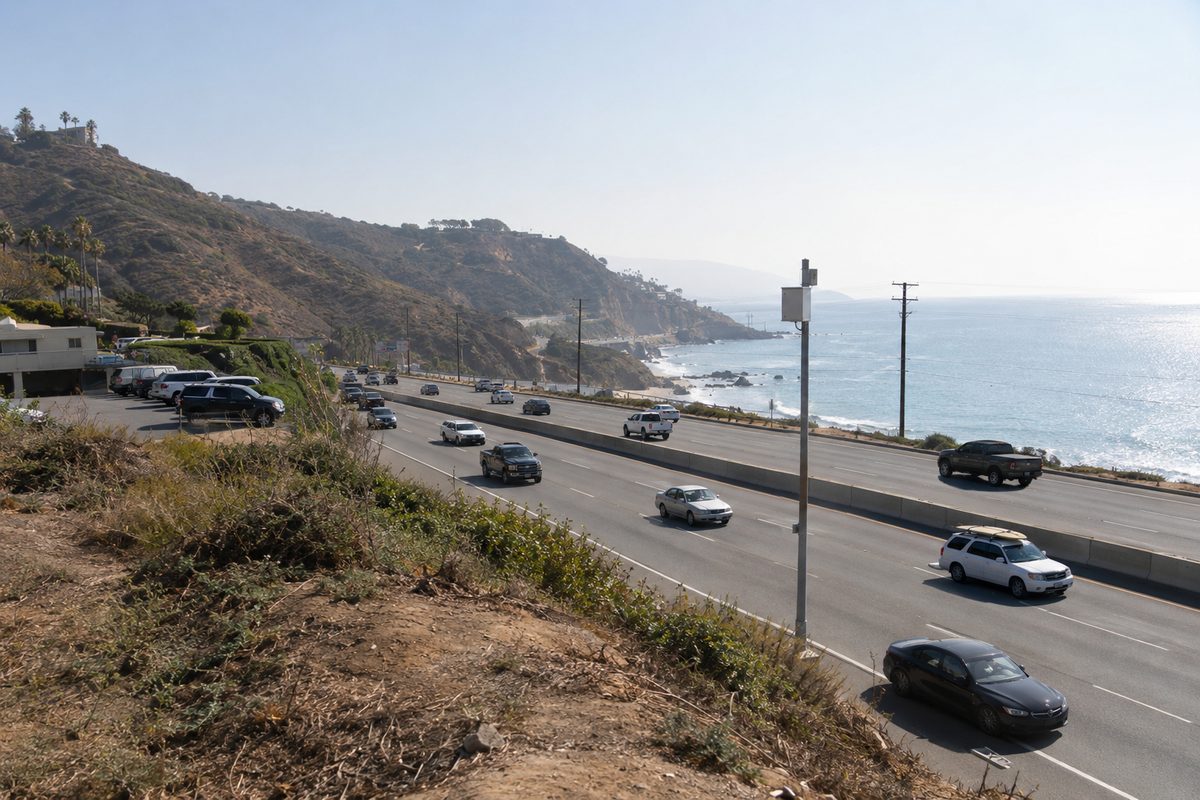
Malibu's new speed cameras on Pacific Coast Highway flagged about 100,000 speeding violations in nine days of testing in September. Nobody got a ticket for any of them.
That changes in stages. The city now plans to switch the system on in November, and for the first 60 days, drivers caught going 11 mph or more over the limit will get a warning notice instead of a fine. Civil fines start once that grace period ends. The city hasn't named a start day for either phase.
The warnings were supposed to begin in late September, but Malibu pushed them back to make changes to how the cameras are installed, LAist reported. The test ran from Sept. 16 through Sept. 24. It covered four camera sites, the city said in an update posted Oct. 1. Roughly 86% of the violations piled up in eastern Malibu. During the test the cameras could flash, but they weren't sending warnings, writing citations or pulling anyone's DMV record.
The 11-mph trigger sits barely above how fast traffic already moves there. On PCH the posted limit is 45 mph, according to the city's speed camera page. The city puts the 85th-percentile speed, the pace most drivers stay at or under, at 55 mph. Do the math and the camera's line is 56.
The fine schedule the city had posted as of Oct. 4, 2026:
- 11 to 15 mph over: $50
- 16 to 25 mph over: $100
- 26 mph or more over: $200
- 100 mph or more over: $500
The tickets don't put points on a license and don't touch insurance rates, the city says. It also promises an appeals process and a diversion program for low-income residents who qualify. The system uses lidar, with a separate laser beam for each lane, and photographs only a cropped shot of the rear license plate. Malibu says it doesn't use facial recognition and won't share the data with other agencies, ICE included.
The cameras grew out of years of deaths on this road. Malibu's stretch of PCH runs 21 miles, and more than 60 people have died in crashes on it since 2010, the city's program page says. The year 2023 alone brought 220 crashes. There were 93 injuries and seven deaths that year.
Four of the dead that year were Pepperdine University students. A speeding driver hit them in October 2023 as they stood beside the highway. The City Council declared a local emergency afterward. Gov. Gavin Newsom signed state Sen. Ben Allen's SB 1297 in September 2024, the city's camera page says. The law lets Malibu run up to five camera systems, with 10 cameras in all.
Money from the fines goes first to paying for the program, and anything left over can only go to more safety work on PCH, done with Caltrans. The city's own FAQ insists it isn't a revenue program and says success means slower cars and fewer crashes, not more citations.
Malibu is one piece of a wider rollout. The Globe reported on Aug. 26 that four speed camera programs were reaching L.A. County. Fines in those programs run from $50 to $500, the Globe reported. On Oct. 3, the Globe reported that the city of Los Angeles put up its first camera outside an East Hollywood school. Malibu's cameras were already flashing at speeders on PCH in mid-September.
One more piece lands in November alongside the warnings. A city traffic study of the speed limits in eastern Malibu, where most of the test violations came from, is due to finish that month, and it covers the two cameras at Carbon Canyon and Tuna Canyon.
Source: LAist, retrieved October 5, 2026. Other sources: malibucity.org, malibucity.org (2).
Comments 0