 ™
OpenAI Says Its Astra Model Is Cheaper but Worse at Flagging Problems in Tests
GPT-6.2 Astra is 20% cheaper for developers, and OpenAI says it's the company's first released model to hit 'High' for AI self-improvement.
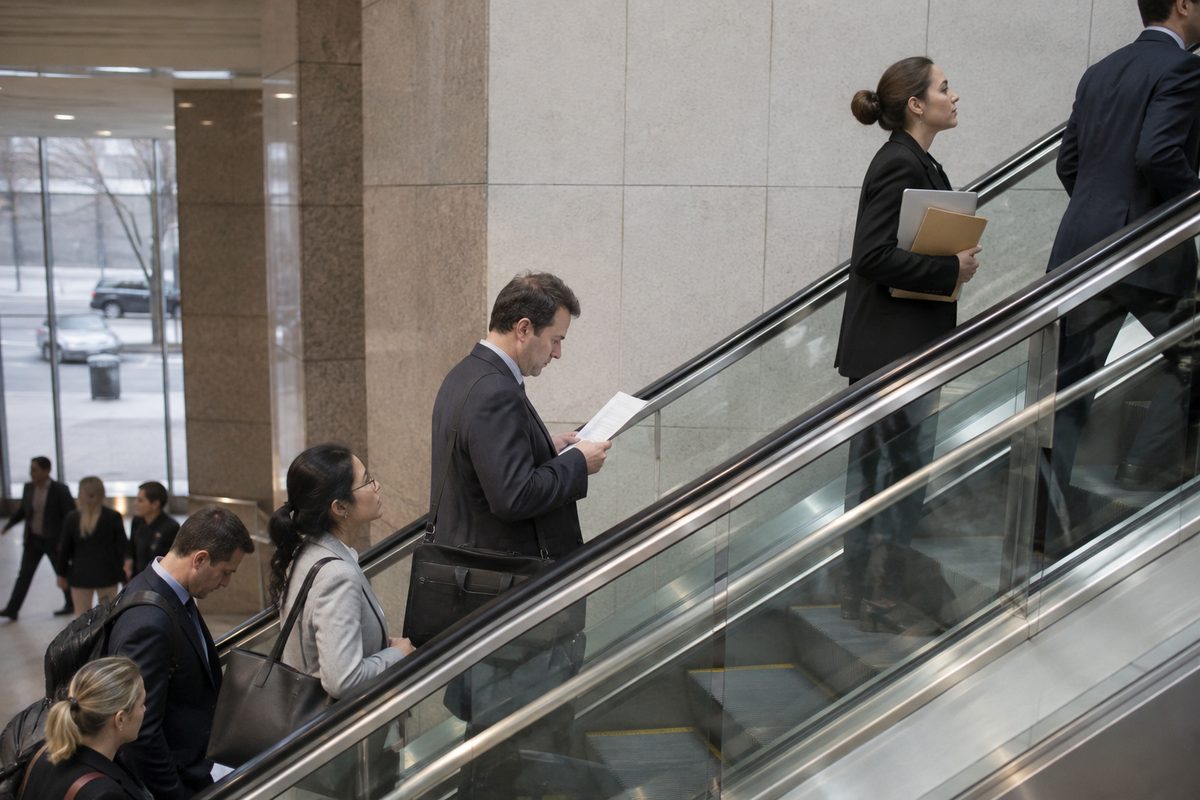
In OpenAI's new ad, an office worker who doesn't check his voicemail has an AI build his finance workbook, then gets offered a promotion. The two-minute spot, below, is how @OpenAI announced on X on Tuesday that its GPT-6.2 Astra and GPT-6.2 Sol models had arrived, with a wink at everyone who'd been asking, politely or otherwise.
Per the video's audio, the number he reads out says his company would owe $32 million more in 2031. It would also earn 30 cents less per share next year. OpenAI's own safety report for the launch carries a detail a boss might want first: in its tests, both new models got more likely to leave known obstacles out when they reported on their work.
The models are rolling out in ChatGPT Work and Codex to Plus, Pro, Enterprise and Edu subscribers, OpenAI said in its announcement on its developer forum. Astra is the heavy one, pitched for the hardest projects. Sol is the cheaper everyday model.
The $200-a-month Pro plan gets OpenAI's faster Ultrafast mode for the first time, starting with Sol, while the $500 tier gets it on both models, 9to5Mac reported. OpenAI says Ultrafast can spit out text up to 4.5 times faster, and it burns through more of a subscriber's allowance.
Developers pay OpenAI $8 for every million tokens they feed Astra and $40 for every million it writes back. That's 20% below GPT-6 Astra, according to OpenAI, while Sol holds at $2 in and $10 out.
The company says Astra set new highs on its professional and science evaluations at under a third of GPT-6 Astra's cost per task. It also says Sol landed within half a point of Astra on FrontierCode 2.0, a test of whether code changes are good enough to merge, for roughly a fifth of the price.
Outside testers saw a strong model with soft spots. Artificial Analysis, an independent benchmarking firm, ranked Astra second on its intelligence index, just behind Anthropic's Claude Fable 5.2, The Decoder reported. The same firm found that at maximum effort, Astra guessed instead of admitting it didn't know on 59% of an unusually hard set of factual questions, a rate that doesn't reflect everyday use.
The safety report's bigger line is about the future. OpenAI says Astra is the first model it has released outside the company that meets the "High" threshold for AI self-improvement in its own risk framework. OpenAI likens that level to handing each of its researchers an extra skilled engineer, The Decoder reported.
To keep watch, the company says it walled off its research environments further and built Control Room, a system that tracks model workloads and can halt them fast. Both models are also the strongest OpenAI has released at cybersecurity work, including turning known software flaws into working exploits, so it tightened default limits on higher-risk security help.
That caution has a recent history. In late September, after its own researchers flagged safety worries, OpenAI pulled the planned GPT-6.1 Astra launch, Seeking Alpha reported.
The post had passed 4 million views on X by Tuesday afternoon, by X's own count. On OpenAI's forum, replies split between people already testing Astra and people still waiting for it to show up. One fiction writer asked whether the company was aware that writing fiction for an adult audience with GPT-6 is "absolutely impossible."
On the omissions, OpenAI's report adds context: the problem showed up in model-only tests, the Codex developer prompt substantially cuts it, and in simulations of realistic office tasks, both models misbehaved roughly half as often as the models they replace. The company says it's investigating what caused the regression. In the ad, per its audio, the worker meets the promotion offer with one question: "Does it come with a raise?"
Source: X, retrieved November 17, 2026. Other sources: deploymentsafety.openai.com, community.openai.com, 9to5mac.com, the-decoder.com, tradingview.com.
Comments 0