 ™
™L.A. Hasn't Installed One Speed Camera. That's a Choice.
San Francisco and Oakland already run cameras that slowed drivers down, while Los Angeles hasn't installed any of its 125.
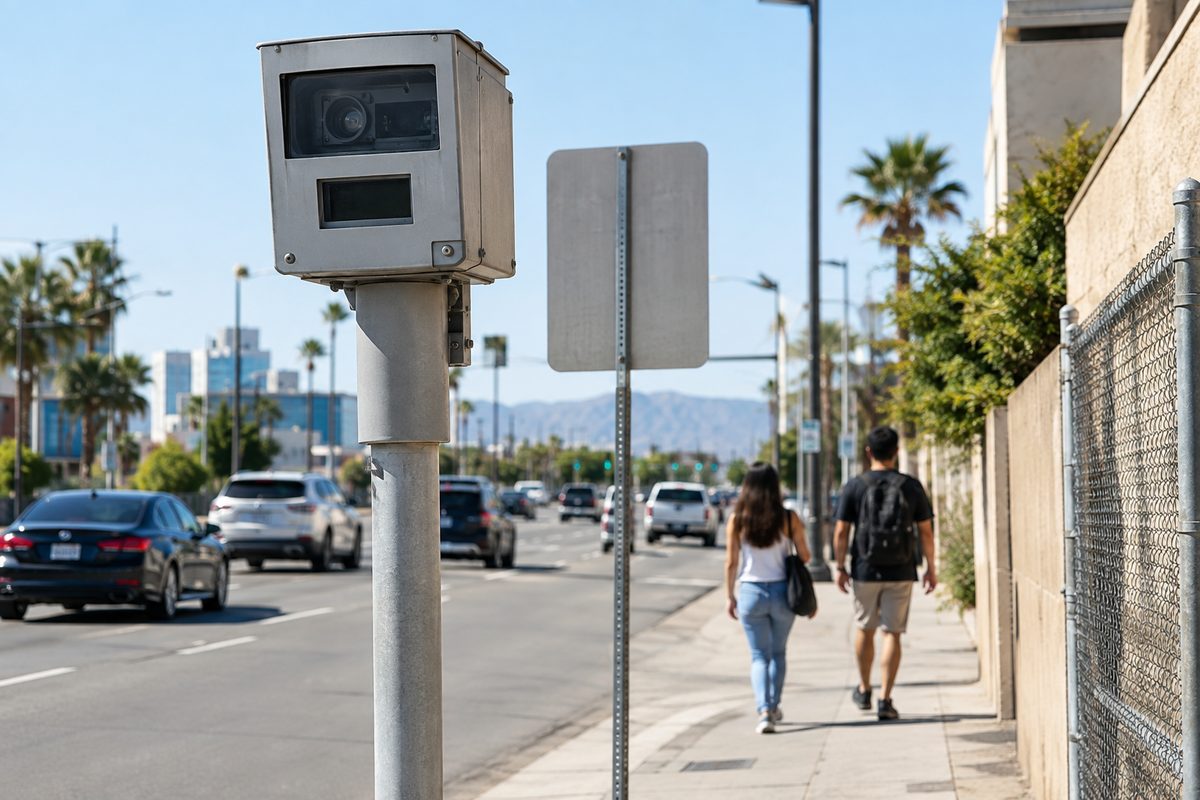
Los Angeles hasn't installed one of the 125 automated speed cameras it's cleared to operate. That's two years after Gov. Gavin Newsom signed the 2024 law authorizing the pilot. The city also blew past its own schedule, which had the cameras up and ready for testing by July, CBS LA reported. Two summers of study and zero poles isn't a procurement problem. It's a decision the city renews every month it doesn't pick a date.
Speeding kills and injures more people on Los Angeles streets than any other driving behavior, according to Damian Kevitt, executive director of the nonprofit Streets Are for Everyone. He told CBS LA the city has counted more traffic deaths than homicides three years running. That arithmetic has people inside it: the guy pushing a stroller across six lanes while a driver does 55 in a 35.
We know roughly what the cameras do, because two of the other authorized cities turned theirs on. The San Francisco Municipal Transportation Agency reported results a year into its 56-camera program. At those sites, drivers exceeding the posted limit by 10 mph or more fell by nearly 80%. That's about 40,000 fewer speeding instances a day. Oakland said that five weeks after its 35 cameras went live, traffic at every one of them was moving close to the limit.
Streets Are for Everyone graded the seven participating cities in December. Los Angeles finished last, with a D.
The Los Angeles Department of Transportation says it has made "significant progress" since that report card. Spokesperson Colin Sweeney told CBS LA the city now sits at the same implementation stage as Glendale, San Jose and Long Beach. The department expects to launch this fall, with billboards and social posts already running.
It hasn't announced a start date.
Kevitt has since moved his own grade up to a C-minus or C. "They are still in last place, but they're at least moving now, and there is a light at the end of the tunnel," he told the outlet. Fine — I'll take the upgrade. A grade isn't a camera, and a fall launch without a day on it is a press release with a season attached.
The best argument against me is the one I hear most: these are surveillance devices that tax poor drivers by mail. The surveillance half deserves an answer the city hasn't fully given. It can give that answer before launch — publish, in plain English, how long the images are kept, who else gets to see them, and exactly how a person contests a notice. LADOT has already posted where all 125 cameras go. There's no reason the rest can't be posted too. On the money half, the program starts with 60 days of warnings and then $50 tickets, which is cheaper than almost any other enforcement contact in this city and doesn't involve a traffic stop after dark.
California logged more than 24,000 speed-related crashes in 2025, with nearly 10,000 of them causing injuries, CBS LA reported, citing California Highway Patrol data. The cameras won't fix that alone. They're also the one intervention here with a year of local numbers behind it.
So name the day, mail the warnings, and let the 60 days run. The $50 can start whenever it starts.
Source: cbsnews.com, retrieved September 17, 2026.
Comments 0