 ™
™A Deputy Ran a California Plate Through Flock. A Judge Ruled It Unconstitutional.
Judge Sara Hill called the camera network 'indiscriminate mass surveillance' and threw out the evidence, including 91 pounds of meth.
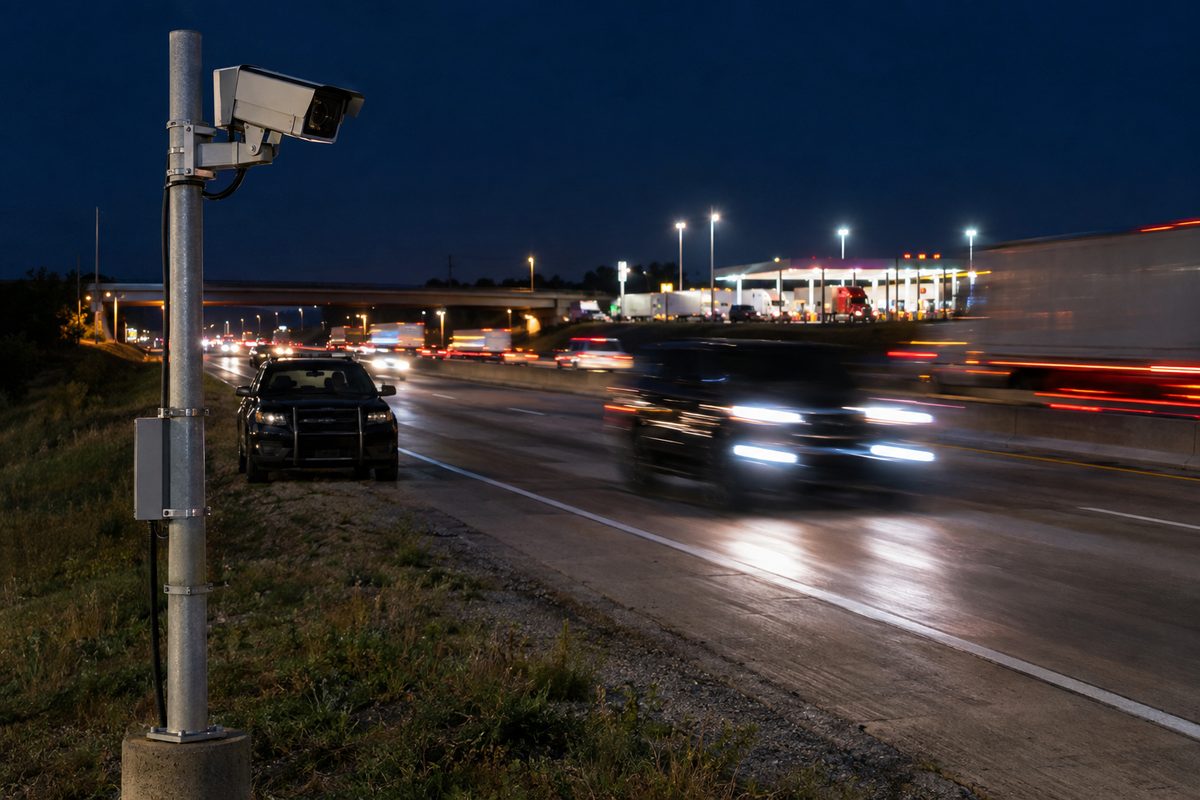
A federal judge ruled Thursday that a Tulsa County deputy's warrantless Flock search was unconstitutional, throwing out evidence that includes 91 pounds of methamphetamine, 404 Media first reported.
Flock Safety sells police cameras that photograph every passing plate and store where each car was seen, so officers can pull up a vehicle's travel history. By Sen. Bernie Sanders' office's count, Flock has the most cameras of any vendor in the country, TechCrunch reported. Audit logs seen by 404 Media show police run more than 100,000 warrantless searches of the network every month.
The deputy, Freddie Alaniz, spotted an SUV with California plates on an Oklahoma highway in May, followed it and ran the plate through Flock. He stopped the driver, Melisa Kyle, who's now accused of meth trafficking, for a lane change with no turn signal.
He questioned her about her trip while checking the camera records, and had her account for her last several days. Then he told her that her short stay in California made him suspect drug trafficking. His one Flock search had turned up more than 50 sightings of her car around the country over a single month, Judge Sara Hill wrote, 404 Media reported.
Hill found the California plate was the only reason for that search, which was done with no warrant and no probable cause. "The factors that the government relies upon are the same type of circumstances that everyday Americans encounter on long road trips for many legitimate reasons," she wrote, as 404 Media quoted the ruling.
Courts that have allowed warrantless plate searches lean on United States v. Knotts, a 1983 Supreme Court case about a tracking device police hid in a chemical container, which said a driver on public roads has no reasonable expectation of privacy in moving from place to place. Hill granted the broad point. But she wrote that Knotts dealt with far cruder gear than a network she described as "approaching dragnet-type law enforcement practice," one that keeps a running location history for every car that rolls past any connected camera, 404 Media reported.
"This is a type of indiscriminate mass surveillance," Hill wrote. Her ruling follows the Supreme Court's decision in Chatrie v. United States, which held that police tapping a person's digital data, phone location included, is a search, 404 Media reported.
The ruling covers one search in one criminal case. It doesn't bind any other court, and similar challenges are pending around the country. Flock, which wasn't a party, told 404 Media the decision runs against most rulings on the question, including several recent ones in Oklahoma, and that it expects the case to be appealed and reversed.
Its chief executive, Garrett Langley, told The Drive in July that courts had already decided a Flock lookup isn't a warrantless search and that he didn't see that changing, 404 Media reported. The company's year has been moving the other way: as of Aug. 13, the LAPD had switched off its 138 Flock cameras while the city rewrote its contract, and that same day Flock cut its default data retention from 30 days to seven. By Aug. 17, nine Wisconsin agencies had dropped Flock in four months.
On Friday, Oct. 2, Sanders introduced the Ban Flock Act, TechCrunch reported. It would keep federal agencies from running plate readers of any brand, or from using data from the ones local police and private companies run, with toll collection exempt. States and cities that don't ban the cameras themselves would lose grants from five federal departments, among them Justice and Homeland Security. Rep. Alexandria Ocasio-Cortez and Sen. Jeff Merkley signed on as co-sponsors.
Michael Soyfer, an attorney with the Institute for Justice, a group suing over plate cameras on Fourth Amendment grounds, told 404 Media that police keep treating ordinary travel as suspicious, and that he expects the software to start doing it for them. "I think Flock is going to automate that using AI where cops can set alerts for those kinds of travel patterns," he said.
Source: 404media.co, retrieved October 4, 2026. Other sources: techcrunch.com.
Comments 0