 ™
™Voters Told L.A. to Add Bike Lanes. It Added One Mile.
Measure HLA was supposed to put bike lanes into repaving jobs; the city logged 16.2 lane-miles, its worst since 2018-19.
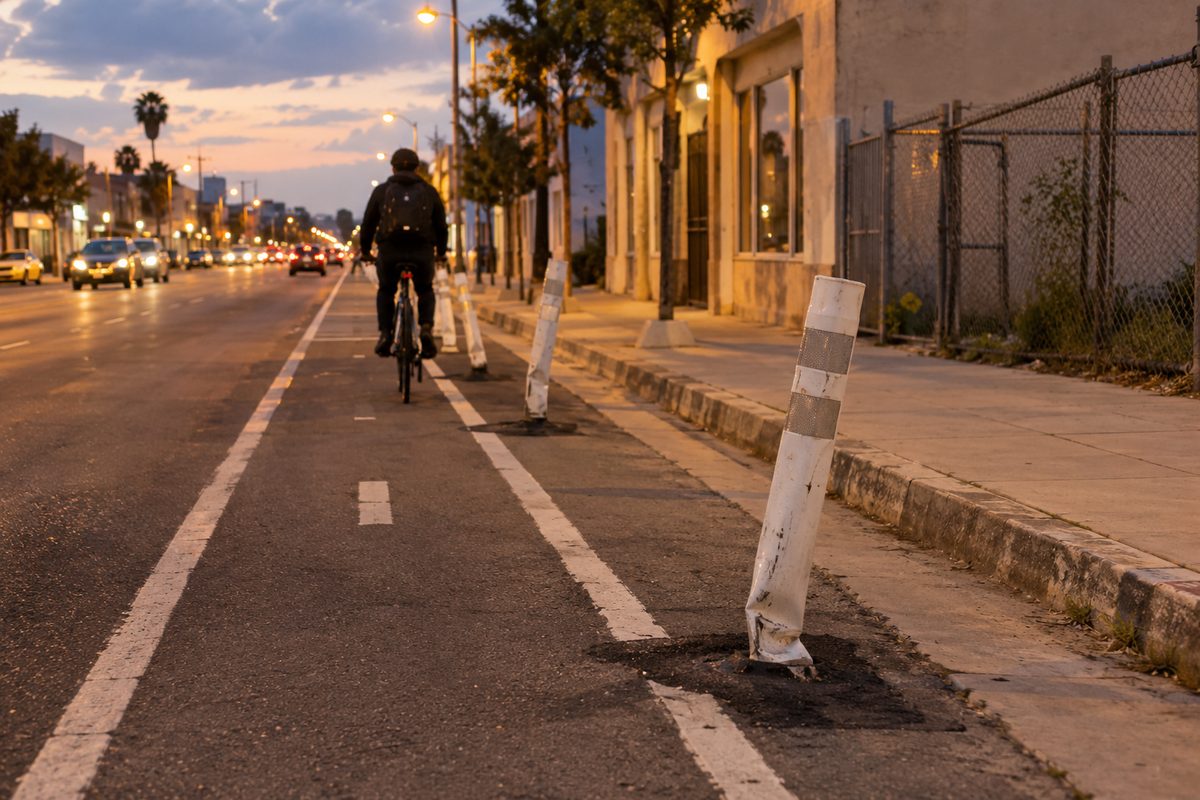
Los Angeles added or improved 16.2 lane-miles of bikeway in the fiscal year that ended June 30, 2026, the city's lowest annual total since 2018-19. The count comes from Streetsblog Los Angeles's annual bikeway review, which reconciles the Los Angeles Department of Transportation's own bikeway list with the outlet's running spreadsheet. Last fiscal year's figure was 35.6 lane-miles.
For a rider on Van Nuys Boulevard in the East San Fernando Valley, the year's arithmetic is a detour. To protect on-street parking along Metro's light rail construction, the city permanently pulled the boulevard's bike lanes and put replacements on Terra Bella Street, a mostly residential street off the commercial spine, Streetsblog reported. The swap takes out about 5.3 lane-miles, 0.9 of them protected, and puts back about 4.9, none protected.
So is the collapse real, or a bookkeeping artifact of one fiscal year? The records suggest it's real, and the one known reporting gap runs the wrong way for the city. LADOT's list included the new Terra Bella lanes but not the Van Nuys removal, and the department's August newsletter acknowledged that Terra Bella "replace[d] bike lanes on Van Nuys that were removed." LADOT also left the year's marquee project, a concrete-protected stretch downtown, off its own tally.
The bigger cause is a broken habit. For roughly half a dozen years, LADOT striped new lanes and upgrades while the Bureau of Street Services repaved, and a repaving season typically carried 5 to 15 lane-miles of bikeway with it. In fiscal 2025-26, not a single new bikeway rode along with a resurfacing job.
Streetsblog attributes that break to a change in how the bureau paves, made largely to avoid installing the features now required under the Americans with Disabilities Act and Measure HLA, the Healthy Streets L.A. initiative voters approved to force planned bike and bus lanes into repaving work. From July through most of April, the bureau swapped full resurfacing for "large asphalt repair," the outlet reported; when it resumed resurfacing in late April, it concentrated on streets without sidewalks and stayed off streets designated for bikeways. Two upgrade projects, on Sherman Way and part of Martin Luther King Jr. Boulevard, caught about 2.9 lane-miles of repaving between them.
Delays did the rest. Improvements to Forest Lawn Drive were announced in 2023 for installation in 2024, slipped for years, and in May 2026 Mayor Karen Bass formally directed city departments to pause the safety upgrade, according to Streetsblog, which reports that state legislation could now finish it off. Chandler Boulevard is under construction; Westwood Boulevard and the Los Angeles River paths aren't.
Strip out sharrows and subtract the removals, and the city's bike lane and path network grew by 1.1 lane-miles over twelve months, by Streetsblog's count. Upgrades to protected status totaled 9 lane-miles, much of it in Griffith Park and on MLK.
Upgrades make an existing lane safer. They don't make the network any bigger.
The best of them is small and permanent: about 600 feet of two-foot concrete Toronto Barriers on 3rd Street downtown, between Main and Spring, the city's first.
The MLK work between Central Avenue and Broadway Place is finished, and the same Metro-funded project is set to add protected lanes on 39th Street and Broadway Place this fall. Bollard protection along Crystal Springs Drive in Griffith Park wrapped after July 1, so it lands in next year's total.
Source: la.streetsblog.org, retrieved September 17, 2026.
Comments 0