 ™
™$25 an Hour or a 30% Match: Santa Monica Rewrites the Terms of Its $9.2 Million Safety Net
The council approved the rules on a 5-0 vote. No money moves until July 2027 — but a nonprofit that pays its front-line staff $25 an hour can now stop raising the match. We read the staff report and the two attachments that carry the terms.
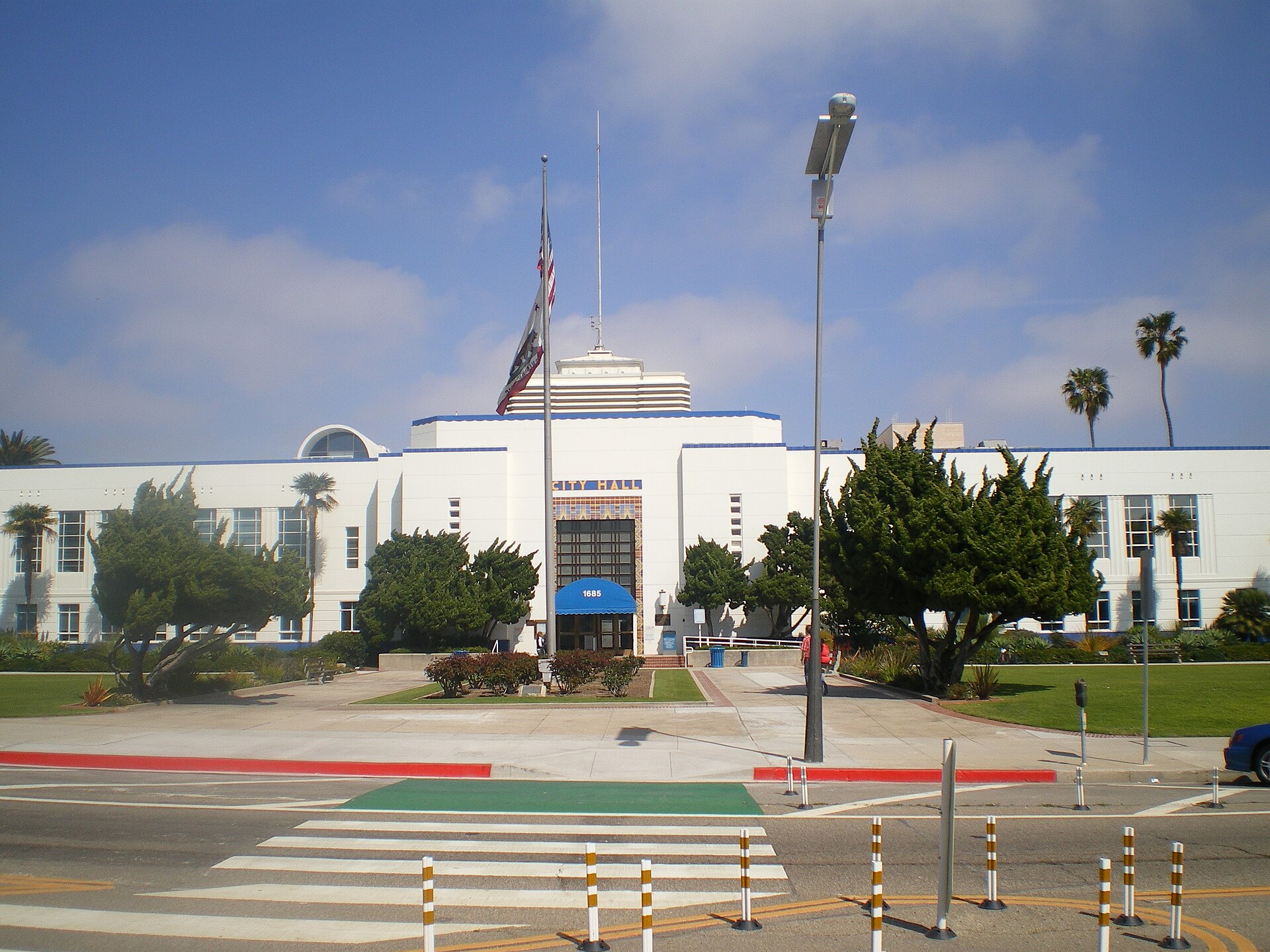
On Aug. 11 the Santa Monica City Council spent an evening on a grant program that will not hand out a dollar until July 1, 2027. The vote was 5-0 — Councilmember Barry Snell recused, Councilmember Dan Hall absent, the Santa Monica Daily Press reported. Nothing was awarded. What was decided was the rulebook, and the rulebook is where the interesting money is.
The item was 11.A on the agenda, brought by Housing and Human Services Director Aileen Reynolds: approval of the funding guidelines for the FY 2027-31 Human Services Grants Program and authorization to put the next four-year cycle out to bid. We read the 18-page staff report and both of the attachments that carry the terms. Three things in them are worth a reader's time, and one of them is a number that means two different things on two different pages of the city's own website.
The match, or the wage — pick one
For years a Santa Monica grantee had to bring 30 cents of its own for every 70 cents of city money. That was the deal, and for a small nonprofit it was the hardest part of the deal: the city would fund the program, and the program had to go find a third of its own budget somewhere else.
Under the approved guidelines, applicants now choose. Option 1 is the old arrangement — a 30% cash match, and, in the document's own words, "no minimum threshold for staff salaries." Option 2 lets city funds cover up to 100% of the cost of serving eligible residents, with no match at all, in exchange for a promise: every staffer billed 90% or more to the grant is paid at least $25.00 an hour. There is a catch, and the guidelines print it as a condition — only programs that actually bill staff salaries to the grant may choose Option 2. A program that spends its city money on rent, food or subsidies rather than payroll stays on the match.
The staff report explains the trade in one sentence: the point is "to free up funding that would otherwise be used for match to help make it more feasible for programs to meet minimum wage." It is a wage floor bought with a fundraising exemption, and it is aimed at a specific problem the report names — case managers, care coordinators, outreach workers and counselors who leave.
About that $25
Both the staff report and the guidelines call $25.00 "the City's Minimum Wage." Santa Monica's minimum wage is not $25.00. Per the city's own minimum wage page, the general rate rose from $17.81 to $18.47 an hour on July 1, 2026, indexed to the CPI-W for the Los Angeles metropolitan area; $25.00 is the rate for hotels and businesses operating on hotel property, effective the same day.
The $25.00 in the grant guidelines is a third number that happens to match the second. It comes from the Living Wage Ordinance, Municipal Code Chapter 4.65, which sets $25.00 an hour for July 1, 2026 through June 30, 2027 — and the certification form the report attaches describes the ordinance as one that "establishes a Minimum Wage of $25.00 per hour." Three pages of santamonica.gov, two rates, one phrase.
The distinction is not academic, because the ordinance and the offer point in opposite directions. The living wage binds contractors on service contracts above $54,200. The certification form lists the exemptions, and two of them are "(b) contractor is a City grantee and is exempt" and "(c) contractor is a non-profit corporation and is exempt" — which is to say the ordinance does not reach the organizations now being offered its rate. What the council approved is a voluntary purchase of a wage floor the law does not require, paid for with the match.
The gap the offer asks an agency to close is $6.53 an hour. At a 40-hour week and 52 weeks — our assumption, stated so it can be argued with — that is $13,582.40 a year for one full-time position: $52,000 instead of $38,417.60.
The pot is smaller than the pot it replaces
The report puts the first year of the new cycle, FY 2027-28, at $9,198,587. It also states where the current cycle began and where it ends: $10,145,594 in FY 2023-24, rising to $11,168,123 in FY 2026-27. We ran the subtraction. The new cycle opens $1,969,536 below the level the old one closes at — a 17.6% drop — and $947,007 below the level the old one opened at four years earlier, before any adjustment for inflation.
Some of that is bookkeeping rather than loss: the Daily Press reported that roughly $2 million in interim housing money historically routed through the grants program will now be funded separately, outside it. And the report says staff expect to come back in spring 2027 recommending an increase, looking at Measure GS and County Measure A dollars "to minimize the potential impact on the City's General Fund." That is a recommendation, not a budget. The budget is adopted in June 2027.
The pressure on the other side of the ledger is in the report too, sourced item by item: Los Angeles County's homeless services department cut FY 2026-27 programming, including homelessness prevention and housing navigation, against a $303 million deficit; 18% of eligible children in the county were enrolled in subsidized child care as of 2024. Staff add a local figure of their own — nearly half of current grant-funded programs regularly keep a waitlist.
The menu got shorter and more specific
The previous cycle took proposals against broad priorities. This one publishes a list. Section 1 of the guidelines sorts eligible services under three headings — housing and homelessness prevention, health and wellness, financial stability — and we counted 19 of them, from "case management for formerly homeless individuals and families with city-issued tenant-based vouchers" down to child care subsidies. An agency has to land on one.
Four are new to the program, per the staff report: intergenerational programming, domestic violence services, enhanced immigration services, and expanded case management for housing retention. Physical health is on the list as "medical, dental, and preventive health services" — dental care for adults and seniors was one of the gaps residents named at the input sessions, which drew 51 stakeholders across three meetings in May and June and four written comments.
What did not change is who counts as a Santa Monican. The residency tests survive intact, including the homelessness criteria shortened in January 2025 — three years in Santa Monica for a single adult, one year for a family with a minor child. Staff proposed no further changes, and none were made.
What happens next, and when
The request for proposals goes out in September 2026 with a bidders' conference to follow; proposals are due in December; staff return to the council with recommendations in spring 2027; the awards ride into the biennial budget adopted in June 2027; the cycle starts July 1, 2027. Proposals are scored out of 100 points by a panel of city staff and outside experts — 25 for the program summary, 25 for past performance and organizational capacity, 15 for the program budget, 15 for audited financials, 10 for evaluation design, and 10 for employee retention. Ten points, in other words, for how an agency keeps the people it hires.
The program is 52 years old. It started in 1974 with four nonprofits; it now funds 18 agencies and 21 programs. The room on Aug. 11 wanted it to be bigger. In the Daily Press's account of the meeting, Mayor Caroline Torosis asked staff to find "at least $2 million somewhere to add to this program"; Councilmember Lana Negrete argued for prevention on the grounds that "what we end up dealing with in the end is so much heavier when we don't address it" early; Connections for Children told the council that licensed child care in Santa Monica now averages $1,755 a month, that 30 children sit on its eligibility waitlist, and that clearing the waitlist would take about $631,800 more a year; and speakers asked the council to bring back the five-day senior meal program at Reed Park's WISE Diner, which closed in July.
None of that was on the ballot Aug. 11. The council approved a rulebook and a calendar. The arguing over the number starts in spring.
Comments 0