 ™
™93 Seniors Wait for Meals on the Westside. The Formula Fight Above Them Runs to 2029.
The waitlist is nine months old and costs about $312,000 a year to clear. The federal appropriation it gets blamed on was frozen in February; the state formula Los Angeles County is fighting is not final until September 2027 and not fully in force until July 2029. We read all three records and ran the division.
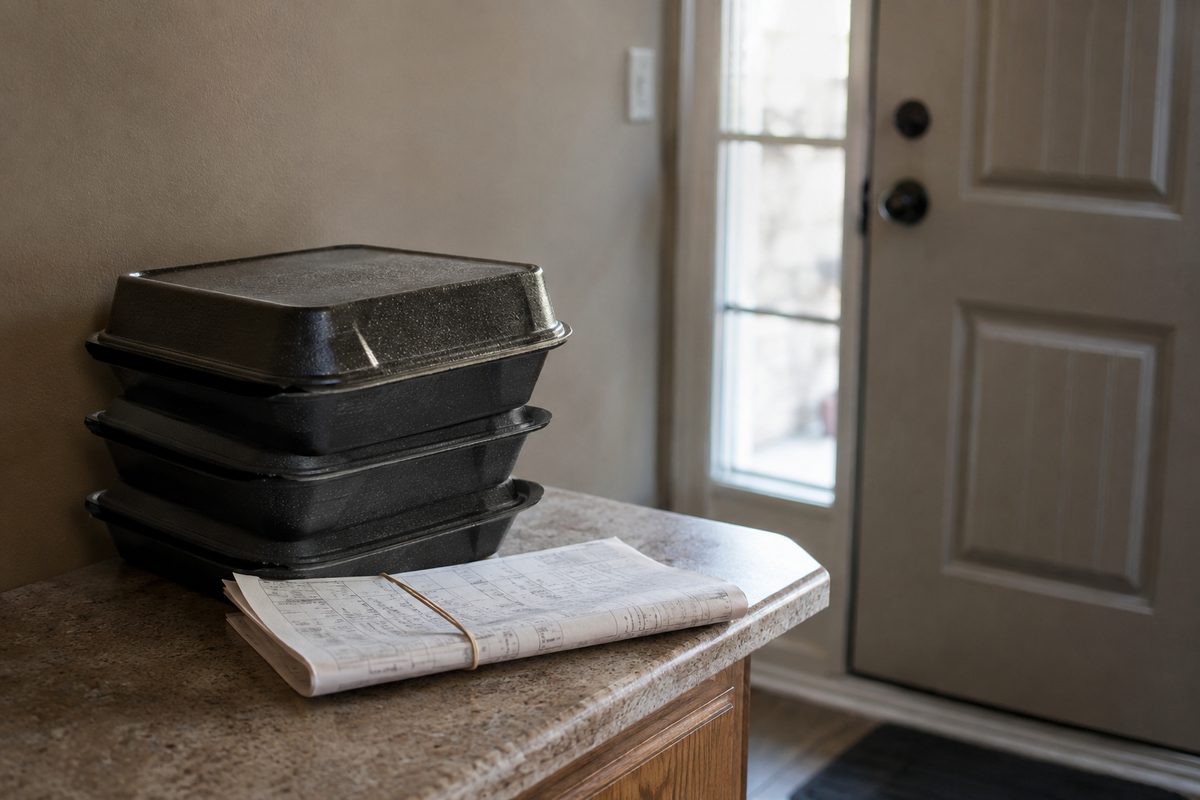
Ninety-three people on the Westside are waiting for a meal. Meals on Wheels West, which delivers to homebound residents in Santa Monica, Venice, Pacific Palisades, Marina del Rey and Malibu, told the Santa Monica Daily Press that the list should reach 100 by the end of August. It is the first waitlist in a history the organization puts at more than 50 years. It opened in November 2025 and has grown steadily since.
The list has a price. A year of meals for one client averages $3,360, the group told the Daily Press, which puts all 93 at roughly $312,000 a year in new money — a number the organization stated itself and one that survives the multiplication. Its actual near-term goal is smaller: the ten most vulnerable, longest-waiting names by the end of the year. "Moving ten clients off the waitlist immediately isn't the ceiling — it's the floor," executive director Kaylee Hawkins told the paper.
Above that $312,000 sit two funding arguments, one federal and one in Sacramento. Both are real. Neither has moved a dollar in either direction this year, and the more consequential one does not finish until the end of this decade.
The federal number has not changed since February
On Feb. 3, Meals on Wheels America and the National Association of Nutrition and Aging Services Programs issued a joint statement on the Labor-HHS appropriations bill that finalized fiscal 2026: funding was "remaining flat at $1.059 billion for the Older Americans Act (OAA) Nutrition Program." The two groups had asked for at least $1.605 billion. The gap between the ask and the appropriation is $546 million.
Their argument is that flat is not flat. "As the senior population grows and costs continue to rise, flat funding actually represents a service cut," the statement says, and it puts the number of low-income, food-insecure older adults receiving no senior nutrition services at an estimated 2.5 million — a level of unmet need at which, by its own arithmetic, the appropriation "would have to more than double." The same statement notes the program leverages nearly $3 for every $1 of federal money.
Hawkins made the same case in local terms. "This isn't a story about government failing to write a check, but instead about funding formulas that haven't caught up to the rapidly changing demographics to write the right-sized check," she told the Daily Press. The national organization has been counting the consequence for a while: one in three Meals on Wheels providers has a waitlist, it said in a May 2025 statement on the president's FY26 request. Since November, the Westside has been one of them.
The state formula is real, disputed, and years out
The second argument is over the Intrastate Funding Formula, the split that decides how much Older Americans Act money each of California's Area Agencies on Aging receives. The California Department of Aging is rewriting it. Per the department's own page, the update runs on "five equally weighted factors: older adult population, low income, racial and ethnic minority status, disability, and geographic isolation," and is meant to "simplify the formula, improve transparency, and better align applicable funding with today's statewide conditions." The same page gives the calendar: 2025 through 2029 for planning, policy changes and public comment, then full implementation in July 2029, with the next State Plan cycle.
The near dates have already slipped. Los Angeles County's campaign page on the formula reports that after feedback from counties and stakeholders, the state extended the deadline for finalizing and adopting the new formula to September 2027. The public comment window the county spent the spring pushing residents toward — subject line "Public Hearing Comment: IFF Proposal," to CA2030@aging.ca.gov — closed on May 12, 2026 at 5 p.m. The county's April 16 press release had said the proposed changes were "expected to take effect in 2026."
The county's estimate, published twice
That April release is where the county's headline number comes from: under the proposal, Los Angeles County "could see up to a 17% reduction," which it translated into "approximately $4.1 million less in funding for nutrition programs alone, resulting in nearly 396,000 fewer meals annually, or about 1,571 fewer meals each day." The campaign page carries the same total and breaks it out — more than 185,000 congregate meals and more than 209,000 home-delivered ones.
The department's director published a different version three weeks later. In a May 11 commentary, Maral Karaccusian put the same 17% cut at about 185,875 congregate meals and about 157,000 home-delivered meals — roughly 342,000 total, "more than 1,300 fewer meals every single day." The congregate figures agree. The home-delivered figures differ by about 52,000 meals a year. Both documents are still posted, and neither explains the other.
We ran the division on the daily figures, because they are the ones that will end up in somebody's speech. Nearly 396,000 meals a year divided by 365 days is about 1,085. Divided by 252 weekdays it is 1,571, which is the county's published number; the May commentary's 342,000 divides the same way, to about 1,357. The daily figures are service-day figures, not calendar-day figures. Neither page says so.
The county's case for keeping more of the money is about weighting, not about which factors get counted. Los Angeles County serves roughly 25% of Californians over 60, the commentary says, and it argues that equal weighting moves money away from the places where services are actually used, because "not all factors drive service utilization at the same magnitude or scale." Its sharpest line is a ratio: "A 5% increase in a county of 7,000 is not equivalent to a 4% increase in a region of more than one million, yet the formula treats them similarly." The department is not asking the state to stop. "We support modernization of the IFF. We support its equity goals," its campaign page says, next to a request for "a short validation step" before the formula is finalized.
Five communities, two agencies
One structural detail sits underneath all of this and is easy to miss. The county's aging department is Planning and Service Area 19; the City of Los Angeles Department of Aging is Planning and Service Area 25. They are separate Area Agencies on Aging that wrote a joint area plan for 2024-2028.
Meals on Wheels West's delivery map crosses that line. Venice and Pacific Palisades are Los Angeles city neighborhoods, both listed among Council District 11's neighborhoods. Santa Monica and Malibu are separately incorporated cities inside the county's service area, and Marina del Rey is county territory — it appears nowhere on that city district's list. Of the two agencies whose ground those routes cover, one has published a projected loss under the new formula. The other has not.
What is true this week
Nothing in either argument has been decided. The federal line is the same $1.059 billion it was in February. The state's rewrite is not adopted until September 2027 at the earliest and not fully implemented until July 2029. The 93 names were added under the formula that exists now, at the funding level that exists now, and the list has grown steadily since it opened.
The two numbers are also not the same size, and they are not the same kind. Clearing one nonprofit's Westside list costs about $312,000 a year in new money. The nutrition money the county says is at risk in Sacramento is about $4.1 million a year across all of Planning and Service Area 19 — thirteen times as much, and, on the state's own calendar, not fully in force until July 2029.
Local money moves at similar speed. The Santa Monica grant program that funds much of the city's social safety net had its rules approved on Aug. 11 and awards nothing until July 1, 2027, as we reported on Aug. 17; speakers at that meeting asked the council to bring back the five-day senior meal program at Reed Park's WISE Diner, which closed in July.
The formula fight is an argument about what the money should be divided by. The waitlist is a record of what the current division already produces. It is nine months old, and the organization expects it to reach 100 before the month is out.
Comments 0