 ™
™L.A. Matches Campaign Donations Six to One on the First $257. It Stops at $1,507,000.
Karen Bass's viral donation pitch was arithmetically correct. The Ethics Commission's own tables carry the five limits it left out.
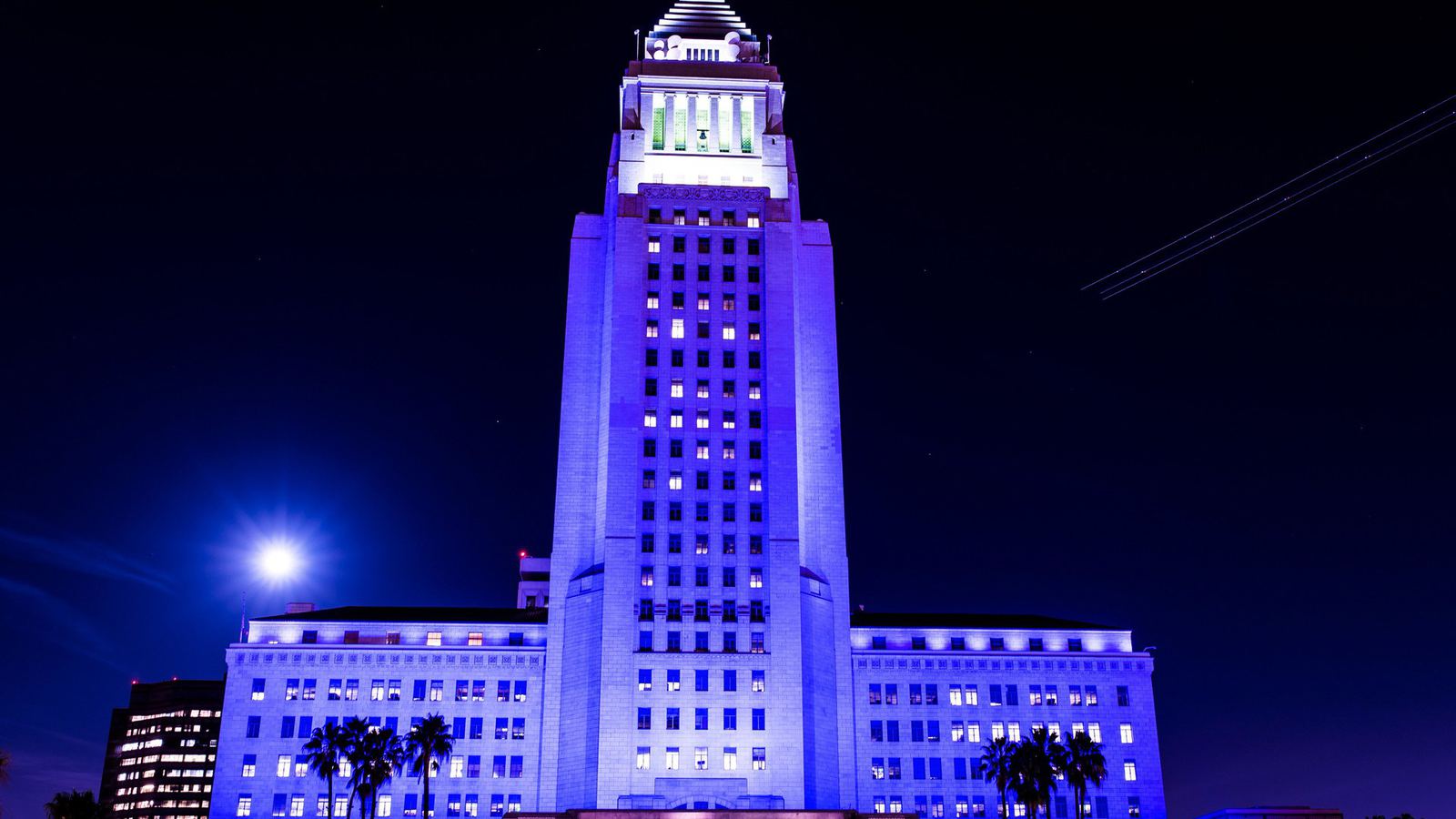
Los Angeles pays $6 in public money for every $1 of a qualified campaign contribution, and Mayor Karen Bass spent the back half of August telling donors exactly that. "Thanks to LA's super match program, every qualified donation from Los Angeles residents is matched 6-to-1 by the city," she says in a campaign video that Fox News wrote up on August 19, which reported her noting that $5 becomes $35 and $25 becomes $175. The rate is right. It's also the only number in the pitch, and the Ethics Commission publishes five more.
The program is old and it isn't a secret. Voters created it, the Commission administers it, and its rules sit in two public documents — a matching funds FAQ for 2026 candidates and the 2026 City Candidate Guide. We read both. Fox News reports the program has run since 1990 and the 6-to-1 rate since 2019. Every figure below is printed in one of those two documents or is simple division on them, and we say which.
As quoted / in context
As quoted. "Your donation to our campaign right now is more critical than ever before," Bass says in the video, per Fox News. "Let me explain. Thanks to LA's super match program, every qualified donation from Los Angeles residents is matched 6-to-1 by the city." And then the part that turns out to be the most technically precise sentence in the ad: "But after the primary, we had to start over from scratch, so we need you to rush your matching donation right now to help fuel this campaign."
In context. She had to start over from scratch because the city says so. The primary and the general are two separate elections with two separate ledgers, and the Commission's table sets a separate maximum payment for each: $1,257,000 to a mayoral candidate in the primary, $1,507,000 in the general. The 6-to-1 rate applies to the first $257 any one person gives and to nothing after it. Above $257, a contribution is a contribution; the city stops matching and the donor is just a donor.
So we ran the numbers on the Commission's own table. Six times $257 is $1,542 — the most public money a single Angeleno can generate for a mayoral candidate, no matter how large the check. Divide the general-election maximum of $1,507,000 by $1,542 and the program fills up at 978 contributors, the last of whom is matched $466 rather than $1,542. On the five-dollar donations in the video, where the match is $30, it takes 50,234 — and the last of those is matched $10. Past that point the rate is still 6-to-1 and the payment is still nothing.
What it excludes
- Everyone who doesn't live in the city. The match runs on qualified contributions from individuals who reside in Los Angeles. A check from Santa Monica, Pasadena or Glendale spends the same as any other in the campaign account and generates nothing from the treasury, and it doesn't count toward the threshold that unlocks the program in the first place.
- Every dollar over $257. That's the citywide cap; for a City Council candidate it's $143. The ceiling makes the match flatter than the rate sounds. A $257 contributor and an $1,800 contributor — $1,800 being the direct-giving cap per donor per cycle, per LAist — produce the identical $1,542 in public funds.
- Candidates who never clear the door. A mayoral candidate has to bank $77,100 in qualified contributions before a dollar of it is matched, which is 300 maxed-out contributors' worth, plus at least 100 city residents giving $5 or more. They must cap what they lend their own campaign at $173,900, file a Form 20 by noon on February 7, draw a qualified opponent, attend Commission trainings with their treasurer, file every statement on time, and either debate or hold a town hall. Nothing is paid until the City Clerk has settled who is on the ballot.
- The spending limit the whole bargain rests on. Public money is the city's half of a trade: take the match, accept a ceiling. For mayor in 2026 the ceiling is $3,908,000 in the primary and $3,125,000 in the general, and it binds a participant whether or not they ever claim a payment. It also comes off. On May 11 the Commission announced that the primary ceiling in the mayor's race had been lifted by independent spending — the notice names the report that did it, $66,706 for an independent expenditure communication by the Streets for All Los Angeles PAC supporting Councilmember Nithya Raman. The published trigger for the 2026 mayor's race is $432,000 in independent spending for or against a single candidate. The notice doesn't publish the running total that the $66,706 report completed; it says only that more independent spending had been reported for and against Bass and Spencer Pratt. This is not new. In 2022 the Commission lifted the general-election ceiling, then $2,662,000, after Rick Caruso, who was not in the program, notified it that his committee's expenses had passed that figure.
- The money the ceiling never governed at all. Independent expenditure committees don't take the deal and don't have a limit. LAist reported on August 5 that outside spending in this race has favored Bass over Raman 36 to 1, that the LAPD officers' union reported $1.2 million on ads against Raman and against Rae Huang, and that Airbnb gave $750,000 to a committee backing Bass. The public match is capped at $1,507,000 for the general. One union's reported anti-Raman spending was most of that before the runoff started.
The number underneath
Add the two maximums together and the most public money one mayoral candidate can draw across an entire 2026 cycle is $2,764,000. Hold that next to the other number the Commission published in May. On May 12 it lifted the aggregate non-individual contribution limit in the mayor's race — $1,695,500 for the primary — because Adam Miller, who was not in the matching funds program, had notified the Commission that his committee's receipts exceeded the $3,908,000 primary spending limit. One candidate who declined the deal reported taking in more, in the primary alone, than the program can pay a participant across both elections.
Both candidates in the November race are inside the program. LAist reported in April that the match had given Bass a nearly $874,000 advantage over Miller, who didn't qualify for it, and that Raman had taken in $1.1 million from direct contributions and matching funds combined. The choice isn't revisited between rounds: the Form 20 a candidate signs is binding for the primary and the general together.
The verdict
Six to one is correct, and it is the smallest true description of the program. The full one is that Los Angeles will pay up to $1,507,000 toward one mayoral campaign this fall, in $1,542 increments, only on money raised from its own residents, only after that campaign has raised $77,100 on its own — and only from a candidate who agreed to a $3,125,000 spending limit that, in the primary version of the same race, was gone by May 11.
The General Municipal Election is November 3, per the City Clerk. The Commission posts each notice as it issues, which means the next lifted ceiling will be public the day it happens, in a press release nobody shares.
Divide responsibly.
Comments 0