 ™
™Los Angeles Unified Got About $72 Million in Prop. 28 Arts Money. Other California Schools Are Sending Theirs Back
Three years after voters approved roughly $1 billion a year for K-12 arts, CalMatters reports that some districts spent nothing — and a lawsuit over Los Angeles Unified's spending is pending in Los Angeles Superior Court.
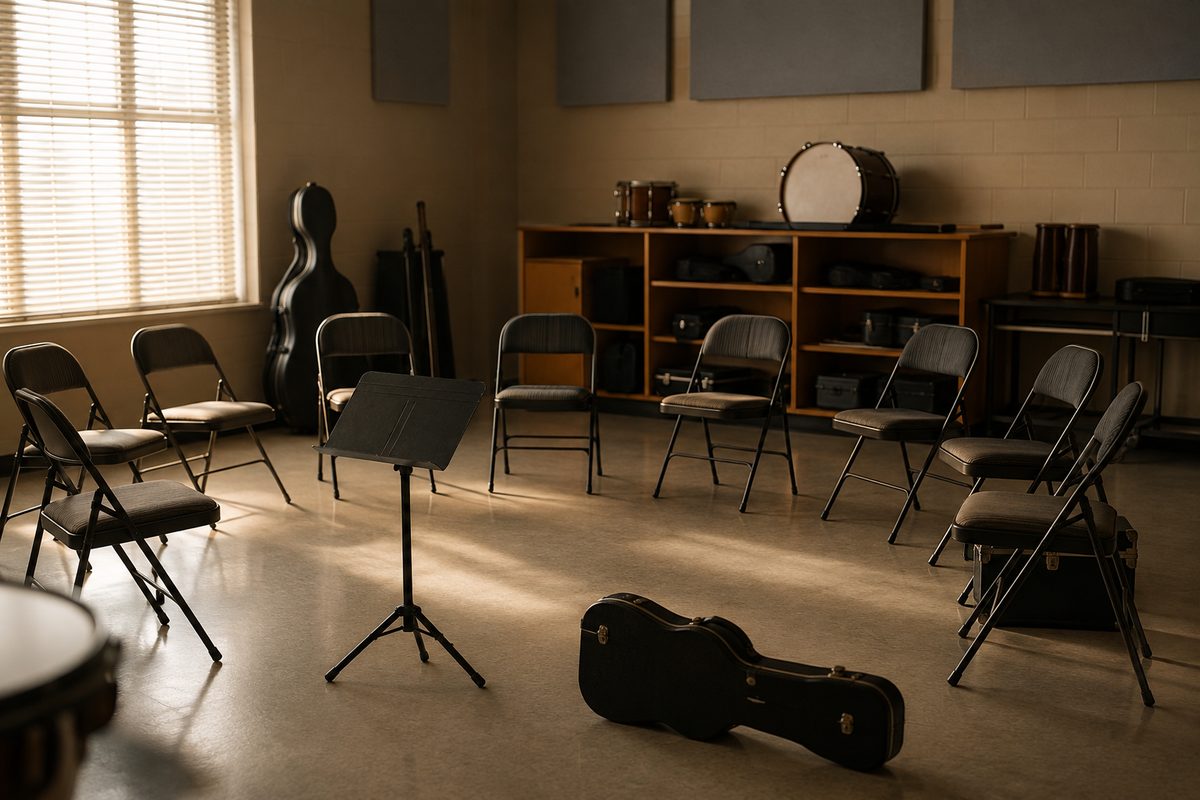
Some California public schools are returning unspent arts education money to the state three years after voters approved Proposition 28, the ballot measure that sets aside about $1 billion a year for arts programs in K-12 schools, CalMatters reported on August 13, 2026. School officials told the nonprofit newsroom that the rules on how to spend the money are too vague and that they cannot find enough arts teachers to hire.
Los Angeles Unified School District, which enrolls about 400,000 students, received about $72 million under Proposition 28 in the most recent year, according to the CalMatters report. At the other end of the scale, Death Valley Unified, with 21 students, received about $2,000.
How the money is supposed to work
Proposition 28 was approved by voters in 2022. Funding is based on enrollment, with schools serving more low-income students receiving more, CalMatters reported.
Schools must spend at least 80% of the money on additional arts staff, with the remainder going to art supplies and other arts expenses. Anything they do not spend must be returned to the state after three years. That first three-year period has now ended, and the California Department of Education has not yet announced how much money schools returned, according to CalMatters. The state redistributes unspent funds to individual schools that are using their Proposition 28 money correctly, based on annual spending reports.
State figures compiled by Create CA, an arts nonprofit that backed the measure, put the number of schools with no arts spending at all in the dozens, and possibly in the hundreds, CalMatters reported. Charter schools are on that list. So are small and mid-sized schools around the state.
Where districts did spend
Other districts expanded aggressively. In Bakersfield City Schools, the folklorico and mariachi dance programs are now twice the size they were. The district also bought thousands of instruments and put artists from the area into classrooms alongside teachers. Long Beach Unified's high schools now list dozens of arts courses. Photography is one. So are painting, marching band, chamber orchestra, steel drums, stage technology and improvised dance.
The hiring problem
California needs at least 5,000 new arts teachers to meet demand, according to a Stanford Research Institute study cited by CalMatters. Rural districts have a harder time hiring teachers generally, and harder still for those with specialized training. The state allows districts to pool their Proposition 28 money to share a teacher, but the law does not spell that out explicitly.
"We need clarity and confidence that we're doing this the right way," El Dorado County Superintendent of Schools Ed Manansala told CalMatters, citing the example of sharing a music teacher with another district without dividing the teacher's time lawfully.
The Los Angeles lawsuit
Austin Beutner, the former Los Angeles Unified superintendent who wrote Proposition 28, sued his former district. He alleges that it reduced the arts spending it was already making and covered the difference with Proposition 28 dollars. The measure bars that. The case is pending in Los Angeles Superior Court, and the district has said its use of the money was legal.
"The sad thing is, this means that thousands of kids aren't getting art," Beutner told CalMatters. "We thought Prop. 28 was clear."
A bill to rewrite the rules
Assemblymember Al Muratsuchi, a Democrat from Torrance, wrote Assembly Bill 2440 to clarify parts of the law, including defining what counts as supplemental arts funding. CalMatters reported the bill has drawn nearly unanimous bipartisan support, with Beutner as its most vocal opponent. He called it a "get-out-of-jail-free card" for Los Angeles Unified. CalMatters reported that "District spokesperson Christy Hagen said in an email that the district had nothing to do with the bill and hasn't taken a position on it."
As of the August 13, 2026 report, the bill sat in the suspense file in the Senate appropriations committee. If the committee does not agree to hear it, it will likely die.
"We want clearer statewide rules, so all kids from Shasta to Bakersfield get high-quality arts education," said Veronica Alvarez, executive director of Create CA, in comments to CalMatters.
Comments 0