 ™
™Nine L.A. Council Districts Haven't Had a Street Repaved Since July
Bel-Air, home to about 8,700 people, got roughly 15 percent of the city's street resurfacing in July and August.
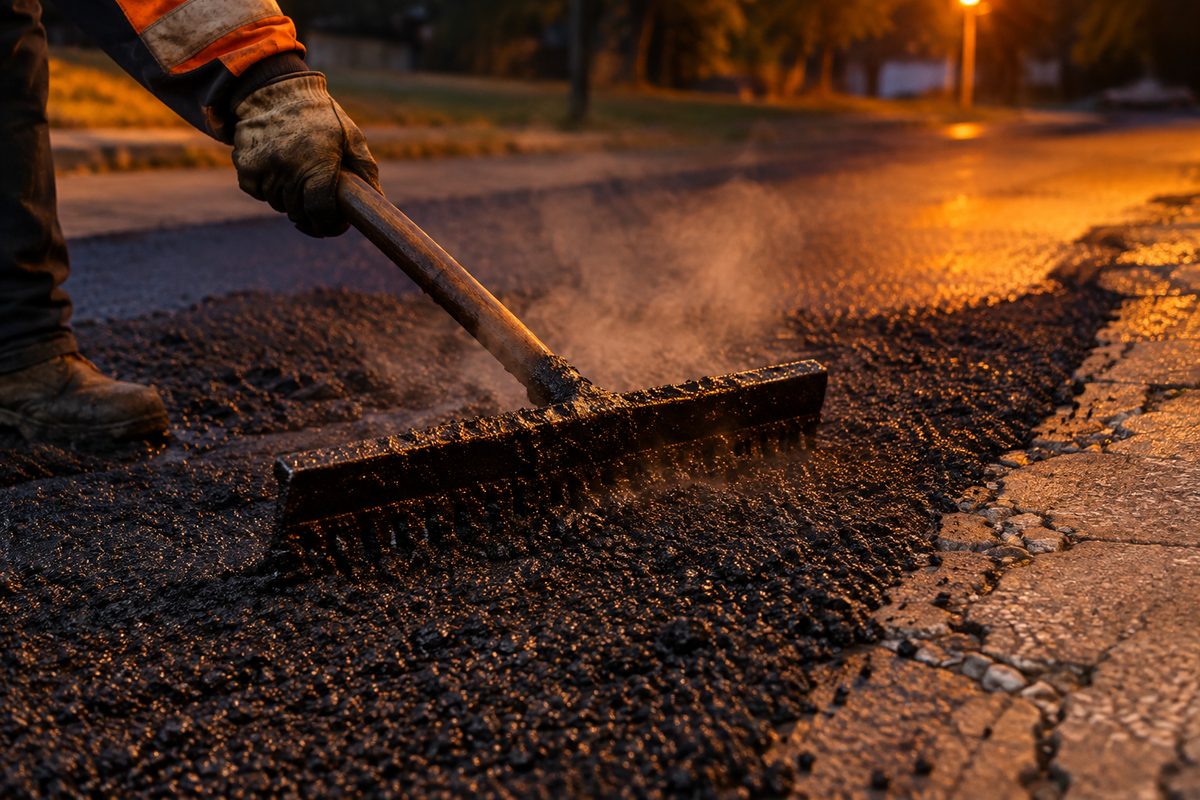
City crews resurfaced streets in six of Los Angeles' 15 council districts in July and August. The other nine didn't get a single repaved block.
Most of the paving went to quiet residential streets in hillside and suburban neighborhoods. Northridge, Bel-Air, Harbor City, Brentwood and Hollywood Hills West each took more than a tenth of it by area, Streetsblog Los Angeles found after measuring every job the city's Bureau of Street Services listed as finished.
The bureau, known as StreetsLA, reported 96 completed resurfacing projects after the fiscal year began on July 1, 2026. Only three were on streets with sidewalks. None was on a street wider than 40 feet.
The nine council members whose districts got nothing are Eunisses Hernandez, Adrin Nazarian, Imelda Padilla, Monica Rodriguez, Marqueece Harris-Dawson, Curren Price, Heather Hutt, Hugo Soto-Martinez and Ysabel Jurado.
For four of them, the wait is longer. Padilla's 6th District, Harris-Dawson's 8th, Hutt's 10th and Soto-Martinez's 13th haven't seen a block fully repaved since before July 2025, Streetsblog reported. Their streets have gotten only slurry seal, a coat that seals worn asphalt, and the patch-style work the city calls "large asphalt repair."
Council districts hold roughly the same number of people, so an even split would give each about 6 to 7 percent of the work. The six districts that got paving did far better than that, by Streetsblog's count.
- Traci Park, whose district covers the Westside west of the 405, got about 20 percent.
- John Lee, in the northwest San Fernando Valley, got about 20 percent.
- Nithya Raman, with work in the Hollywood Hills and Encino, got 19 percent.
- Bob Blumenfield, mostly in Woodland Hills, got 17 percent.
- Tim McOsker, whose 15th District runs from Watts to San Pedro, got 14 percent. Nearly all of it was in one tract next to Lomita.
- Katy Yaroslavsky got 11 percent. Every bit of it was in Bel-Air.
Bel-Air's numbers are the sharpest. The neighborhood has about 8,700 residents, under half a percent of the city's nearly 3.9 million, and it got about 15 percent of all resurfacing. Brentwood, with roughly 40,000 people, got 13 percent. Together they got more new pavement than nine council districts combined, which isn't hard when the nine got zero.
The pattern traces back to Measure HLA, which city voters passed in March 2024. It requires Los Angeles to build planned walking, bus and bike upgrades when it repaves or reconfigures a street. Streetsblog argues the city has chosen small streets without sidewalks to sidestep both HLA and disability-access (ADA) requirements, and that those streets tend to sit in wealthier single-family neighborhoods.
The city's paving has shifted several times since the measure took effect in April 2024, Streetsblog reported. First it mostly stopped paving streets with planned upgrades. In mid-2025 it stopped full repaving altogether and moved to partial patching. It returned to curb-to-curb work in mid-March 2026, aimed at small, sidewalk-free streets.
In the stretch when whole-street repaving had largely stopped, the Globe reported on Aug. 24 that two potholes that went viral were filled within days.
The count comes from a site whose editor says he isn't neutral: he's fighting for HLA in court and before the Board of Public Works, though he says he has no financial stake. Streetsblog measured each job's length and width on Google Maps and didn't inspect all 96 sites in person. It says its figures should be accurate to within a few percent.
StreetsLA has posted only July and August so far, and its online paving map doesn't yet show this fiscal year. Since mid-2024, StreetsLA and the city's Department of Transportation have told the council they'd jointly write a plan to deliver HLA projects. More than two and a half years after the measure became law, no plan has been shared, Streetsblog reported.
Source: la.streetsblog.org, retrieved October 2, 2026.
Comments 0