 ™
™L.A. Wants to Split More Home Lots. A Hancock Park Panel Objects.
Greater Wilshire's land use committee voted unanimously to recommend opposing the Missing Middle initiative and the state bill SB 1116.
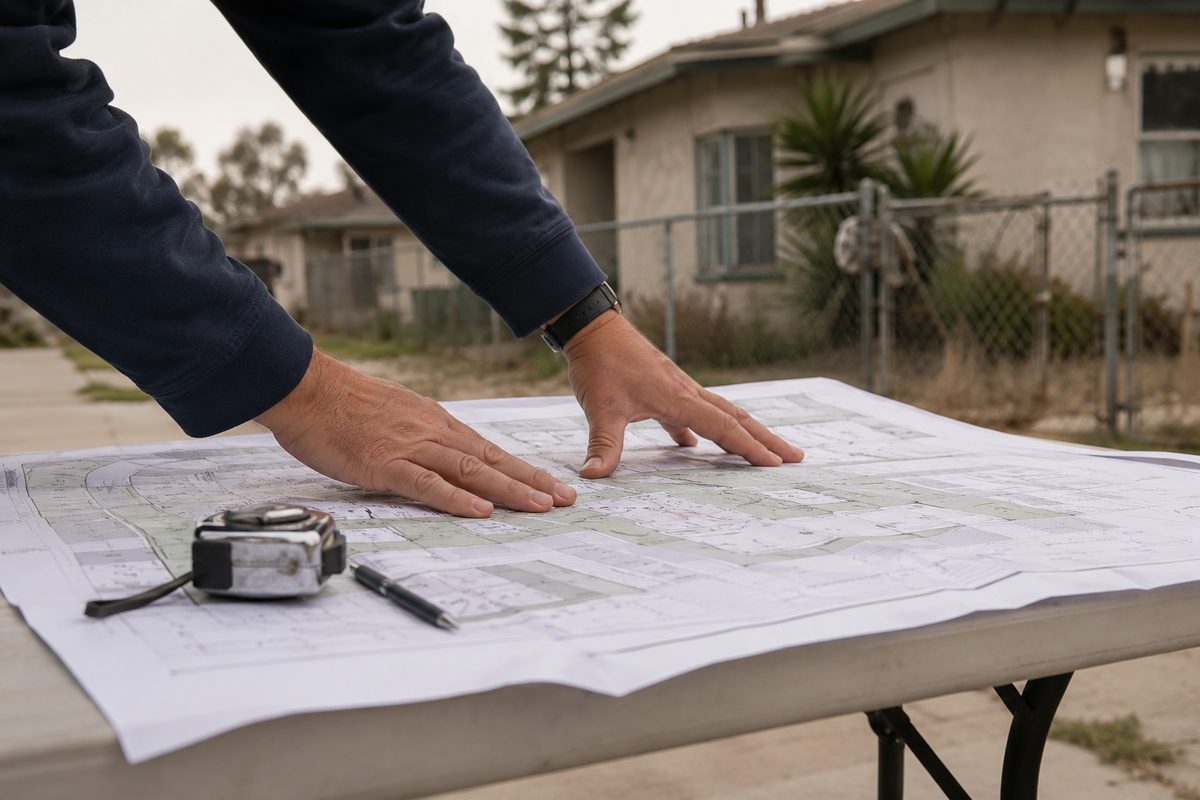
A Hancock Park–area land use committee voted unanimously on August 25, 2026, to recommend opposing the city's Missing Middle housing plan. The Greater Wilshire Neighborhood Council's Land Use Committee took that vote at its monthly meeting, Larchmont Buzz reported. A second unanimous vote asked the board to oppose the state housing bill SB 1116.
The fight is over how many homes can replace one house on a single-family block. That's the number a homeowner on a 50-foot lot in Windsor Square would feel first, and the number a family priced out of the neighborhood would feel next.
The Missing Middle package is a set of proposed city ordinances meant to produce smaller, cheaper units. That means accessory dwelling units, small lot subdivisions, duplexes, fourplexes, townhomes and courtyard buildings. It also carries design standards for new housing in the city's Historic Preservation Overlay Zones. Together the ordinances would give Los Angeles its own rulebook for complying with state housing mandates, the outlet reported.
There's a clock on it. Planning's goal is adoption by the end of this year, when the initiative's funding runs out.
Cindy Chvatal, a GWNC alternate board member who works with the statewide group United Neighbors, told the committee the city's draft goes past what Sacramento demands. She traced the ladder. State law began with one ADU and one junior ADU per lot. SB 9 allowed a single lot to be split into four parcels. The city's proposal, she said, would allow as many as 10 parcels from one residential lot, with rear setbacks cut to four feet and administrative approvals that skip neighborhood review.
Not everyone at the table agreed. Tony Gittelson, a GWNC board member, said the city faces both a housing shortage and an affordability shortage. Approaches like this one are needed to add density without wrecking neighborhoods, he said, and he wished the committee were more open-minded.
Sam Uretsky, president of the Larchmont United Neighborhood Association, sided with Chvatal. Lot splits and shrunken setbacks would destabilize single-family blocks, he argued. The city's adopted Housing Element wouldn't, he said, because that plan steered most new density toward commercial corridors.
Committee secretary Mark Alpers presented the motion. It opposes the program as presented and asks the city for four changes:
- Cap the number of ADUs per lot. The motion says the ordinance would permit up to six, turning a neighborhood program into what it calls "a high-density commercial enterprise."
- Hold front setbacks to prevailing block patterns.
- Require at least 25% permeable deep-soil area per lot.
- Leave existing landscape and open space protections intact.
The same motion backs attached for-sale townhouses under AB 1123 as a buffer between multi-family and single-family zones. It also backs bungalow courts and townhouses that keep 15-foot front and rear setbacks with 25% open space.
On SB 1116, committee member Jane Usher moved that the board urge the Los Angeles City Council to oppose the bill. She cited United Neighbors' written objections: ministerial review that removes public input, plus effects on parking, sewer capacity, water pressure and electrical service in areas built for fewer homes. Larchmont Buzz's account is inconsistent on one figure. Its summary of the bill puts the new minimum parcel size at 800 square feet; the United Neighbors statement it printed says 960.
Usher also reported on the city's draft objective design standards for HPOZs. She called them "one-size-fits-all" across neighborhoods that aren't alike. The negotiating group wants the prevailing standard applied before lots are split, and no new construction taller than what's already there. It also wants a style guide drawn from the preservation plan for each of the city's 35 HPOZs. A new draft is expected in early September, with adoption sought by year's end.
The recommendations go to the full board on Wednesday, September 9, 2026, at 6:30 p.m. at the Ebell of Los Angeles, 743 S. Lucerne Blvd. The committee meets again by Zoom on September 22. Empty nuisance properties are on that agenda, after board member Lisha Sevanian said LAPD and Council District 13 have told her they're working on the problem without visible result.
Source: larchmontbuzz.com, retrieved September 2, 2026.
Comments 0