 ™
™L.A. Housing Officials Urged a Utility Billing Ban. No Vote Yet.
Known as RUBS, the practice splits a building's water and trash bills among tenants who say they can't verify the math.
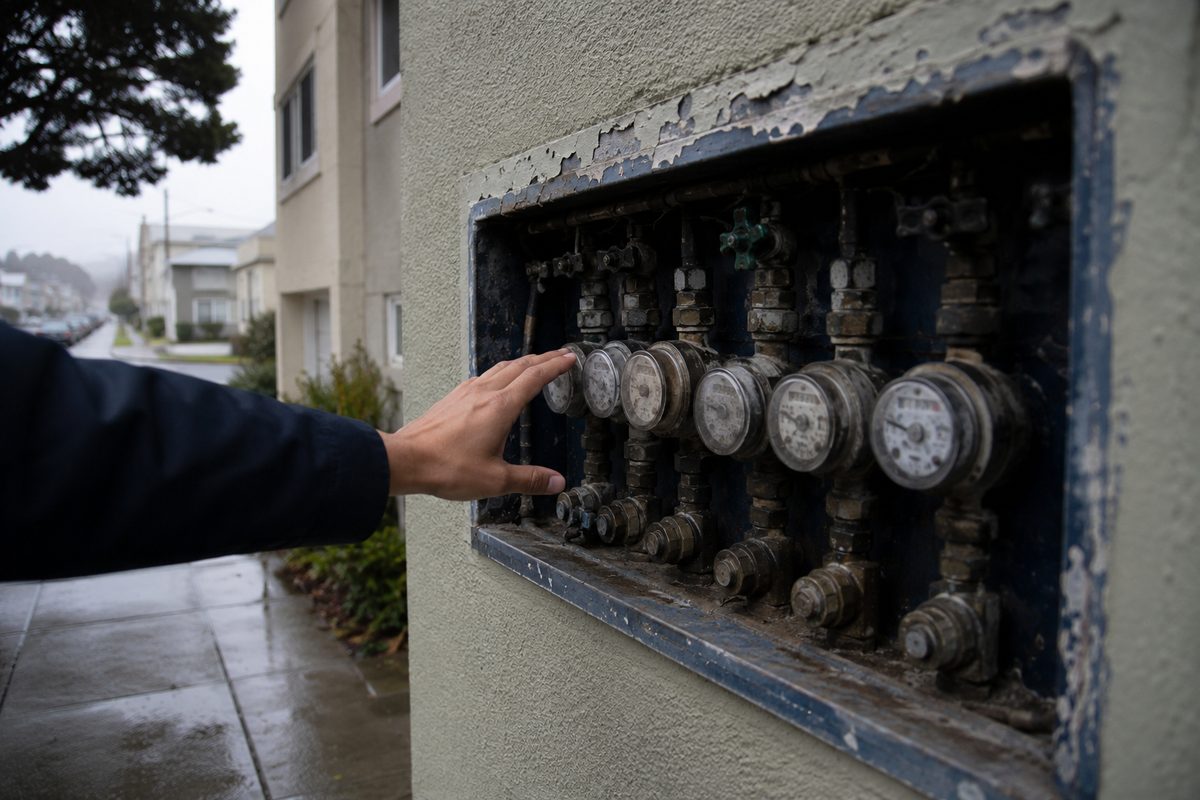
Alicia Yu's monthly utility bill for her Koreatown studio runs about $140, and she says she can't check how that figure gets built. Her landlord uses a Ratio Utility Billing System, or RUBS, which divides a building's master-metered utility costs by unit size and occupancy rather than by what anyone actually uses, Capital & Main reported. In her first apartment, a Burbank studio billed the same way, the charge usually landed between $40 and $80.
Hanna Yoseph, a hairstylist, lives at the Hope + Flower complex in downtown Los Angeles. Her bill swings from roughly $220 to $550, she told the outlet. Late in the month she holds off buying supplies for her business until the number arrives.
“I cannot predict it. I cannot control it, and I cannot budget for it,” Yoseph said at a tenant rally outside Los Angeles City Hall on August 10.
The method exists because most rental buildings don't have a meter on every door. About 80% of rental properties run on a master meter, said Daniel Yukelson, executive director and chief executive of the Apartment Association of Greater Los Angeles. A tenant's share is assembled from square footage, bedrooms, bathrooms and how many people live in the unit.
“It's truly trying to be as precise as possible in allocating what a tenant's usage would be,” Yukelson told the outlet. Landlord groups also argue that rolling utilities into rent leaves owners no way to recover rising costs, and that a separate charge nudges tenants toward conservation.
Renters say there's nothing to conserve toward.
Robert Shore, president of the Park La Brea Residents Association, said his usage gets spread across 12,000 neighbors, which puts the effect of anything he does at a few cents.
The city has been circling this since February 2023. That month the Los Angeles City Council approved a motion from Councilmember Nithya Raman, directing the city's housing department to return within 60 days with recommendations on regulating the practice. The report arrived in December 2025, roughly 34 months later. It recommended banning the billing method in rent-stabilized units and adding transparency rules for everything else.
Those recommendations were scheduled for a Housing and Homelessness Committee hearing in May, and the meeting was cancelled. Raman wrote to Capital & Main that the item had been agendized in error because of a clerical issue, and was meant to be taken up after the summer recess.
Raman, who's running for mayor, lost the chair of that committee in August 2026. She wrote that she expects the item to be re-referred to a new Housing Committee under a different councilmember, and that she hopes the committee and the full council consider it before the end of the year. No hearing date has been set.
Other California cities got there first. Mountain View, San Jose and West Hollywood have banned the practice, and Alameda did so in July. Each of those bans reaches only rent-stabilized units. Under state law, single-family homes and anything built after February 1, 1995 can't be rent controlled, and cities have read that as fencing off the rest of their housing stock. Connecticut bans the billing method statewide, after a ruling by that state's Supreme Court found it violated state law.
In Koreatown, the Virgil Square Tenants Association has spent more than a year on a RUBS strike, paying rent while refusing the utility charges. The Los Angeles Tenants Union and the Debt Collective want the proposed ban widened to units that aren't rent stabilized, organizer Rose Lenehan said. They also want the provision allowing a one-time rent increase in buildings where the practice is banned struck, Lenehan said.
The next thing that has to happen is the re-referral. Then a committee hearing, then the council.
Source: capitalandmain.com, retrieved September 3, 2026.
Comments 0