 ™
™
How to Renew Your California Driver's License, Online or in Person
Online renewal works from 90 days before expiration to a year after, unless your address changed or it's your first REAL ID.
Your California driver's license expired a few weeks ago, and you're wondering what the delay will cost you. The DMV charges no late fee to renew it, but driving on an expired license is illegal and can get you cited, according to the California DMV's renewal page.
So the clock to watch isn't about money. It's the online window: most drivers can renew on the DMV's website starting 90 days before the expiration date printed on the card and ending 12 months after it. After that year, the online option is gone.
The DMV mails a courtesy notice about four months before a license expires. That notice tells you whether you have to take a knowledge test, and drivers 70 and older should check it too, since many of them won't need one. If yours never came, you can request a paper copy.
Renewing online
You can renew online only if all of these are true:
- You're inside the window, from 90 days before expiration to 12 months after.
- You aren't changing your address or your physical description.
- You aren't getting a REAL ID for the first time.
- Your license isn't a commercial one.
If you already carry a REAL ID, the card with a California grizzly bear and a star in its upper-right corner, the DMV lists only two conditions for renewing it online: no change to your address or description, and no commercial license.
- Get the address right first. The online system won't let you change your address, birth date, physical description or license class. If you've moved, update your address with the DMV at least five days before you renew. If you don't want to wait, write the new address on your paper notice and renew by mail instead.
- Go to the DMV's online renewal page and choose "Renew DL/ID."
- If your notice calls for a knowledge test, you may be able to cover it with the DMV's eLearning course. It's built so nobody fails, it runs on a phone or a computer at any hour, and it comes in English, Spanish or Traditional Chinese with Mandarin audio.
- Watch the mail. The DMV says a renewed card should arrive in two to four weeks.
Renewing by mail
You can renew by mail only if the answer to each of these is no. Does your license expire more than 120 days from today? Are you on driving probation or suspension? In the past two years, have you skipped a court date you'd signed a pledge to show up for? Do you hold licenses from more than one state? Are you getting your first REAL ID or renewing a commercial license?
One more rule can send you back to a counter. If your last two five-year renewals both happened by mail or online, the DMV wants to see you in person this time.
Renewing in person
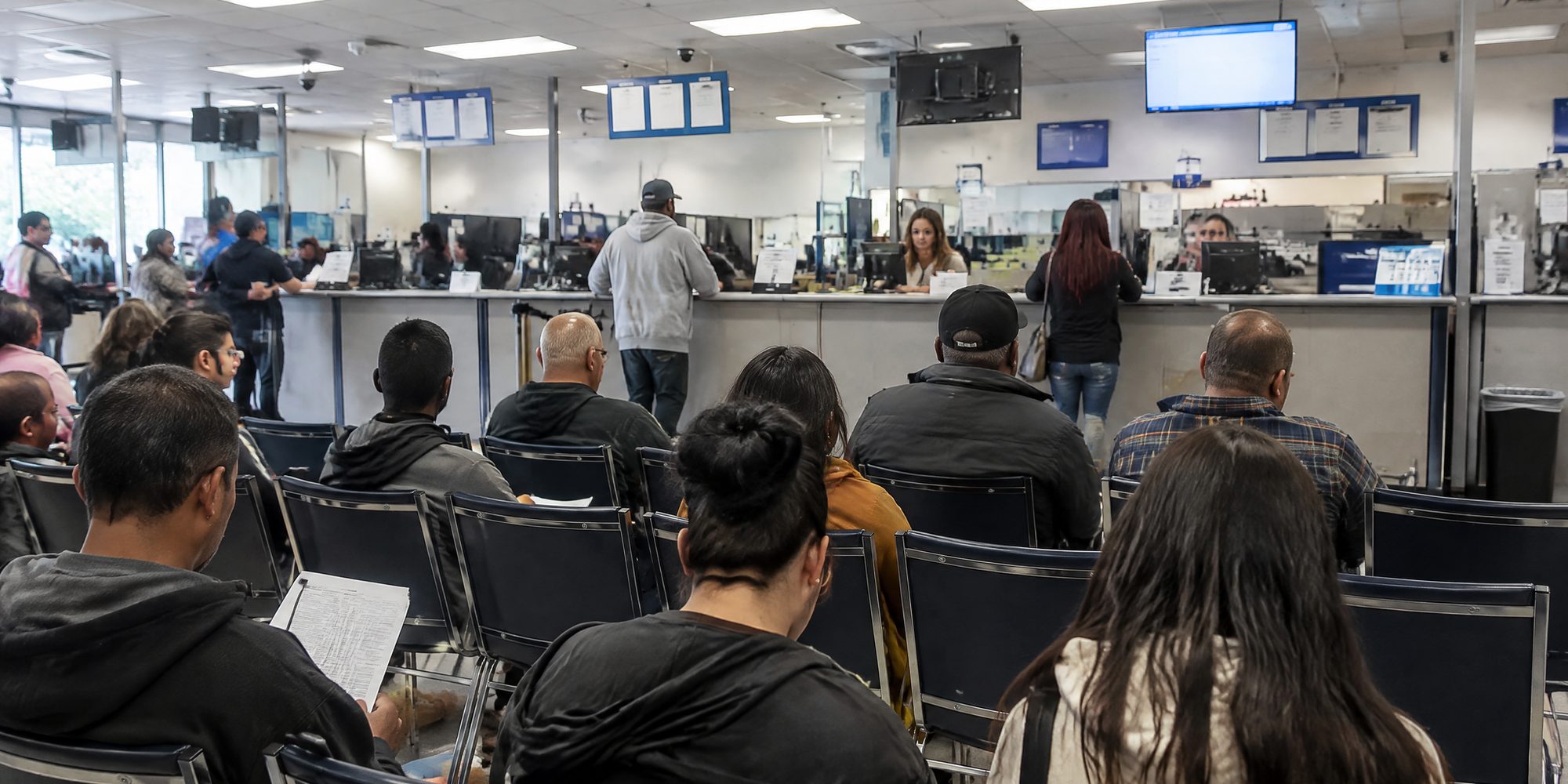
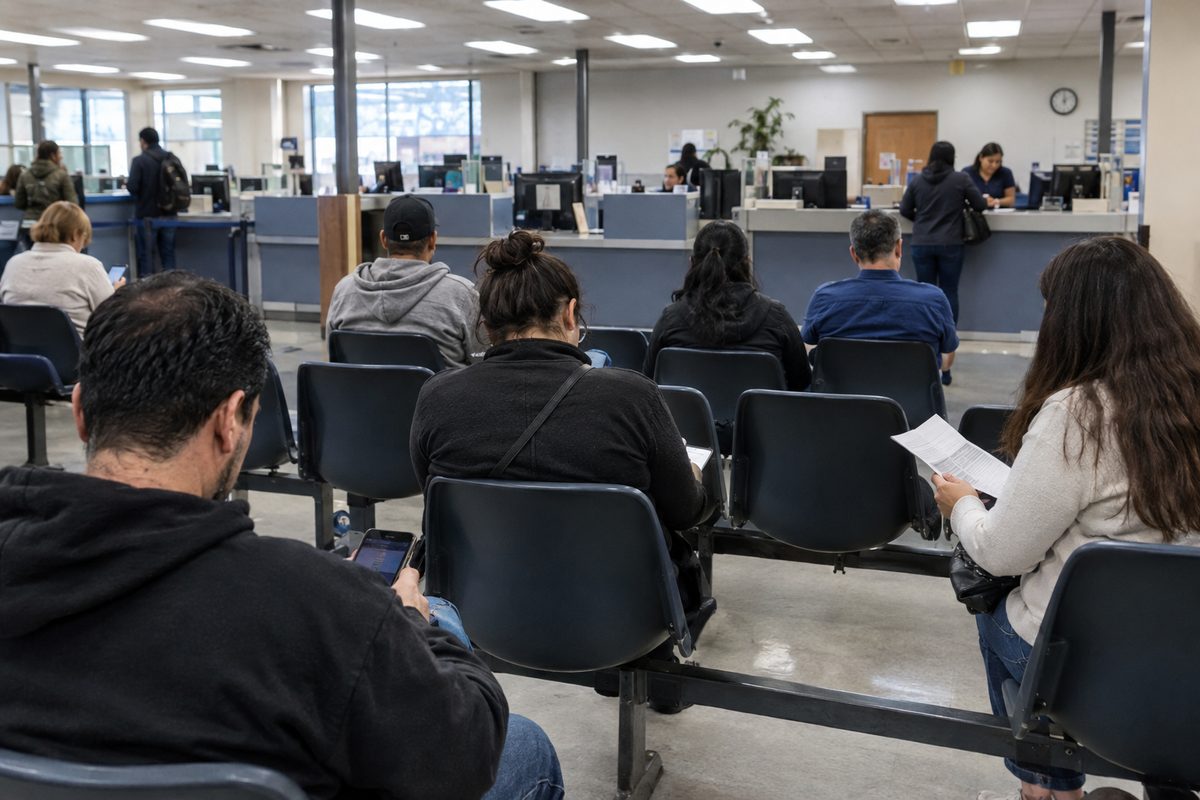
If your notice tells you to come in, make an appointment or check office hours on the DMV's locations page. Then:
- Fill out the license application online before you go. Or bring the notice the DMV mailed you, with the old information crossed out and the current information written in.
- At the office, you'll get a thumbprint scan, a vision exam and a new photo. To pass the vision check you need 20/40 with both eyes together and 20/70 in the weaker eye. If surgery fixed your eyes differently, setting one to see far and the other to see near, you might miss that bar.
- Pay the nonrefundable application fee. The amounts are on the DMV's licensing fees page, and the application and fee stay good for 12 months.
- Take any knowledge test your notice lists. You get three tries at each test, and if you fail the same one three times, you have to apply all over again. Don't cut it close: the DMV won't start a knowledge test in the last 30 minutes before closing.
- If this is your first REAL ID, bring proof of identity and residency from the DMV's list of accepted documents.
You'll leave with a temporary license that's good for 60 days. The real card should come in the mail in three to four weeks. If 60 days go by and it hasn't come, look it up on the DMV's license status page.
Source: State of California, retrieved October 8, 2026. Other sources: State of California (2), State of California (3).
Comments 0