 ™
How to Get an Earthquake Brace + Bolt Grant in L.A.
The state pays up to $3,000 to bolt a pre-1980 house down, but registration is closed until the next window opens.
You're wondering whether the state will really help pay to bolt your old house to its foundation. It will, up to $3,000, through a program called Earthquake Brace + Bolt.
Households earning $94,480 a year or less can apply for up to $7,000 more, according to the program's official page. The catch is timing: as of Monday, that page offers an email alert for when registration opens, not a sign-up form.
That matters because the line is a drawing. Under the program's current rules, effective Sept. 14, registration opens for a limited time, and once it closes, participants are picked at random. Everyone else lands on a wait list that guarantees nothing.
The program is run by the California Residential Mitigation Program, a joint agency whose two members are the California Earthquake Authority and the governor's Office of Emergency Services. FEMA money helps pay for it. The grant goes toward bolting a house's wood frame to its concrete foundation and, where short "cripple walls" ring the crawl space, bracing them with plywood. A typical contractor job runs $3,000 to $7,000, the program says, so the base grant covers the cheap end.
Who qualifies
- A detached, wood-framed house with one to four units, built before 1980, on a continuous raised foundation and level ground or a gentle slope.
- A ZIP code on the program's list. As of Jan. 15, 2025, that meant more than 1,100 high-hazard ZIP codes statewide, ranked by earthquake hazard and by the share of houses built before 1940.
- You live there as your main home, you're on the deed and you have an email address, since everything runs through an online dashboard.
- Out: mobile and manufactured homes, houses built on a slab, any parcel that already got an earthquake retrofit grant, and any house where a brace-and-bolt job has already started.
Owners of homes they don't live in, including rentals, got a one-time opening from Aug. 20 to Oct. 17, 2025. The rules warn that rentals may not be eligible again.
The steps, in order
- Check your ZIP code on the program's site and sign up for the registration alert.
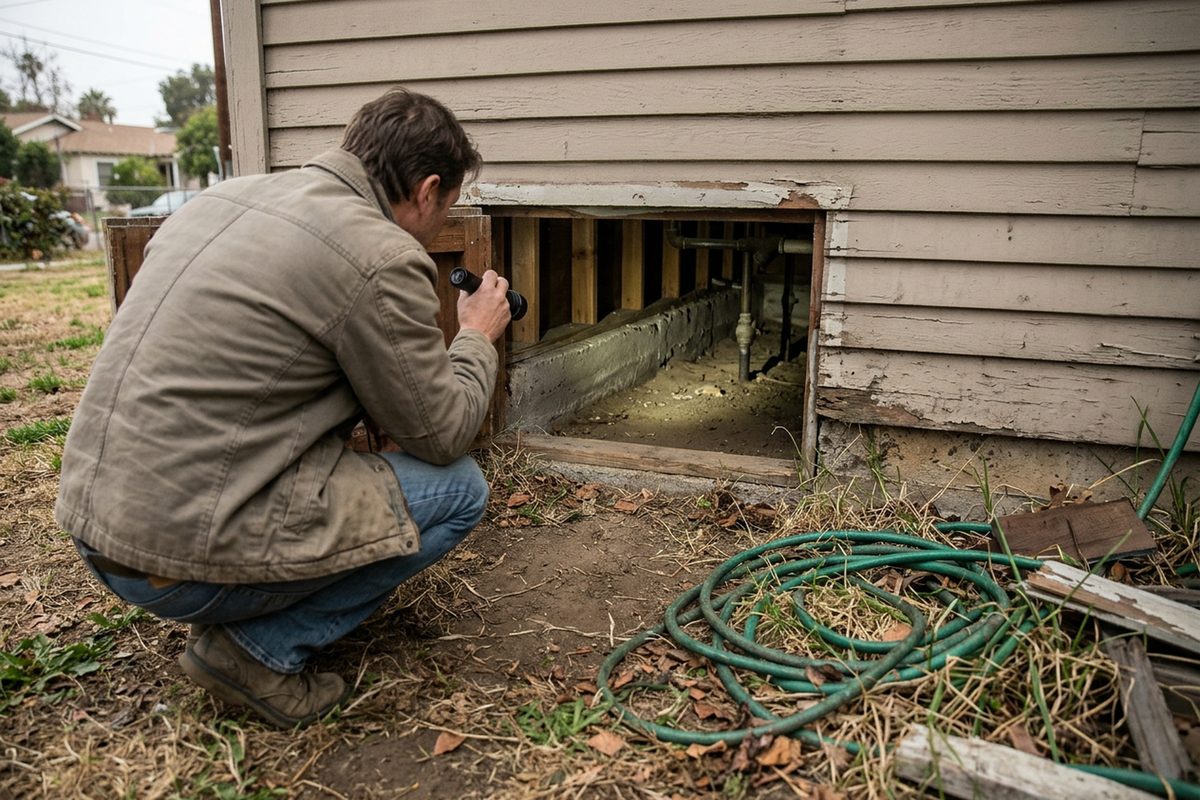
- Look under the house. Cripple walls 4 feet tall or shorter mean a brace-and-bolt job; a frame sitting right on the foundation means bolt only. Taller cripple walls mean an engineer or architect has to draw the plans. The water heater has to be strapped, too. For a simple job, a local building department can sign off on the Los Angeles Standard Plan Number One instead of custom plans.
- Register inside the window, online or by mailing a paper application with proof of the mailing date. Early, late and incomplete ones don't count.
- Wait for the email. If you're picked and claiming the income-based grant, the income verification form is due within 30 days of acceptance. The program checks your income with the IRS, and that extra money goes first come, first served while it lasts.
- Beat the 90-day clock. From the acceptance email, you've got 90 days to choose a contractor from the program's directory (a Class A or B license; B-2 doesn't count) or sign on as owner-builder. You also upload a bid, plus a second if the first tops $10,000; a retrofit-only permit issued after your acceptance date; and eight photos, three in the crawl space and five outside. One 30-day extension is possible if you've already applied and paid for the permit, but those days come out of your build time.
- Build, then file. The work has to be done within 180 days of the program's go-ahead. Within 30 days after that, upload the permit the inspector signed at final, plus 11 photos.
The grant isn't a loan, but it may be taxable, depending on whether your share comes from federal or state money, and some homeowners may get a 1099. Questions go to the program's toll-free line, (877) 232-4300.
The one mistake that costs the whole $3,000 is starting early. Under the rules, any work begun before FEMA and the program approve your pre-retrofit photos and paperwork, finished or not, makes the retrofit ineligible. So if a contractor offers to get going before that approval lands, the answer is no.
Source: crmp.org, retrieved October 20, 2026. Other sources: crmp.org (2).
Comments 0