 ™
™California's Daylighting Law in L.A.: 20 Feet From Every Crosswalk, Painted or Not, $63 Ticket
The state statute took effect Jan. 1, 2024, and the warning-only window closed at the end of that year. LASD's Parking Enforcement Detail started writing $63 tickets across unincorporated L.A. County on Nov. 1, 2025 — under a code that applies to a painted red curb and a blank curb alike. Here's what CVC 22500(n) actually says, the three exceptions written into it, and where the City of Los Angeles sits.
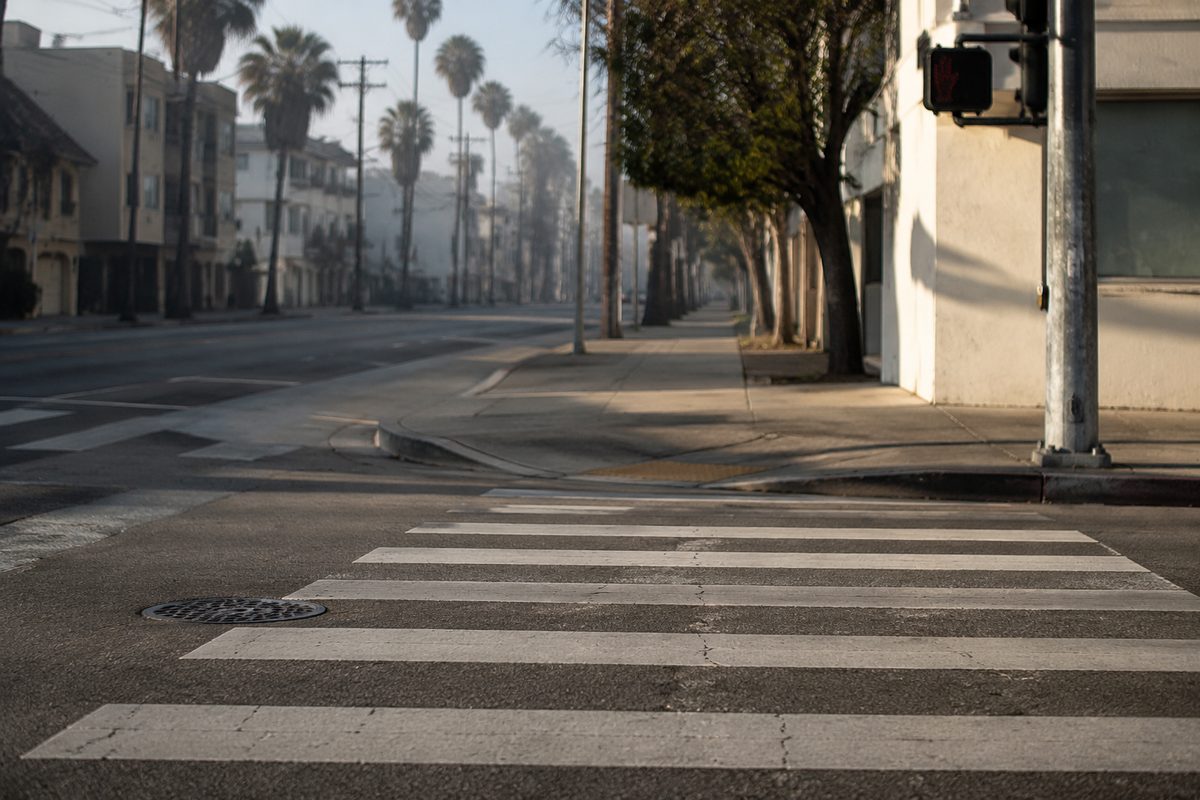
You're wondering if it still applies when there's no red paint on the curb. It does. California added a new subsection to its vehicle code — Vehicle Code section 22500(n) — that bars stopping, standing, or parking within twenty feet of the "vehicle approach side" of any crosswalk, marked or not, and within fifteen feet at a corner where a curb extension has been built out. Two words in the statute do most of the work: unmarked, and approach. The first is why paint does not decide it. The second is why the rule sometimes touches only one side of the street.
The rule is called "daylighting," a public-works word for keeping the sightline between a driver and a person about to step off a curb clear of parked cars. It is not a Los Angeles rule; it is a state rule, and it applies at every crosswalk in California, whether the curb is painted, striped, or bare. Below is what the statute actually says, what the L.A. County Sheriff's Department is now doing about it in unincorporated county, and what the City of Los Angeles has and has not published.
Step 1: The two distances, and which side of the street they touch
Twenty feet is the default: no stopping, standing, or parking within twenty feet of the approach side of a crosswalk. The approach side is the piece of curb a driver reaches before the crosswalk, not after. On a two-way street, that is one curb; on a one-way street, the rule reaches both curbs, because traffic approaches from only one direction and both curbs face it. Several California cities that host their own AB 413 explainers spell the one-way case out — see, for one, the City of Pacifica's page.
Fifteen feet is the tighter distance, and it applies only where there is a curb extension — the bulge of sidewalk that some corners have built out into what would otherwise be the parking lane. LAist, in its July 6 explainer, compared fifteen feet to the length of a four-door sedan, which is the ruler most useful at the curb.
Step 2: What "unmarked" means for you at the curb
The statute reaches "any marked or unmarked crosswalk." A marked crosswalk is the one with painted bars. An unmarked crosswalk, under California law, is the implied one at almost every intersection where two streets meet at close to a right angle — the imaginary rectangle across the road a pedestrian is entitled to walk within, whether the city ever painted it or not. The daylighting distance applies to both.
And the curb itself does not have to be red. The L.A. County Sheriff's Department's own page, published July 27, 2026, states in one line that the violation applies even if there is no posted signage or painted curb. The LAist explainer puts the same point more bluntly: it does not matter whether the curb next to the crosswalk is painted red or not.
Simply put, the state moved the responsibility off the paint truck and onto the driver. That is the change. Cities may still paint red curbs — many will, over time — but the ticket does not wait for the paint to arrive.
Step 3: The three exceptions written into the statute
We read the full text of subsection (n) at California.Public.Law, which mirrors the state's own posting. The rule has three carve-outs, and it is worth knowing all three:
A local authority may set a different distance. A city or county may shorten or extend the twenty feet, but only if it does two things at once: adopts an ordinance whose finding says the different distance is justified by established traffic safety standards, and marks the different distance at the intersection in paint or on a sign. Without both, twenty feet is the default and the default is what a ticket rides on.
A local authority may permit commercial loading in the zone. The statute lets a jurisdiction authorize "commercial vehicle loading or unloading" within the daylighting distance — but only if the loading zone is written into an ordinance that names the crosswalk and is marked in paint or on a sign. A yellow-curb loading zone painted right up to the crosswalk is not an accident; it is the exception, printed.
Bicycles and motorized scooters are allowed. Paragraph (3) is a single sentence letting a local authority permit parking for bicycles or motorized scooters inside the twenty-foot distance. Which is why a bike-corral bulge and a scooter drop zone can sit legally where a sedan cannot.
Two edge cases the statute does not exempt: a disabled parking placard, and a running engine with the driver inside. Neither is written into 22500(n) as a carve-out. Every other subsection of section 22500 keeps its own force — parking on a crosswalk itself, in a fire lane, within fifteen feet of a hydrant, and so on — and the daylighting rule sits alongside them, not in place of them.
Step 4: What LASD is now doing about it
The L.A. County Sheriff's Department's Parking Enforcement Detail started enforcing 22500(n) in unincorporated L.A. County on November 1, 2025, per the department's own page. The citation is written under violation code 22500(n)(1)(A) CVC and the fine is $63. LAist's July 6 story confirms the same number and reports that Southern California enforcement departments moved from the warning period into active ticket-writing that summer.
Unincorporated L.A. County is the part of the county that no city has annexed — Altadena, East Los Angeles, Marina del Rey, Rowland Heights, Ladera Heights, and dozens of other communities the county governs directly. If your street is in one of those, an LASD parking enforcement officer writes your ticket. The department's own fact page names the reason plainly: nearly 36 percent of all pedestrian traffic fatalities in unincorporated Los Angeles County happen at intersections.
LASD posted a longer fact sheet on the rule in December 2025 (linked from its enforcement page as the AB 413 daylighting law info sheet). The department also handles many incorporated cities that contract for sheriff patrol — Malibu, West Hollywood, Lakewood, Compton and about forty others — and the same officers write daylighting tickets in those cities under the same code, at the same $63.
Step 5: The City of Los Angeles, and what LADOT has and has not said
Inside the City of Los Angeles the enforcing agency is LADOT, not LASD. LADOT's own Parking Enforcement Division page states, in one flat line, that its traffic officers enforce every parking law in the California Vehicle Code and the Los Angeles Municipal Code. Vehicle Code 22500(n) is a state parking law, and it applies inside city limits by force of the statute regardless of whether LADOT has posted a page specifically about it.
Two things the City has not published on LADOT's public enforcement pages, as of this writing: a stand-alone daylighting notice at the level of detail LASD posted, and a public citation-schedule line showing the fine amount specifically for a 22500(n) violation. What LADOT does say, on its parking regulations page, is what it always says — the officers write the state code, twenty-four hours a day, and the way to contest a ticket is the initial review by LADOT's Parking Operations and Support Division. If you catch a daylighting ticket in the city and want to argue that the twenty feet was measured wrong, that is where the argument goes first.
The county's fine of $63 is the only figure we can quote against a primary source. LADOT prices its own parking citations from a schedule the City Council sets, and citation amounts for individual code sections are printed on the ticket that lands on the windshield. Until LADOT publishes a daylighting-specific line on its enforcement page, the honest answer is: read the citation when it lands.
Step 6: What to look for at the corner, in the order that helps
Start with the crosswalk. If it is painted, the twenty feet run from the near edge of the paint, on the side you approached from. If it is not painted, look for the corner where two roadways meet at close to a right angle — the unmarked crosswalk is the imaginary rectangle across that mouth, and the twenty feet start there.
Next, look for a curb extension: a section of sidewalk that has been built out into the parking lane at the corner, often paved to match the street rather than the sidewalk. If one is there, the distance is fifteen feet, not twenty.
Then look for paint or a sign that specifies a different distance, in either direction. If a city has painted a longer red curb, believe the paint. If a city has posted a sign shortening the distance, believe the sign — the statute lets it do that, provided the ordinance is on the books.
Then look for a marked commercial loading zone or a marked bike or scooter parking area right at the corner. Both are legal within the daylighting distance under the statute's exceptions, and both are the reason a curb close to a crosswalk can be legally in use.
If none of those override anything, twenty feet is your rule of thumb. Fifteen feet, if the curb bulges.
Step 7: If you already got a ticket
In unincorporated L.A. County, a $63 daylighting citation is processed through the county's parking-citation vendor; the ticket itself carries the appeal instructions and the online payment address. The LASD Parking Enforcement page is the department's front door for follow-up. Note, from the LAist explainer: a driver who plans to contest a daylighting ticket by pointing to a missing sign is probably out of luck. Absence of paint is not a defense the statute allows.
In the City of Los Angeles, the first step is an initial review at LADOT's parking-operations page linked above, followed by an administrative hearing if the review does not reverse it. That is the same two-step you would use for any other parking citation in the city.
What is worth arguing on either side of the line is the measurement itself — twenty feet from the approach edge, on the correct side — and whether a local ordinance has changed the distance in that block. What is not worth arguing is the missing red paint. The statute wrote the paint out.
What actually changed, in one paragraph
The rule you may still have in your head — "no parking in a red zone" — was always the local government's rule, and it required the government to arrive with a paint truck first. The rule now is the state's, and it does not. A crosswalk is a legal object even without paint, and twenty feet from its approach side is now unavailable to park a car by force of a state statute (fifteen feet if the curb has been built out). LASD started writing the ticket on November 1, 2025, at $63 a copy, and the enforcement is spreading through the county's parking-enforcement culture the way any new line item does — slowly at first, and then all at once. The best thing to do about it is not to argue about the paint, but to stand at the corner, look for the two things that override twenty feet, and move the car if nothing does.
The statutory text of Vehicle Code section 22500(n) was read at California Legislative Information and mirrored at California.Public.Law on August 20, 2026. LASD's enforcement start date, violation code and $63 fine are stated on the department's own daylighting page, dated July 27, 2026. The LAist explainer, updated August 4, 2026, was used to confirm the ticket amount and the "no paint required" line. LADOT's enforcement page was read on the same date; its silence on a daylighting-specific fine schedule is noted as silence, not filled in. This page is re-verified and updated in place at this address.
Comments 0