 ™
™Half the Satellites Starlink Dodges Don't Share Their Paths, SpaceX Says
Starlink has steered around about 650 active satellites in recent months, some within tens of meters, a SpaceX executive said.

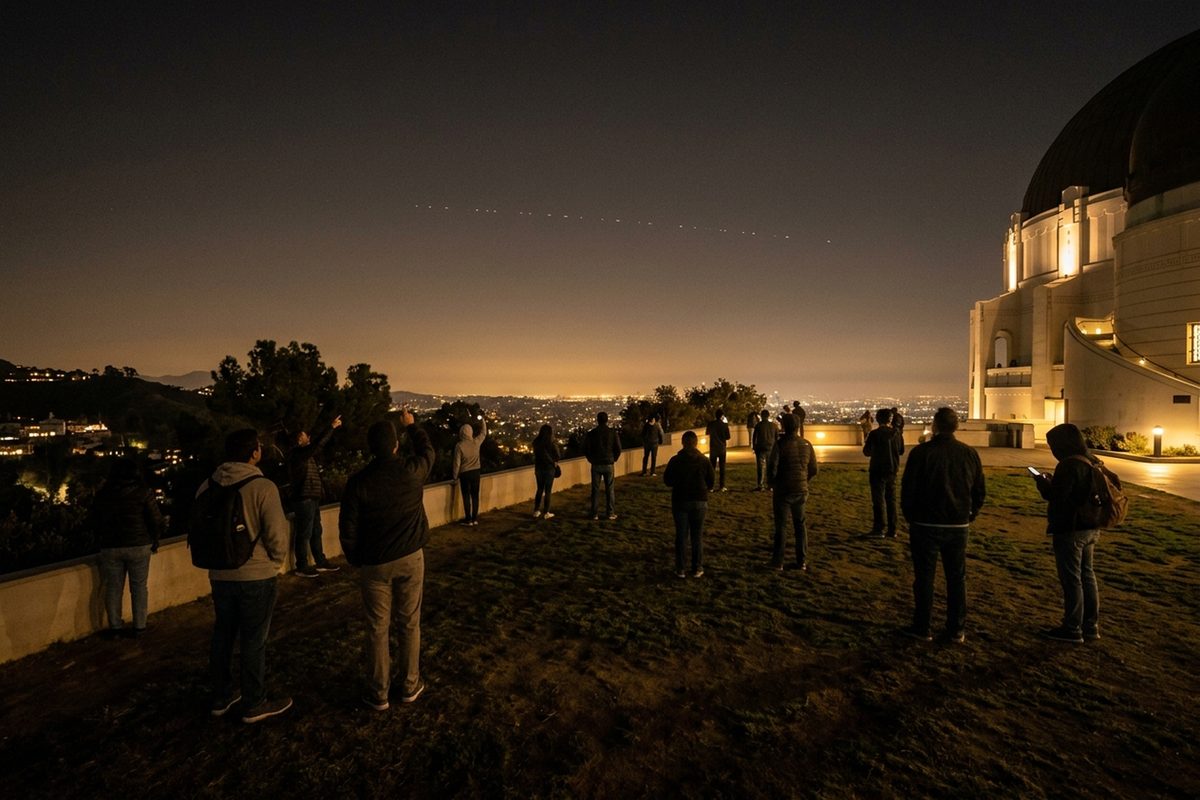
Five hours before a Starlink satellite was due to clear another spacecraft by about 9,000 meters, the other spacecraft moved, SpaceX said. The predicted gap shrank to roughly 60 meters, and its operator hadn't been sharing where it was headed, according to the company's January account of the encounter late last year, reported by Inside Outer Space.
On Tuesday, a SpaceX executive said that kind of surprise keeps happening. Michael Nicolls, who oversees Starlink at SpaceX and also leads Elon Musk's AI company xAI, told the International Astronautical Congress in Antalya, Turkey, that rival satellites have repeatedly changed course near Starlinks without warning anyone, leaving gaps of tens to hundreds of meters. "Way too close to comfort," he said, Ars Technica reported.
His fix is ephemeris sharing: every operator, from every country, publishing where its satellite is and where it's going. No global treaty or regulation makes anyone do that today.
By SpaceX's count, Starlink's satellites make about 1,000 avoidance moves a day around working spacecraft and junk, Nicolls said. In recent months they've swerved around about 650 active satellites run by other operators, and only half of those belong to operators that trade orbit data with SpaceX, he said.
The fleet doing the swerving is huge. Starlink has more than 11,000 satellites, roughly two-thirds of the active spacecraft in low-Earth orbit, Ars noted, and they circle Earth at about 5 miles a second.
The odds of a crash on any single day are tiny. But one collision could scatter thousands of new fragments, which could set off more collisions in a cycle that feeds itself. Nicolls cited the law of large numbers: "if it can happen, it will happen."
Junk, he argued, is the easy part, since anything tracked well can be predicted and avoided. The hard part is a working satellite whose owner moves it and says nothing. A chart in his talk pointed mostly at Chinese and Russian satellites, though some American, European and Japanese operators don't share either. SpaceX does swap data with China's space station and some Chinese operators, he said, but many others give it nothing.
SpaceX has already tried giving data away. In January, it said it would offer every operator free screening data from Stargaze, a tracking system built on nearly 30,000 star trackers aboard Starlinks, hoping they'd start sharing too. Stargaze now spots about 90 percent of maneuvering satellites crossing Starlink orbits, Nicolls said. Eight months after that offer, half the satellites Starlink dodges still belong to operators outside its data swaps.
When there's no room left to steer, a Starlink can duck: it turns itself to shrink the odds of a hit at the riskiest moment, Nicolls said. That's the last resort a shared map is supposed to make unnecessary.
The loudest voice for sharing the road also has the most cars on it, and wants plenty more. SpaceX has moved its whole active fleet below 500 kilometers, away from busier altitudes, and its new V3 satellites, launching on Starship since last month, will fly near 350 kilometers, Ars reported. It's also revealed plans for up to a million satellites in Starmind, a constellation meant to put AI computing in orbit.
Its biggest broadband rival is on board. Amazon Leo, which has 396 satellites up, coordinates every launch with SpaceX and meets with the company regularly to exchange data, Amazon Leo chief Rajeev Badyal told Ars. Sharing that information is "a non-issue," he said.
China was another matter. Badyal said he couldn't comment on China or adversaries for now, then added, as Ars reported: "At some point, we will have to coordinate, or it'll end up being a negative thing for everybody, especially if they get to scale."
Source: arstechnica.com, retrieved October 9, 2026. Other sources: leonarddavid.com.
Comments 0