 ™
SpaceX Is Turning Down New Government Launches as It Bets on AI
SpaceX told NASA it'll end Crew Dragon flights by 2030 and passed on three Space Force missions no rival offered to fly.
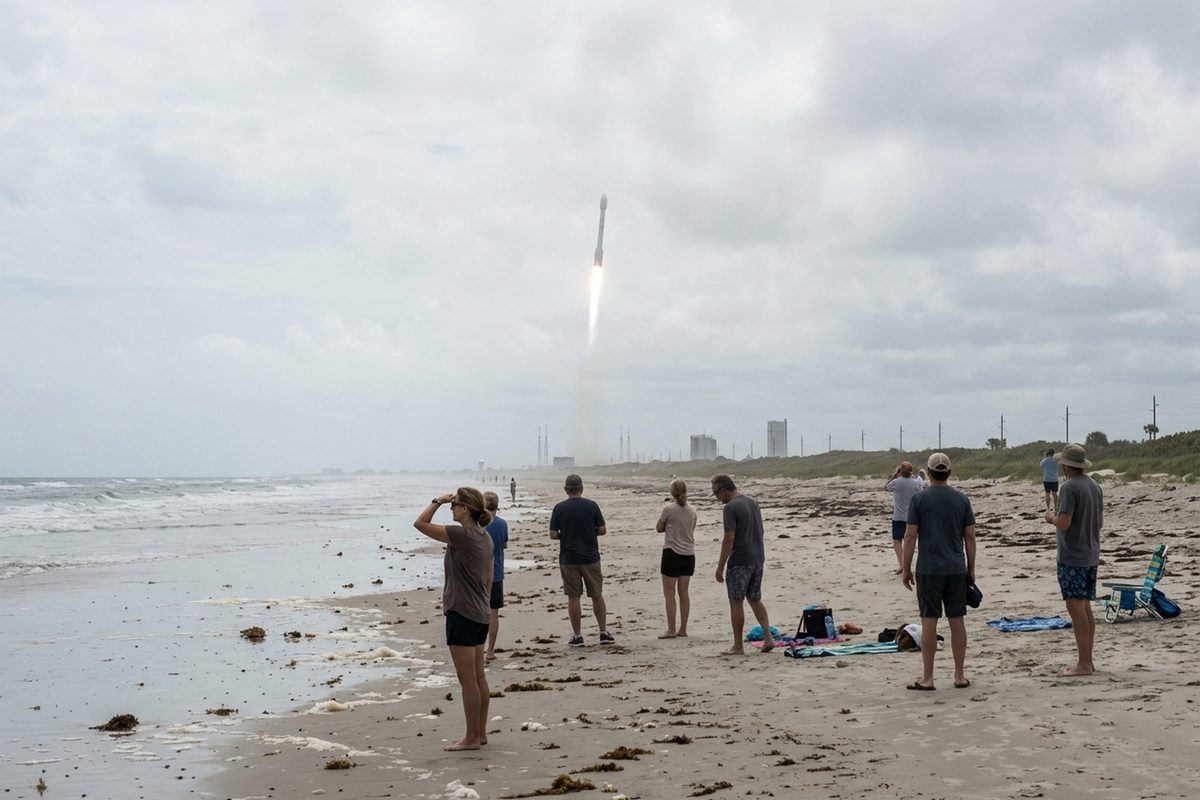
Elon Musk once revealed that the password on some of his online accounts was "ILoveNASA." His rocket company is now turning away new launch and spaceflight work from NASA, the Space Force and the companies building small moon landers for NASA.
SpaceX plans to retire Crew Dragon, NASA's only dependable way to get astronauts to the International Space Station, no later than 2030, and it has told the agency so, Ars Technica reported Thursday. It's also quit selling commercial Falcon 9 launches for missions after 2028, and three sources told Ars the company informed the lunar lander builders it won't fly their hardware. Ars said SpaceX is still flying the contracts it already holds, for less money and generally more reliably than pretty much anyone else.
The Pentagon is feeling it too. When the Space Force went looking for launches for three upcoming military satellites, SpaceX passed, two people with knowledge of the missions told Politico, which reported it Oct. 22. They said no rival launch company offered to carry them, either. SpaceX flew 85% of U.S. launches in 2025, according to Politico.
Brig. Gen. Eric Zarybnisky, the Space Force's acting head of buying launches, told Politico he wasn't worried about flying any particular mission: "we're working through the right way to support those customers."
It's a long way from where the relationship started. In December 2008, as SpaceX struggled to cover payroll, NASA gave it $1.6 billion for a dozen Dragon cargo runs to the station. Musk and SpaceX's Gwynne Shotwell have both said that deal probably kept the company out of bankruptcy, Ars recounted. Contracts NASA has awarded SpaceX over the last two decades add up to roughly $20 billion. Now the agency is the one that can't do without its partner.
The reason is AI. SpaceX expects most of its future revenue to come from artificial intelligence, Ars reported. On the company's third-quarter earnings call in October, Musk said the team that won SpaceX close to 90% of the mass sent to orbit is now building computing on the ground — in places like Memphis, Ars wrote. "This is a bit like the New York Yankees playing in Little League," he said on the call.
Here's the plumbing problem. Starship, the giant rocket meant to replace Falcon, releases flat satellites like Starlink through a narrow slot that Ars compared to a Pez dispenser. Most military satellites are built for a roomier cargo bay, Politico reported, and Ars said the slot is no good for conventional satellites or for a hefty NASA payload like a big space telescope. SpaceX's 2020 Starship user guide showed a clamshell nose that would open in space. Ars gave the company a chance to commit to building a large payload door, and it didn't.
The backups aren't ready to take the work. United Launch Alliance's Vulcan was grounded earlier this year over booster problems, and in May a Blue Origin New Glenn blew up on the company's only launchpad, in Florida, according to Politico. For astronauts, Shotwell said in September that NASA should turn to Boeing and fly the capsule the government already paid for.
The moon is the bigger worry. NASA's Artemis landings depend on a Starship lander SpaceX won a $2.89 billion contract to build in 2021, and some people at NASA are starting to wonder how serious SpaceX is about it, Ars reported. Jeremy Parsons, NASA's Artemis program manager, told Ars he regularly visits SpaceX's facilities in Hawthorne and at Starbase, Texas, and that its leaders are "definitely committed" to the lunar missions. Ars estimated an early uncrewed demo landing could take about 20 Starship launches. Starship has flown 14 times in three and a half years.
Lori Garver, NASA's deputy administrator under President Obama, helped push the agency toward commercial companies like SpaceX in the first place. Garver told Ars she's still in denial that a breakup is pending and can't yet imagine SpaceX without Dragon and Falcon flights. "Not yet," she said.
Source: arstechnica.com, retrieved October 29, 2026. Other sources: yahoo.com.
Comments 0