 ™
™The LAPD Takes Eleven Kinds of Report Online. Eight Rules Decide Whether Yours Is One.
No known suspect is the rule that stops most people. Here's the whole list, and the eight conditions.
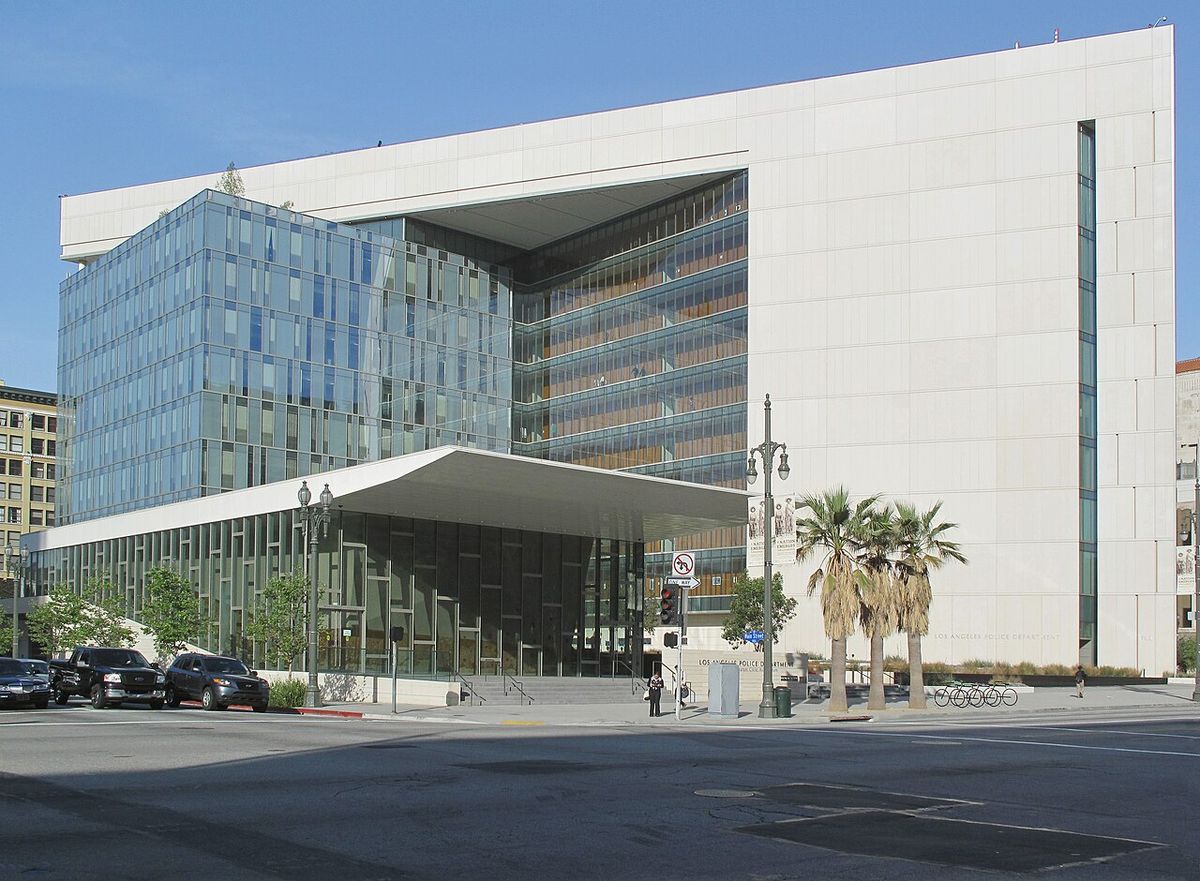
You're wondering whether you have to wait around for a patrol car. For eleven kinds of report, you don't. The Los Angeles Police Department takes them through a web form at any hour, and it hands you a report number before you close the tab. Eight conditions decide whether yours is one of the eleven, and the one that stops most people is that there can't be a known suspect.
Start with the thing that looks wrong, because it stops people at the door. The form is not on the department's website. The LAPD's file a police report page sends you to secure.coplogic.com, an address run by the vendor named at the bottom of that page — "Powered by Coplogic." That is the real form. The department offers it in five languages there, English, Spanish, Korean, Traditional Chinese and Simplified Chinese, and the same page lists a number, 424-359-4636, that texts you a link so you can fill it out on a phone.
The eleven the form takes
These are the department's own categories, with its own definitions condensed.
Theft. Personal property taken from a publicly accessible place. The example the page prints is the one most readers arrive with — a package taken off a porch — and it prints a second one that is easy to miss: a wallet left behind in a restaurant and gone by the time you went back for it.
Theft from vehicle. The page accepts it from a locked or an unlocked car, in those words. Hold on to that distinction. The Sheriff's Department draws it differently, and that is further down this page.
Vandalism. Malicious damage, destruction or defacement of someone else's property. The department's examples are a knocked-over mailbox, a spray-painted wall, a rock through a window. No dollar limit is posted anywhere on the category.
Hit and run. Damage caused by another vehicle whose driver should have left their information and didn't.
Minor traffic collisions. Here the page contradicts itself, and it's better to know that before you start typing than halfway through. The category line describes minor injuries with information exchanged. The eligibility list further down the same page requires that no one was injured. The eligibility list is the gate the form actually applies, so if anybody was hurt at all, the phone is the safer route.
Lost property. Property its owner left behind without meaning to — left at an unknown location, or left with no attempt to go back for it.
Harassing phone calls. Repeated contact meant to annoy, which the page defines broadly enough to cover hang-ups, obscene language, emails and text messages, and which it limits to incidents with no known suspect.
Identity theft. One instruction here catches nearly everyone. You report identity theft at your own home address, whatever address the fraud was actually committed at, and to the agency that polices where you live. The department states it as a rule about the crime location, not a suggestion.
Hate incident. The definition is narrow and the narrowness is the whole point. The page describes a hate incident as a non-criminal act directed at someone for a protected characteristic, says such acts do not violate criminal statutes, and says they are generally protected speech under the First Amendment. A hate crime is a different thing, and it is not on this menu.
Vice tips and narcotics tips. Two separate categories, and both of them let the person filing stay anonymous.
A twelfth item sits on the page without really being on the form. Illegal dumping gets its own heading and is immediately handed off: the page names the city's sanitation department as the agency that handles it, and the link it gives lands on StreetsLA's public right-of-way page, which tells you to report dumping through MyLA311. Two departments and a third system before you reach a form, and the report at the end of it belongs to the city rather than to the police department.
The eight conditions, and the one that decides most of them
All eight have to be true of your incident. The department lists them in a block: it isn't an emergency; it happened inside the City of Los Angeles; you are at least 18; nobody was injured; there are no known suspects; it didn't happen on a state highway; no firearms were involved; and you have internet access and an email address.
The fifth is the one that ends most attempts, and the page does not define it. There is no sentence anywhere on it explaining what makes a suspect "known," and nothing that says whether a stranger's face on a doorbell camera counts as knowing who did it. The page's only instruction for the uncertain is the same one it gives everybody it turns away: if your incident doesn't meet the criteria, call 1-877-ASK-LAPD, which is 877-275-5273, for non-emergency response.
The sixth condition is quietly a jurisdiction rule. A state highway is not the LAPD's to investigate, and the California Highway Patrol says on its own collision report page that it can only produce copies of the collision reports it investigated. If a freeway is involved, the report you eventually want will have been written by a different agency than the one whose form you are looking at.
And some things aren't on the list at all. A stolen car is not one of the eleven categories. Neither is anything where a person was hurt or a gun was present, which conditions four and seven exclude outright, whatever the category line says.
What happens after you press submit
Immediately, two things. You get a temporary report number, and you can print a copy of what you just filed. Neither of those is a police report yet.
Then a wait, and the department publishes its own pace for it: reports filed this way are reviewed on average once every 24 hours, and possibly longer on weekends and holidays. Approval is the step that converts a submission into an official report. At that point an LAPD report number is issued and a copy of the final report is emailed back to you. If your incident needs more looking into, the page says you'll be contacted by email or telephone.
The part people get caught by is what they can't do next. Supplemental reports cannot be filed online. If the serial number of the stolen laptop surfaces the next morning, the department's instruction is to wait until the final report with its LAPD number arrives, then call your local station and ask for the detective assigned to the case. There is no box to add it to.
One warning is printed twice on that page, at the top and again at the bottom, which is a fair signal of how seriously it is meant. Filing a false police report is a crime under Penal Code section 148.5, and the department states the exposure as up to six months in county jail, a fine of up to $1,000, or both.
If it didn't happen in the City of Los Angeles
The second condition disqualifies a great many people in this county, because the LAPD polices one city in it. The Sheriff's Department runs a separate system of its own, the Sheriff's Online Report Tracking System, and it is a narrower door with dollar figures written on it.
SORTS takes five kinds of report, and four of them carry a ceiling. A lost or stolen cell phone worth $950 or less. Other lost or stolen property worth $950 or less. Theft from an unlocked vehicle worth $950 or less. Theft from an open or unsecured area worth $950 or less. And vandalism where the damage comes to under $400, with graffiti excluded outright. The department publishes all five on its online reporting page.
Set that against the city's list and three differences matter to whoever is filing. The Sheriff's form caps the value of what you lost; the LAPD's posts no dollar limit at all. The Sheriff's takes theft from an unlocked vehicle; the LAPD's takes it locked or unlocked. And graffiti — a spray-painted wall, which is the LAPD's own printed example of reportable vandalism — is the single thing the Sheriff's vandalism category refuses.
One thing the county system does that the city's does not: it accepts a supplemental loss form online, provided you already have an LASD report number. The department also says that once a report is reviewed and accepted you get a free copy of it by email, which is what the LAPD's page promises too, and worth knowing because a report an officer wrote is a purchase rather than an email.
The numbers that explain why the form exists
The department has been running this for a decade and has published what happened. In a January 2024 announcement, the LAPD said the service launched in 2016 and took 1,300 reports in its first year. In 2023 it took more than 131,000. That is a hundredfold rise across ten years in which the department also widened what the form would accept, and it is the honest reason the door exists.
Two counts in that announcement don't line up with the page it points to, which is worth a reader's caution rather than any alarm. The announcement says the service has expanded to 22 types of report. The public menu today lists the eleven crime categories above, plus the illegal-dumping hand-off. The announcement also describes traffic collisions as part of the original 2016 set, and the current page still carries them. Where an agency's own two documents disagree, the form is the one that settles it: it either accepts your report or it doesn't.
The order to do it in
Work out which city you were standing in first, because that decides which form you're even allowed to open. Then run your own facts against the three conditions that end the online route fastest: was anyone hurt, was a firearm involved, do you know who did it. A yes to any of those means the phone, and the number is 877-275-5273. If all eight conditions hold, get the serial numbers, the replacement values and the exact address in front of you before you open the form, because adding anything afterward means waiting for the final report and then calling a detective. Then save what the form gives you and watch your inbox. The temporary number is a receipt. The LAPD number that arrives with the approved report is the report.
Categories, conditions, procedures, phone numbers and dollar limits above were checked on September 17, 2026 against the Los Angeles Police Department's file-a-police-report page and its January 11, 2024 newsroom announcement on the Community Online Reporting Service; the Los Angeles County Sheriff's Department's online reporting page; StreetsLA's public right-of-way page; and the California Highway Patrol's collision report page. This page is not legal advice; where a linked source and this page disagree, the source wins. It is re-verified and updated in place at this address.
Comments 0