 ™
™Cal State Bought 675,000 ChatGPT Seats. It Has About 533,000 Students and Employees.
The renewal costs $13 million a year: $19.26 a licensed seat, or $24.39 for every person the system enrolls or employs.
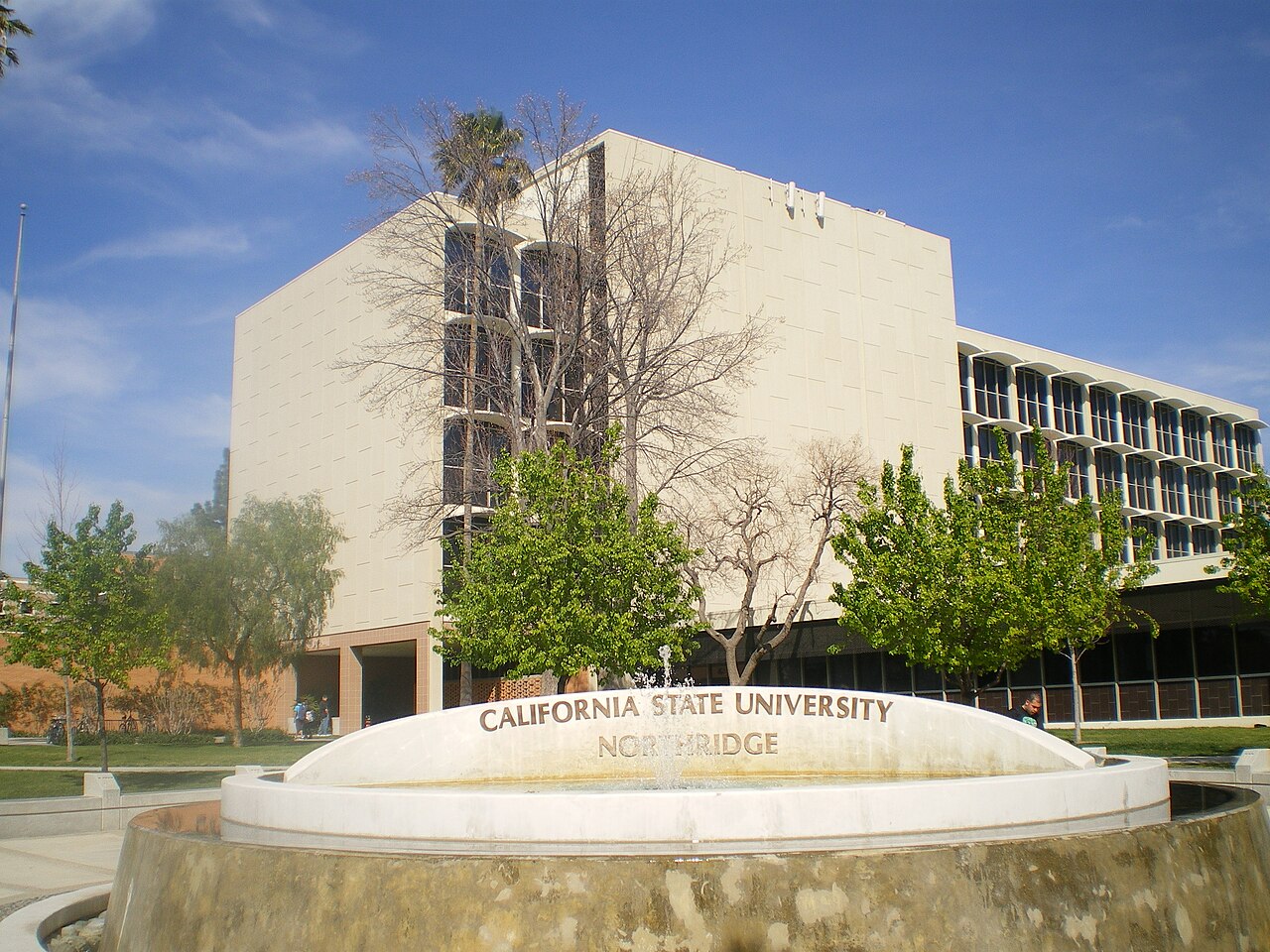
Cal State's renewed contract with OpenAI covers 675,000 users. The system has roughly 470,000 students and 63,000 faculty and staff, LAist reported in May, which comes to about 533,000 people. The seats outrun the people by some 142,000, and one term of the agreement points at part of that gap: graduates keep their account for a year after they leave. The system hasn't published a breakdown of the rest.
That distinction — a seat isn't a person — is the whole of what follows. The figure in circulation this week is $13 million a year, attached to a comparison that LAist published Friday morning: Cal State bought one AI product for everybody, and the University of California bought nothing systemwide, leaving its campuses to arrange their own access and its instructors to write their own classroom rules. Whether $13 million is a lot depends entirely on what you divide it by, and there are several defensible choices.
As quoted / in context
As quoted. Cal State will pay $13 million a year for three years — $39 million if it runs the distance — with the option to cancel annually on notice, LAist reported. The deal it replaces cost $1.9 million for 40,000 users in the first half of 2025 and $15 million for 500,000 users from July 2025 through June 2026; CalMatters described that first agreement, covering all 22 campuses, as a $17 million, 18-month contract, and the two arithmetics agree to within $100,000. CSU spokesperson Amy Bentley-Smith told LAist that "the per-subscriber cost is lower than during the first contract and substantially lower than the price offered by any other vendor."
In context. The published figures let a reader check that claim rather than take it, and it holds. Divide $13 million by the 675,000 seats the contract licenses and the answer is $19.26 a seat a year. Divide it by the 533,000 people the system enrolls or employs and it is $24.39. Divide it by the 470,000-plus students alone and it's $27.66 at most. Run the same division backward through the two earlier deals: $1.9 million over 40,000 users is $47.50 a seat for six months, and $15 million over 500,000 is an even $30 for the year. The seat price has fallen by more than a third while the seat count rose by 175,000 and the annual bill fell by $2 million. Every one of those three facts is usually reported by itself.
What it excludes
- Whether the seat is ever opened. Cal State surveyed 94,060 people last fall — 80,626 students, 6,085 faculty and 7,349 staff — and Inside Higher Ed reported that 95% had used at least one of the 21 AI tools on the questionnaire, while "more than half of faculty, one-third of staff and one-fourth of students access AI tools through their institutions." The survey did not separate the university's ChatGPT Edu from the free public version, Inside Higher Ed notes, so it can't say how many of the 675,000 accounts are live. Assume the student share carries across the seat count — our assumption, and it is doing heavy work — and the $19.26 becomes roughly $77 a year for each student who actually comes in through the university's door.
- The training nobody finished. Fifteen months after the first contract was signed, 0.7% of students and 16% of faculty had completed the system's AI training, CalMatters reported in May, citing figures from April. The tool arrived systemwide. The instruction in how to use it didn't arrive at the same speed.
- Permission. Inside Higher Ed's account of the same survey puts faculty policy at 26% neutral on student AI use, 22% discouraging it, 19% encouraging it, 18% forbidding it, 6% requiring it and 7% not addressing it at all. Forty percent of instructors discourage or forbid the thing the state bought for every one of their students; 25% encourage or require it. The account is systemwide. The permission is per syllabus.
- The staff who are not on the invoice. "Free" is a systemwide word with local exceptions. Cal State Northridge's own ChatGPT Edu page says there is no direct cost to students, faculty, employees, colleges, divisions or departments — and then, two questions later, that auxiliary employees can have access because "there is a cost recovery done back to the auxiliary unit."
The number underneath
Two of the system's largest campuses sit in Los Angeles County, which makes this a local invoice as well as a state one. Cal State Northridge enrolled nearly 37,000 full- and part-time students in fall 2025, by its own catalog's count. Long Beach enrolled 42,355, the largest number in the campus's 76-year history, by its own announcement. That's close to 80,000 accounts between two campuses, before the county's other CSU campuses are counted.
Northridge's IT page is the plainest statement anywhere of what one of those accounts is. Active students, faculty and staff are eligible; alumni keep access one year past graduation; emeritus faculty are not eligible; conversations and data are not used to train OpenAI's models, and the campus's workspace stays private to the campus. The page also still tells students that the Chancellor's Office is funding ChatGPT "through July 2026 at which time an extension will be evaluated," a few lines above the answer that says the new agreement runs three years from July 1, 2026. The extension was evaluated in May.
Students say they were not in the room for the first one. Katie Karroum, a Cal State Northridge student and the Cal State Student Association's vice president of systemwide affairs, told CalMatters: "We were not consulted when the contract was signed, and we weren't even given a heads up." The association's February white paper found 83.5% of students concerned about what happens to their personal data, reported that many preferred the free ChatGPT to the institutional version for that reason, and asked for formal student inclusion in future AI decisions. The renewal was announced in May.
Across town the arrangement is the opposite, and it is not obviously better. UC has no systemwide product, LAist reported Friday: campuses negotiate their own access to OpenAI, Microsoft and Google tools, UC San Diego built TritonGPT, UC Irvine built ZotGPT and adoption stayed low, and UCLA runs an internal committee while individual professors set the rules that students actually live under. Stephanie Valadez, a UCLA ethnomusicology graduate student and president of the UC graduate council, told LAist: "We don't want our brains to atrophy while we're trying to get better at what we're doing." A Cal State student and a UC student in the same county are working under two different theories of the same technology, and neither theory has produced a consistent classroom policy.
The verdict
$19.26 is the correct answer to the question that was asked. It's the price of a licensed seat, and by that measure the system negotiated down three times running. It isn't the price of a user, and the gap between those two words is where the argument over this contract lives. The system's own survey asked about tools rather than about the account Cal State is paying for — which means the number that would end the debate doesn't exist in public.
One monthly figure would produce it: active accounts, by campus, against seats licensed. Cal State publishes the contract, the survey and the training completion rate, so the reporting culture is there. Until the last number joins them, the honest sentence is the boring one. The system is paying about $19 a seat, about $24 a person and about $27.66 a student for an account that three students in four, on the system's own numbers, reach some other way or not at all.
Divide responsibly.
Comments 0