 ™
™The Getty Villa's $110 Beer Night Takes Its Cue From Ancient Mesopotamia
Archaeologist Tate Paulette and beer historian Travis Rupp lead the Bacchus Uncorked talk, then pour modern brews modeled on ancient ones.

On a Sumerian stone seal carved roughly 4,500 years ago, guests at a banquet sit and drink through straws. The Getty Villa put that little scene at the top of the page selling its Saturday beer night. It's the right pitch, because the beer those people drank looked nothing like a pint.
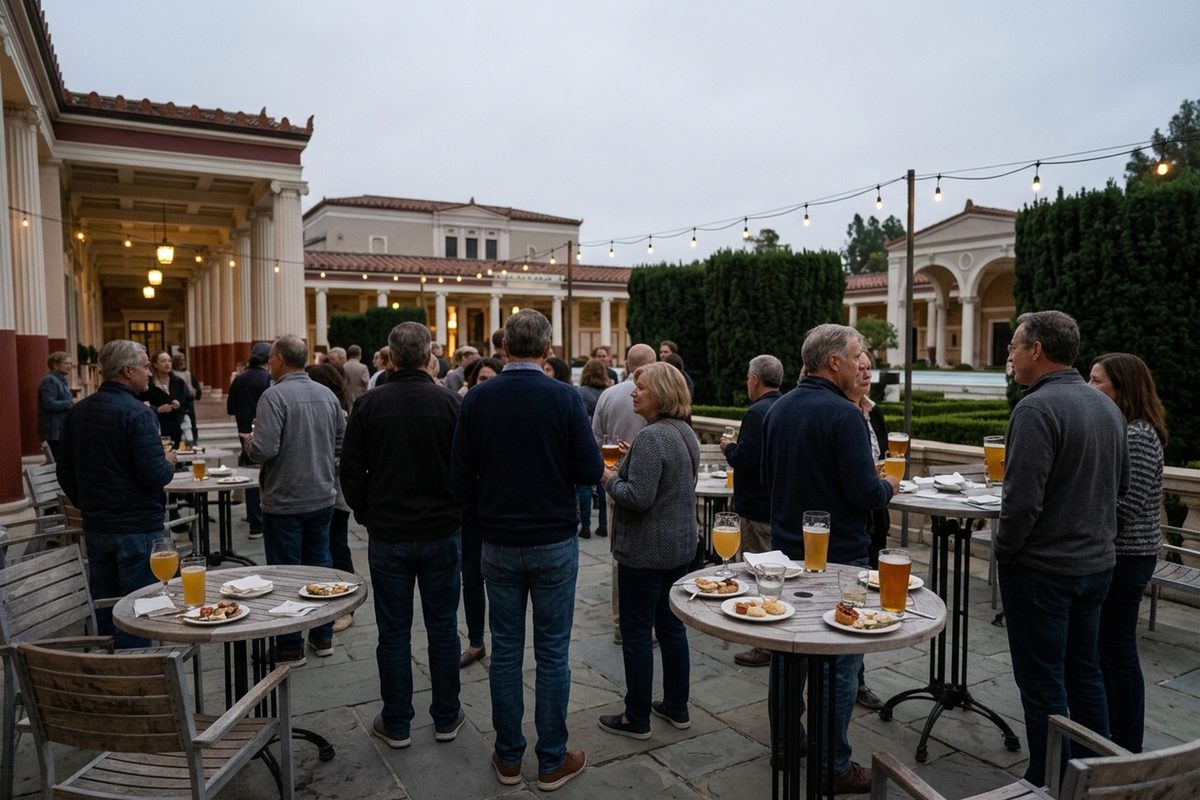
The night is called Bacchus Uncorked: Beer in Ancient Mesopotamia and Egypt, and it runs 5:15 to 8:30 p.m. at the Villa in Pacific Palisades. It made We Like L.A.'s list of Saturday picks. According to the Getty, $110 gets you the talks, a themed beer selection and hearty appetizers. That's real money for a few beers, and the case for it is the two people at the mic.
First up is Tate Paulette, an archaeologist and associate professor of history at North Carolina State University. The Getty says he'll walk through what ancient artists, scribes and brewers left behind, along with his own attempts to brew their beer again. His book, In the Land of Ninkasi: A History of Beer in Ancient Mesopotamia, won the Archaeological Institute of America's Felicia A. Holton Book Award, and copies go on sale in the Museum Store before the program.
Then comes Travis Rupp, who teaches classics at the University of Colorado Boulder and owns The Beer Archaeologist LLC, a research brewery that remakes old drinks. He'll cover what the earliest beers tasted like, then introduce the night's pours: new beers built on ancient methods.
Paulette has already said what those methods were. In a 2021 Getty handout from an earlier Bacchus Uncorked talk, he described Mesopotamian beer this way: mostly barley, often with emmer wheat, sour from sourdough-style starters or wild yeast, possibly brewed with a special bread, sometimes sweetened with date syrup, and made with no hops at all. Herbs and spices like coriander and juniper may have gone in too.
That handout doubles as a bar order. Paulette sent drinkers looking for gruit, which flavors beer with herbs where hops would be. He also pointed to sour and wild ales, kvass (the Eastern European drink brewed with bread) and fruit beers like Berliner Weisse and kriek. His snack advice was flatbread with yogurt and mint, or dates, figs and honey. For anyone priced out of the Villa, that free sheet is a solid consolation prize.
For anyone going, the rules on the Getty's listing are strict. It's 21 and over, capacity is limited and tickets can't be refunded. Your ticket doubles as your Villa entry reservation, and parking costs extra. After the talks, beer and bites move to the Café Terrace from 6:30 p.m., and the exhibitions Sculpted Portraits of Ancient Egypt and The Egyptian Book of the Dead stay open from 7:30 to 8:30.
Nobody knows how strong an everyday Mesopotamian beer was, the handout admits. The drinkers left a verdict anyway. A drinking song from about 1800 B.C., linked to a hymn to the beer goddess Ninkasi, ends on this line in a translation by scholar Miguel Civil that the Getty reprinted: "Our liver is happy, our heart is joyful." Some reviews hold up for 3,800 years.
Source: welikela.com, retrieved October 10, 2026. Other sources: getty.edu, getty.edu (2).
Comments 0