 ™
™Your Rent Can Legally Rise 1.919%, 3% or 8.7% This Year. Six Questions Decide Which.
Three rent caps run side by side in Los Angeles County, and two of them changed in the summer of 2026. On a $2,000 apartment, the distance between the smallest and the largest is $135.62 a month. Which number is yours comes down to a city line, a certificate of occupancy, and one date in 1978.
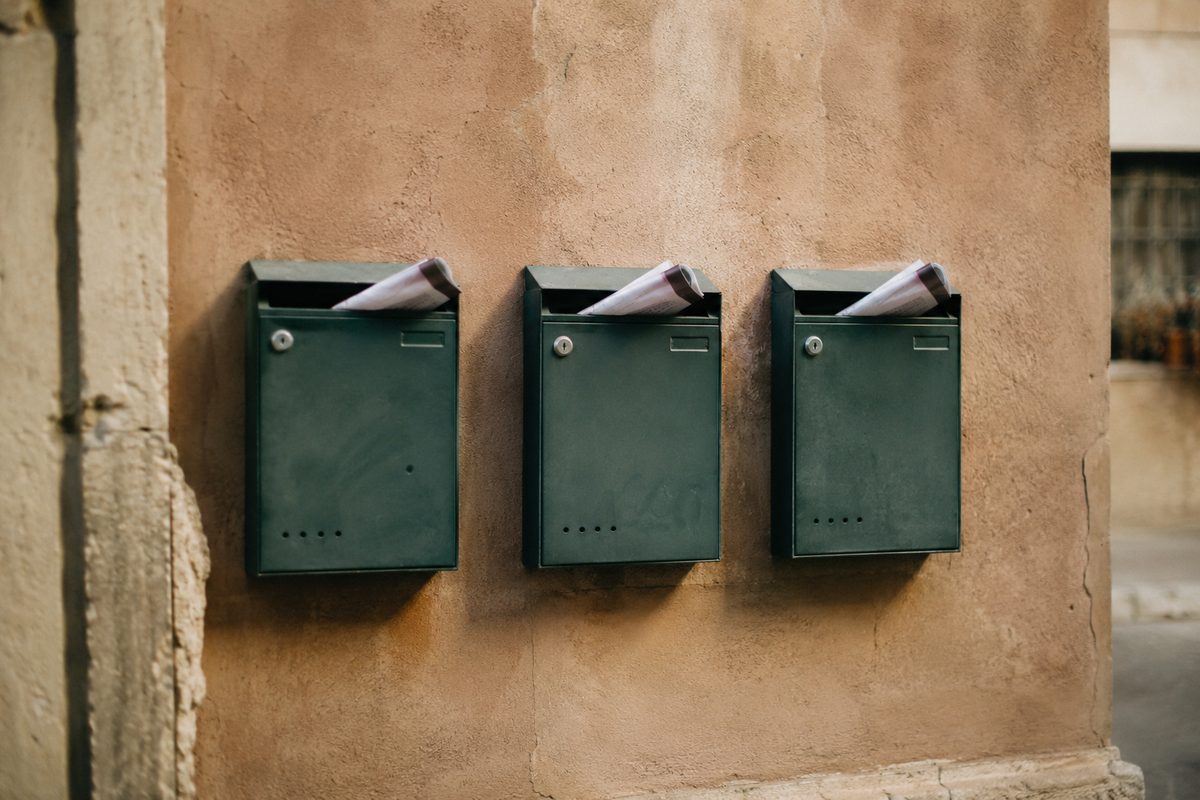
A tenant in Koreatown, a tenant ten miles east in East Los Angeles, and a tenant in a 2019 building in Sherman Oaks are all living under Los Angeles County rent law, and all three are governed by different numbers: 3 percent, 1.919 percent, and 8.7 percent. Every one of those figures is legal. None of them has anything to do with the apartment. The city line decides, and so does the year the building was finished.
This is the part that costs people money. A rent increase notice arrives, it looks official, and there is no way to tell from the notice itself whether the number on it is the legal maximum, half the legal maximum, or triple it. So work through the questions below in order and stop at the first one that gives you a number. It takes about four minutes and it is the same walk a housing counselor would do.
Question 1. Is the apartment inside the City of Los Angeles?
Not the mailing address — the jurisdiction. This is the single most common wrong turn, because plenty of addresses that read "Los Angeles, CA" on an envelope sit in unincorporated county territory, which is a different ordinance with a different number, and this year the difference is more than a percentage point.
The Housing Department publishes two ways to settle the city side. Its own instruction is to look the address up on the city parcel map at zimas.lacity.org and open the Housing tab, which reports the property's rent-stabilization status directly. Or, per the instruction on LAHD's own rent-increase calculator, text the letters RSO to 1 (855) 880-7368 — using the lowest street number on the property, so 1722 for a building that runs 1722 through 1728.
The county answers the same question from the other direction. Its Rent Stabilization Program page tells renters to check the Registrar-Recorder/County Clerk site and select "District Map Look Up By Address," then to confirm coverage itself by entering the address or the Assessor Parcel Number in the FIND field of the county rent registry at rentregistry.dcba.lacounty.gov.
If the answer is yes, go to question 2. If it is no, skip to question 4.
Question 2. Was the building first finished on or before October 1, 1978, with more than one unit on the parcel?
Then you are almost certainly under the city's Rent Stabilization Ordinance, and your number is 3 percent. That is a large club: LAHD counts roughly 624,000 units across 118,000 properties in the city.
The department's own coverage list is broader than most tenants assume. It includes apartments, condominiums, townhomes, duplexes, two or more single-family dwellings on the same parcel, accessory dwelling units and junior ADUs, residential units attached to a commercial building, and rooms in a hotel, motel, rooming house or boarding house occupied by the same tenant for 30 or more consecutive days. Units built after July 15, 2007 that replaced demolished RSO units can be covered too.
You're wondering about the house you rent. A single-family home that is the only residential structure on its parcel is not covered — but two houses on one lot are, and so is the ADU behind the main house if the property predates the 1978 line. LAHD also excludes affordable housing and the luxury units it has specifically exempted.
The cap itself is stated plainly by the department: unless the City Council amends it, the annual increase effective July 1, 2026 through June 30, 2027 is 3 percent, and an RSO rent may be raised once every 12 months. Not once a year in the calendar sense — once every twelve months from the last one.
Question 3. In the city, but the building went up after October 1, 1978?
Then the RSO does not set your rent, and the ordinance that does cover you does not set it either. The city's Just Cause Ordinance extends eviction protections to most rental properties in Los Angeles, including single-family homes and condominiums — and LAHD answers the obvious follow-up in its own FAQ: the JCO "only provides legal reasons for eviction." It is a shield against being removed, not a ceiling on the rent.
So your cap, if you have one, is the state's. Skip to question 6.
Question 4. Are you in an unincorporated part of the county?
Then the county's Rent Stabilization and Tenant Protections Ordinance is the one to read, and it produces the lowest number in this piece. For fully covered units the maximum allowable increase for July 1, 2026 through June 30, 2027 is 1.919 percent, per the county Department of Consumer and Business Affairs. Two variations sit above it:
2.919 percent for a "small property landlord." The county lets a qualifying owner add one percentage point, but it is conditional in a way tenants can check: the landlord must file a Small Property Landlord Self-Certification with DCBA annually and include a disclosure in the rent increase notice stating that they meet the requirements. If the extra point is on your notice and the disclosure is not, that is a question worth asking. The category covers an owner with a homeowner's property tax exemption on the property, or one who holds an interest in only one rental property of no more than ten units.
3.919 percent for a "luxury" unit, which is a term of art here and not a compliment. A unit qualifies only if it meets all three tests: two bedrooms or fewer, in a structure with 25 or more rental units, and generating at least $4,000 a month in rent as of September 11, 2018. That notice also has to carry its own disclosure.
Coverage runs on a later date than the city's: the property needs a certificate of occupancy issued on or before February 1, 1995, and two or more units on the site. Single-family homes and condominiums are outside it unless they sit on a multi-unit property. Mobilehome spaces are governed separately, at 3 percent for the same twelve-month window.
One navigation note, because it will trip you up on the county's page: the rate table still labels the July 2025–June 2026 row "(Current)." The row you want is the one below it.
Question 5. Are you in one of the county's other cities?
Several of them run their own rent boards, and a local cap stricter than the state's displaces the state's. That is not a courtesy — it is written into the statute, which exempts housing already "subject to rent or price control through a public entity's valid exercise of its police power" where the local rule restricts increases to less than the state formula allows. Santa Monica is the clearest example of how different a local answer can look.
The Santa Monica Rent Control Board set a September 2026 general adjustment of 2.6 percent, and then did something no other cap in this piece does: it capped the cap. For units whose current maximum allowable rent is $2,674 or above, the increase may not exceed $70, full stop. On a $3,500 controlled rent, 2.6 percent would be $91; the ceiling makes it $70. The adjustment took effect September 1, 2026, and requires at least 30 days' notice.
If your city is not Santa Monica, the question to ask is simply whether it has a rent board at all — and the place to ask is the city's own housing department, because a local ordinance beats everything below.
Question 6. Everything else: the state cap, and it is much larger
What is left is governed by the Tenant Protection Act of 2019, the law most people call AB 1482. Its cap for the Los Angeles metro area is 8.7 percent, effective August 1, 2026, which DCBA states on its rent increases page as the 5 percent base plus a 3.7 percent regional CPI figure.
The mechanics are worth knowing because they are counterintuitive. Civil Code section 1947.12 caps the increase at 5 percent plus the change in the cost of living, or 10 percent, whichever is lower — measured not against what you pay now, but against "the lowest gross rental rate charged for that dwelling or unit at any time during the 12 months prior." The regional index is the Los Angeles-Long Beach-Anaheim CPI-U, read April to April, and the resulting number governs increases taking effect from August 1 through the following July 31. It is a full year locked to a single spring reading.
Which is why the softening in the summer 2026 inflation data does not help anyone's September notice. The Bureau of Labor Statistics reported the Los Angeles area all-items CPI-U up 3.4 percent for the 12 months ending in July — below the 3.7 percent baked into the current cap. The cap does not move until next August.
Four exemptions take a unit out of AB 1482 entirely, and the first one surprises people every year:
Housing issued a certificate of occupancy within the previous 15 years. That window rolls forward. A building finished in 2011 has aged into coverage; one finished in 2013 stays exempt until 2028. The exemption is not a property's permanent status, it is a countdown, and it is worth re-checking each year.
A single-family home or condominium — but only with both halves. The unit must be alienable separate from the title to any other dwelling, and the owner must not be a real estate investment trust, a corporation, or an LLC with a corporate member, and the tenant must have been given written notice of the exemption. The statute prints the required sentence verbatim, beginning "This property is not subject to the rent limits imposed by Section 1947.12 of the Civil Code." If you never received that notice, the exemption is not simply assumed.
Deed-restricted affordable housing and dormitories operated by a school or university round out the list.
What all this looks like on a $2,000 rent
We ran the numbers on a single assumption — a tenant currently paying $2,000, taking one increase, with no fees added. Under the county's fully covered rate, $2,000 becomes $2,038.38. Under the city's RSO, $2,060. Under Santa Monica's general adjustment, $2,052. Under the state cap, $2,174.
The spread between the county floor and the state ceiling is $135.62 a month, or $1,627.44 over a year, on identical rent for what may be an identical apartment. That is the entire argument for spending four minutes on question 1.
The two fees that ride on top of the 3 percent
City tenants should know that the RSO cap governs the rent and not the whole bill. Two surcharges may be passed through on top of it, and LAHD publishes both amounts: the Systematic Code Enforcement Program fee, $67.94 per unit per year, collectible at $2.83 a month; and the RSO fee, $38.75 per unit per year, collectible at $1.61 a month. Together that is $4.44 a month, or $106.69 a year.
Both come with conditions the department states plainly on the calculator page: the surcharges are separate from and in addition to rent, and they can be collected only after the landlord has registered the units and given the tenant written notice. A surcharge that appears on a bill without registration and without notice has not met the standard the city set for it.
How much warning they owe you
This part is statewide and does not depend on any of the six questions. Under Civil Code section 827, a rent increase of 10 percent or less requires at least 30 days' written notice, and an increase above 10 percent requires 90 days. The test is cumulative: the statute measures the proposed increase "either in and of itself or when combined with any other rent increases for the 12 months before the effective date."
Read that against the numbers above and the practical answer is that almost every legal increase in Los Angeles County is a 30-day notice, including the full 8.7 percent state cap. The 90-day rule reaches you only in the uncapped case, or when a second increase in the same year pushes the combined figure past ten.
Two more limits sit alongside it. An RSO rent may be raised once every 12 months. Under AB 1482, an owner may not raise the rent in more than two increments over a 12-month period for a tenant who stays put — and both increments together still have to fit under the one cap.
What changed in the summer of 2026, in case you last checked a year ago
All three regimes moved, which is unusual and is why a page you bookmarked in 2025 is now wrong in at least one place.
The city rewrote its formula. Effective February 2, 2026, LAHD says the RSO annual increase is calculated on 90 percent of the average Consumer Price Index rather than 100 percent, and the result may range from a minimum of 1 percent to a maximum of 4 percent. In the same change, the annual increase "must not include any additional percentage increase for utilities" — the gas and electric add-ons are gone. The rate itself did not move: the department's page notes the RSO increase remains at 3 percent from July 1, 2025 all the way to June 30, 2027. A new formula, the same number, for now. (Our City Desk covered the council's rewrite as it happened, in City Hall's housing summer.)
The county's rate ticked down, from 1.930 percent to 1.919 percent — eleven thousandths of a point, worth 22 cents a month on a $2,000 rent, and a reminder that this cap is a calculation rather than a policy choice made each June.
And the state cap reset on August 1, as it does every year, to 8.7 percent. It will sit there until July 31, 2027.
If the number on your notice is too high
Start by confirming which of the six answers is yours, because the complaint goes to a different agency in each case: LAHD for units in the City of Los Angeles, DCBA's Rent Stabilization Program for unincorporated areas, the city's own board where one exists, and the courts or the Attorney General's office for AB 1482 disputes, which have no local enforcement counter. Bring the notice, the date it was served, and the rent you were paying twelve months ago — that last figure is the baseline the state law measures against, and it is the one tenants most often cannot produce.
Everything above is what the ordinances and the agencies' own pages said on August 12, 2026. The city's rate resets each July 1, the county's each July 1, the state's each August 1, and Santa Monica's each September 1 — four different clocks in one county. This page carries its date for that reason, and gets re-checked in place at this address. Where a number here and an agency's page ever disagree, the agency's page is the one that wins.
Comments 0