 ™
™UCLA Won't Use Your SAT Score to Admit You, but Caltech Requires It
UCLA, Cal State, USC and Caltech give four different answers, and a Cal Grant still takes a score instead of a GPA.
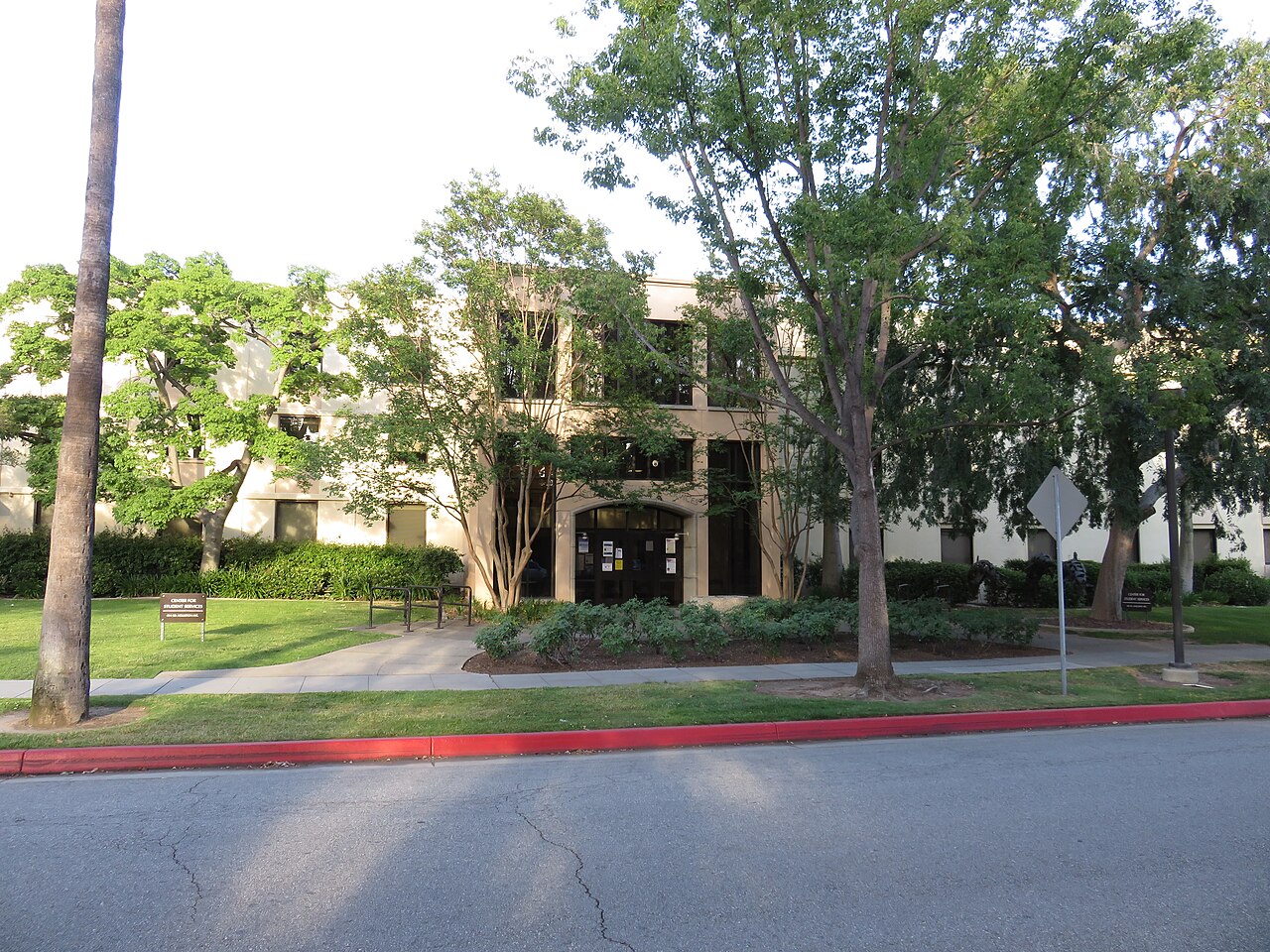
You're wondering whether the score you're about to pay $68 for does anything. In Los Angeles the answer splits four ways, and it splits by campus: UCLA won't use it to admit you, Cal State Northridge won't either, USC will read it if you send it and doesn't ask for it if you don't, and Caltech won't consider your application without it.
The timing is why this matters this week. The University of California's application window for next fall opens Thursday and closes November 30, and Cal State Apply runs on the same two-month clock. Nearly 2 million students in the class of 2026 took the SAT, by the College Board's own count, so a lot of families are about to decide whether to register for one more test date. Here's what the score is worth at each door.
The University of California: not for admission, not for scholarships
UC states it in one line on the page it writes for high school counselors: it "does not consider SAT or ACT test scores when making admissions decisions or awarding scholarships." That covers all nine undergraduate campuses, UCLA included.
There's a second half to that policy, and it's the half people miss. A score you do send can still serve as an alternate way of meeting a minimum eligibility requirement, or of placing you into the right course once you've enrolled. If either of those is your plan, UC's instruction is to test no later than December of senior year.
The mechanics are genuinely confusing, so here they are as steps. You can't type your scores into the application as you fill it out. You submit the application without them, log back in afterward, and add them then. An official report from the testing agency only enters the picture if you're admitted and decide to enroll.
Where a UC still reads a test score
UC lets certain exam scores stand in for A-G coursework, and its subject-requirement table is specific about which. On the English requirement, an ACT English Language Arts score of 24 covers the first three years and a 30 covers all four. On math, it isn't the SAT or the ACT that counts at all: a 3, 4 or 5 on AP Calculus AB or BC satisfies two years, as does a 4 or 5 on AP Precalculus, or a 5, 6 or 7 on IB Mathematics HL Analysis and Approaches. Geometry still has to be completed on its own.
One line in that table hasn't caught up with the test. The SAT line awards credit for a "Writing and Language" score of 31 or 36 — and the digital SAT doesn't report one. The College Board's own structure page says the test "is composed of two sections: (1) the Reading and Writing section, and (2) the Math section," scored 200 to 800 each. Writing and Language was a section of the retired paper test. We read UC's table line by line and found no digital-SAT equivalent on it, so if you're counting on a test score to close out an English requirement, ask the campus before you pay for the test.
Cal State: placement, and nothing else
The California State University goes further than UC. Its policy, printed in Cal State Northridge's catalog and applying to all 23 campuses, is that the system has "permanently discontinued the use of ACT/SAT examinations in determining admission eligibility." A score submitted by an admitted student is used for one purpose: placing that student into the right math or English course. That's the rule at CSUN, at Cal State L.A., at Long Beach, at Dominguez Hills and at Cal Poly Pomona alike.
What decides a Cal State admission instead is the A-G grade point average. A California high school graduate with a 2.50 or better qualifies. Between 2.00 and 2.49, the campus may still admit you after weighing supplemental factors — A-G courses beyond the minimum, household income, extracurricular involvement. Applicants from outside California need a 3.00, with the same supplemental look between 2.47 and 2.99. Each campus publishes the supplemental criteria it uses.
USC: optional, and fussy about how it arrives
USC lists test scores under the heading "Optional" on its first-year application page, and a student who tests more than once has the highest scores recorded. One step catches people out: USC won't accept self-reported scores. If you're submitting, the testing agency has to send them, which takes lead time you should build into the calendar.
USC's deadlines are November 1 for Early Decision and Early Action, December 1 for regular-decision performing arts applicants, and January 10 for regular decision in most majors.
Caltech: required, and partly hidden from the committee
Of the four, Caltech is the one that requires a test. Its admissions page says the institute "requires first-year applicants to submit either the SAT or the ACT," names no preferred exam and sets no cutoff score, and superscores across test dates. Regular-decision scores have to arrive before December 31, 2026.
What Caltech does with the number is unusual enough to be worth understanding before you decide whether to apply. Section scores are sorted into buckets: 780 to 800 on an SAT section, or 35 to 36 on an ACT section, is Bucket A; 750 to 770 on the SAT, or 33 to 34 on the ACT, is Bucket B. In both of those buckets the exact score is hidden from the admissions committee. Only below 750 on an SAT section, or below 33 on an ACT section, does the committee see the specific number.
The place a score still does plain, cash-value work
It's the financial aid file, not the admissions file. The California Student Aid Commission requires every Cal Grant applicant to have "a verified high school GPA, college GPA, or test score" on file — and its own list names the SAT, the ACT, the GED, the TASC and the HiSET as accepted alternatives to a GPA. For a student whose transcript GPA never made it to the commission, a score is a working substitute.
There's no separate Cal Grant application. You're considered on a timely FAFSA or California Dream Act Application, and the priority deadline is March 2 — September 2 if you're headed to a California community college. One week after you file, the commission's advice is to create a WebGrants 4 Students account and confirm that your GPA or score actually landed. Most high schools send it automatically. Confirming it is still on you.
The calendar, and what each date costs
Three SAT dates remain this fall, and the College Board's deadline table has already closed one of them. Registration for the October 3 test ended September 18. For November 7, you have until October 23. For December 5, until November 20. All of those expire at 11:59 p.m. Eastern. The spring dates are March 6, May 1 and June 5, 2027.
Registration is $68 through June 2027. Late registration adds $38. Changing your test center costs $34, canceling by the deadline costs $34, and canceling after it costs $44. Each extra score report beyond the ones included is $15.
If money is the reason you're hesitating, start with the waiver. College Board fee waivers go to 11th- and 12th-graders who qualify for the National School Lunch Program, whose family income falls within the USDA's eligibility guidelines, who are in a federal, state or local program for students from low-income families, whose family receives public assistance, or who are unhoused, in foster care or in federally subsidized public housing.
The benefits are two free SAT registrations, unlimited score reports, free CSS Profile applications and — the piece usually worth the most — waived application fees at over 2,000 participating colleges. That last one carries its own conditions: you have to be a senior or up to a year out of high school, and you have to have taken at least one SAT with a waiver and either hold a score or be waiting on one.
And if you're testing for Caltech's December 31 cutoff, the last sitting that makes it is December 5. Registration for that one closes November 20.
Comments 0