 ™
™Santa Monica Advanced Upzoning to Dodge State Law. I'm For It.
Eighty-nine single-family lots near the Expo/Bundy station could go from one home each to 40 units an acre.
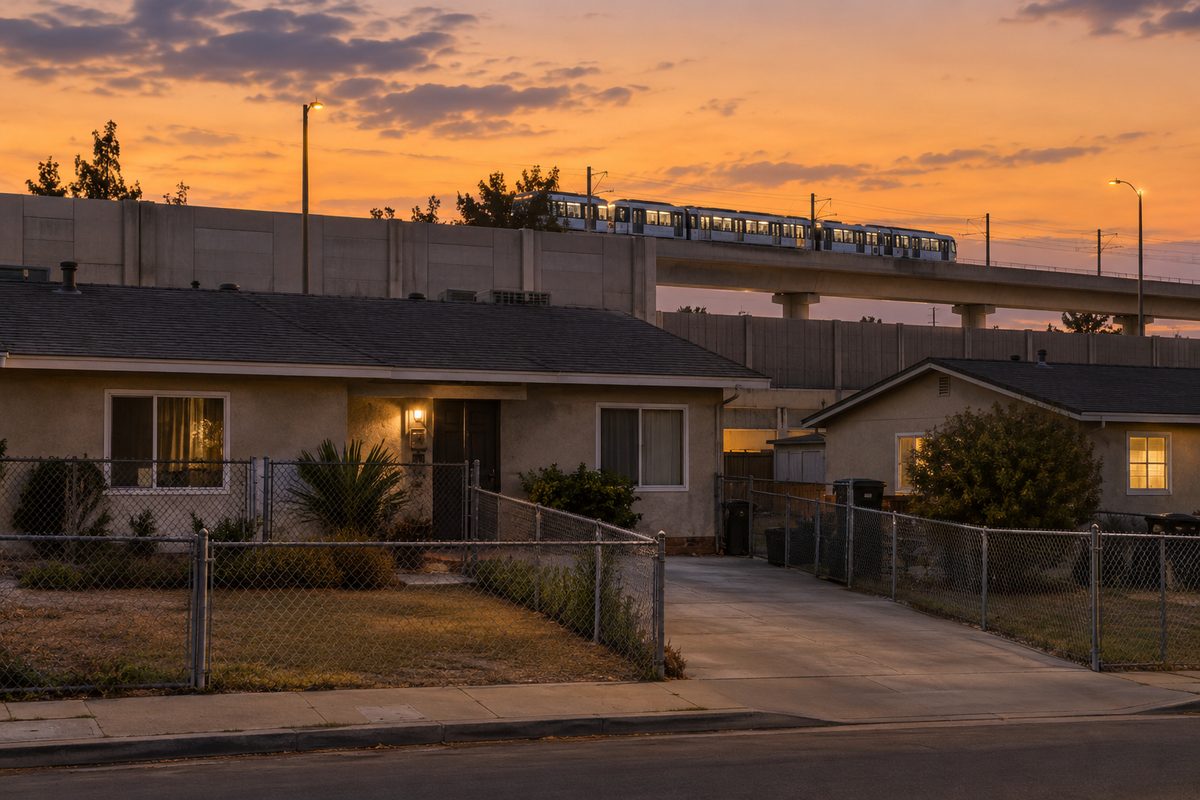
Eighty-nine single-family lots near the Expo/Bundy light-rail station would go from one home each to 40 dwelling units an acre. The Santa Monica City Council advanced that ordinance on a 5-1 first-reading vote on Tuesday, September 15, 2026, in order to keep a new state housing law from reaching the neighborhood, the Santa Monica Daily Press reported. A second reading is required before any of it takes effect.
The motive is cynical. It's still the best housing decision this city has made in years, and the reason is arithmetic rather than virtue.
Start with who lives on those lots. City business-license data flagged two of the 89 parcels as rentals, and five are registered under rent control. Everyone else there owns. That's the political trick in one line: the council found the block where upzoning costs almost nobody a lease.
Senate Bill 79, the Abundant and Affordable Homes Near Transit Act, took effect July 1 and sets floor standards for density, height and floor area on qualifying housing within a half-mile of a major transit stop. In July, the council walked six of its seven transit-oriented zones out of the law until a year after the next housing element, expected around 2030. Expo/Bundy was the one it couldn't.
The gap was a threshold. To win the exclusion, a city has to show that a third of the zone's sites permit at least half of what SB 79 would guarantee. On Santa Monica's side of a zone that runs across the Los Angeles border, only 74 of 381 parcels — about 19% — did.
So the ordinance buys the difference on R1 land bounded by the I-10 Freeway, Dorchester Avenue, Exposition Boulevard and Centinela Avenue. The new ceiling is 40 dwelling units an acre. Floor area ratio rises from 0.5 to 1.25, and the 28-foot height limit stays put. Staff calculated the change would lift the zone to 42.7% of qualifying sites, past the bar, the Santa Monica Daily Press reported.
Here's the part that turned my read. The extra floor area applies only to projects that actually hit the higher density, a condition staff said would keep owners from cashing it in on one enormous house. Ninety new McMansions was the live risk in a single-family upzoning, and the drafting closed it.
Measure the generosity honestly, though. SB 79 itself would have allowed 80 units an acre, 55 feet and a 2.5 floor area ratio on the same land, so the city approved half the density and less than half the bulk. The comparison that tells you more is the other one: in July an earlier plan covering 66 multi-unit R2 and R3 parcels was shelved over renter displacement, and staff judged the single-family route lower risk. Density moved off the parcels where tenants live and onto the parcels where owners do.
Councilmember Dan Hall, who moved the recommendation, argued it as tenant protection with a homeowner's asterisk. "Choosing to sell your home is not displacement, but with renters in multifamily housing, eviction is always an option and thus a threat to stability," he said, per the Daily Press account of the meeting.
The strongest case against all of this is spot zoning. Entitlement gets scattered onto 89 lots picked because they were cheap politically, not because riders would use them best, and the reward for the maneuver is roughly four more years of quiet for six other zones. I won't pretend that second half is defensible.
What I'd say back is that the better-placed units are hypothetical and these are legal. From January 1, 2027, a rejected qualifying project in a high-resource area is presumed unlawful unless the city rebuts it, at $10,000 a unit, which produces litigation and not necessarily buildings.
The state hasn't cleared the fog either. Staff said SB 79 says nothing about how a city counts capacity when the zone crosses a municipal line. The Department of Housing and Community Development hasn't answered Santa Monica's request for guidance, and City Attorney Heidi von Tongeln told the council the odds of a formal response before the second reading were "nil." The exclusion carries an end date tied to the 2030 housing element. Forty units an acre sits in the zoning code.
The second reading is where this can still shrink. Councilmember Ellis Raskin voted yes and said he'd wait to see what comes back. Mayor Caroline Torosis won an amendment sending staff to study three things: the community's two-ordinance proposal, whether some parcels should be spared because of what sits on them, child care among the examples, and a displacement protection for rent-controlled homes across the city. Councilmember Lana Negrete cast the only no and wanted the multifamily version back; Councilmember Jesse Zwick was recused. If the 89 lots come through that vote intact, Santa Monica will have legalized more homes by trying not to.
Source: smdp.com, retrieved September 18, 2026.
Comments 0