 ™
OpenAI Says ChatGPT Agents Can Now Draft Your MRI Insurance Request
OpenAI says the agents prepare prior-authorization requests for a human to check, and its cheaper model cost 8.5 cents per benchmark task.
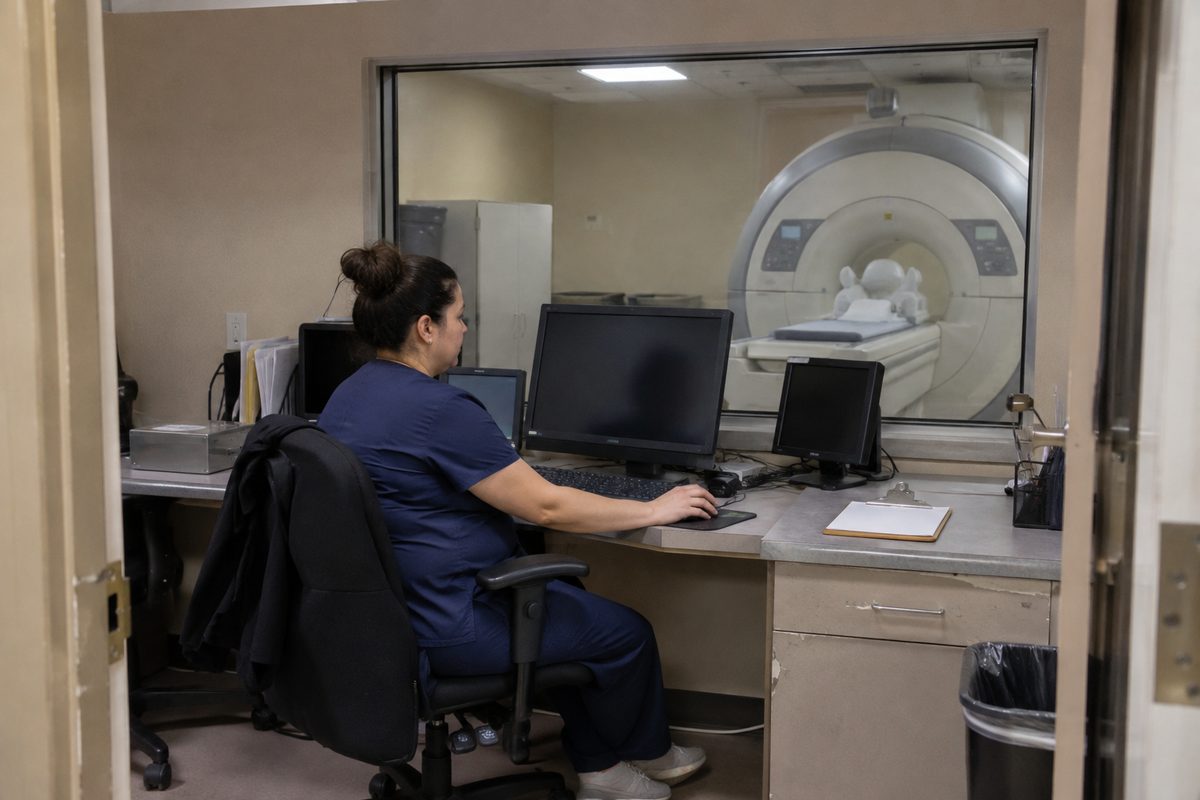
In a 54-second clip OpenAI posted Monday, a ChatGPT agent fills in an insurer's authorization form for a back patient's MRI, then attaches the records. The patient is invented, the company says. The form is the real kind that sits between a clinician's order and a scan.
The @OpenAI post promised "more capable computer-use agents, stronger clinical answers, and 20+ new healthcare plugins" for ChatGPT for Healthcare, and it had passed 465,000 views on X by Wednesday. The pitch is that a bot can now do the clicking hospital staff do between systems. Read the company's own pages, though, and the steps that matter still end with a person checking the bot's work.
OpenAI's announcement lays out the demo: a patient writes in about lower back pain, and the agent goes through the chart, from earlier visits to physical therapy to past imaging. What comes out are three drafts waiting on the clinician: a scan order, an encounter write-up and a message back to the patient. From those same files, the agent builds the prior-authorization request inside the insurer's portal, and an authorization specialist gets the final look.
That last step matters. In a longer, two-minute version of the demo, the insurance request ends as a saved draft rather than a submission, Kingy.ai noted. A partner demo from Ambience goes the same way: when the chart is unclear, OpenAI says, the agent stops, asks the clinician and waits for a yes before it submits.
Insurers are on the customer list, too. Cigna Healthcare is the kind of company whose portal the demo agent was typing into, and its case managers used to dig through more than 10 systems before reaching out to a member, OpenAI says. Agents now pull that context together in seconds, according to the company.
At CVS Health, OpenAI says, one agent worked through a document backlog months deep in a single weekend, and another takes care of the computer steps behind tens of thousands of daily consults. CVS is open-sourcing the kit behind it, which its GitHub page describes as AI finding the steps and code repeating them.
"Less time on administrative work means more time for care," Lagan Khare, a CVS Health engineering executive, said in OpenAI's announcement.
The performance numbers are OpenAI's. It says reviewers rated 99% of 325 inbox tasks by its GPT-6 Astra model clinically safe. On HealthAdminBench, a Stanford benchmark of chores like prior authorizations and appeals, Astra scored 94.3% of the rubric's available points. The cheaper GPT-6 Luna earned 91.8%, at 8.5 cents a task.
Rubric points aren't finished jobs, Kingy.ai pointed out: a packet can score most of its points and still fail for one missing attachment. Kingy.ai added that the benchmark's original paper ran its tests in synthetic portals with no CAPTCHAs, two-factor logins or session timeouts.
The trick itself is old-fashioned in a useful way. The agents click, type and hop between apps the way a person would, which lets them reach software that offers no clean connection for other programs. OpenAI says they're live now in ChatGPT for Healthcare, in ChatGPT for Clinicians, which is free to eligible U.S. clinicians, and in its API. Kingy.ai found no public seat price for the hospital version.
The new plugins, more than 20 of them, hook ChatGPT into tools like UpToDate, Availity and Redox, HIT Consultant reported.
Then there's the privacy promise. OpenAI's announcement says organizations can support HIPAA-compliant workflows, but further down the same page, that support only covers services named in a hospital's business associate agreement, run with the required security and retention settings. Kingy.ai reported that OpenAI's own eligibility chart leaves some features out, including scheduled tasks triggered by events.
The video's last working screen is an authorization overview, filled in and waiting. In OpenAI's telling, somebody still has to read it.
Source: X, retrieved November 18, 2026. Other sources: openai.com, kingy.ai, github.com, hitconsultant.net.
Comments 0