 ™
LAUSD Was Right to Block Google's AI. Sacramento Should Make It Statewide.
The district used an outside filter to shut off AI Overviews, a feature Google says it can't separate from search.
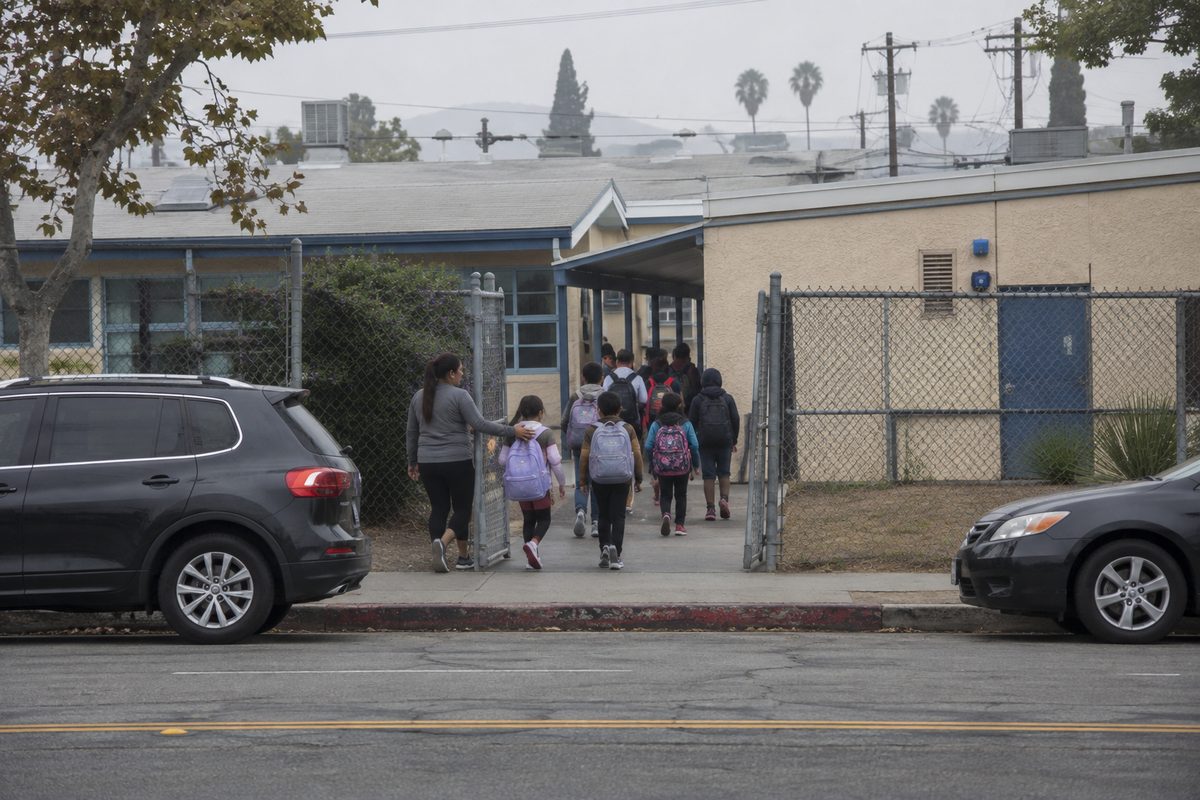
Los Angeles Unified did the right thing this month, and it did it so quietly that parents had to dig it up themselves. Using a filter from a company it hasn't named, the district blocked most student access on district devices to the AI-written summaries Google attaches to search results, the Los Angeles Times reported. Google had said there was no way to pull the two apart.
I think the district was right. I also think it shouldn't have had to do this alone, and the next district shouldn't have to try. Sacramento should keep Google's AI off every California public school student's searches until an elected school board votes to turn it on.
Here's how Google's idea of choice works. In a Nov. 3 post, Chris Phillips, Google's vice president for education, promised school leaders control over the company's AI products. But starting in January, students on school accounts lose Google search unless their district opts into the AI-built version, EdSource reported.
"If a school is not comfortable with that and simply wants AI off, then they have the choice to not have Search on at all," Phillips said in a briefing, according to EdSource. That's a choice the way "your money or your life" is a choice. L.A. Unified board member Kelly Gonez called it a cynical effort "to really hold school districts hostage," the Times reported.
And what Google wants switched on hasn't earned the benefit of the doubt. In 180 tests, Common Sense Media researchers found that Google's AI Mode, the deeper cousin of the summaries, did students' homework for them every time and sometimes made up answers, according to EdSource. Heather Schwartz of RAND told L.A. Unified board members that "there's harm when AI replaces a student's first attempt at the work."
A summary that answers the question the second a kid types it is that first attempt, made for them.
Kids will need to understand AI. Nobody's arguing otherwise, and L.A. Unified's moratorium already teaches students about it this school year. It just keeps them from using it in class and on assignments. When a seventh grader starts leaning on a chatbot is a curriculum call, and curriculum belongs to a public school board, not to a vendor's rollout schedule.
Here's the trouble with leaving it to districts. L.A. Unified is the country's second-largest school system, and even it needed an outside company's help, hasn't said how the block works and calls the shutoff temporary. Board member Nick Melvoin told the Times he worries that the more the district shares about what's possible, the likelier Google is to find a way around it.
Most districts don't have L.A.'s muscle. Yvette Renteria of Common Sense Media told EdSource that districts with strong tech departments are likelier to find workarounds, but that isn't true everywhere, because it turns on staffing and money. Left to the districts, a kid's protection from Google's AI comes down to her district's IT budget.
The state already has leverage. L.A. Unified gets Google Workspace for Education through a statewide purchasing deal, EdSource reported. Sacramento should use deals like that to require that any search sold to California schools comes with an AI off switch that keeps search working, and that student accounts start with it off.
Google says its AI and its search engine can't be separated. L.A. Unified separated them within a day or two of a Nov. 13 board committee meeting, where parents showed that some of the district's blocks were leaking. Sacramento's job is to make sure no school in California ever has to take Google's word for it again.
Source: Los Angeles Times, retrieved November 27, 2026. Other sources: blog.google, timesofsandiego.com.
Comments 0