 ™
™L.A. County Capped Apartment Heat at 82 Degrees. The City Hasn't.
The cap covers rentals in unincorporated L.A. County, isn't enforced until January 2027, and one piece of it is already live.
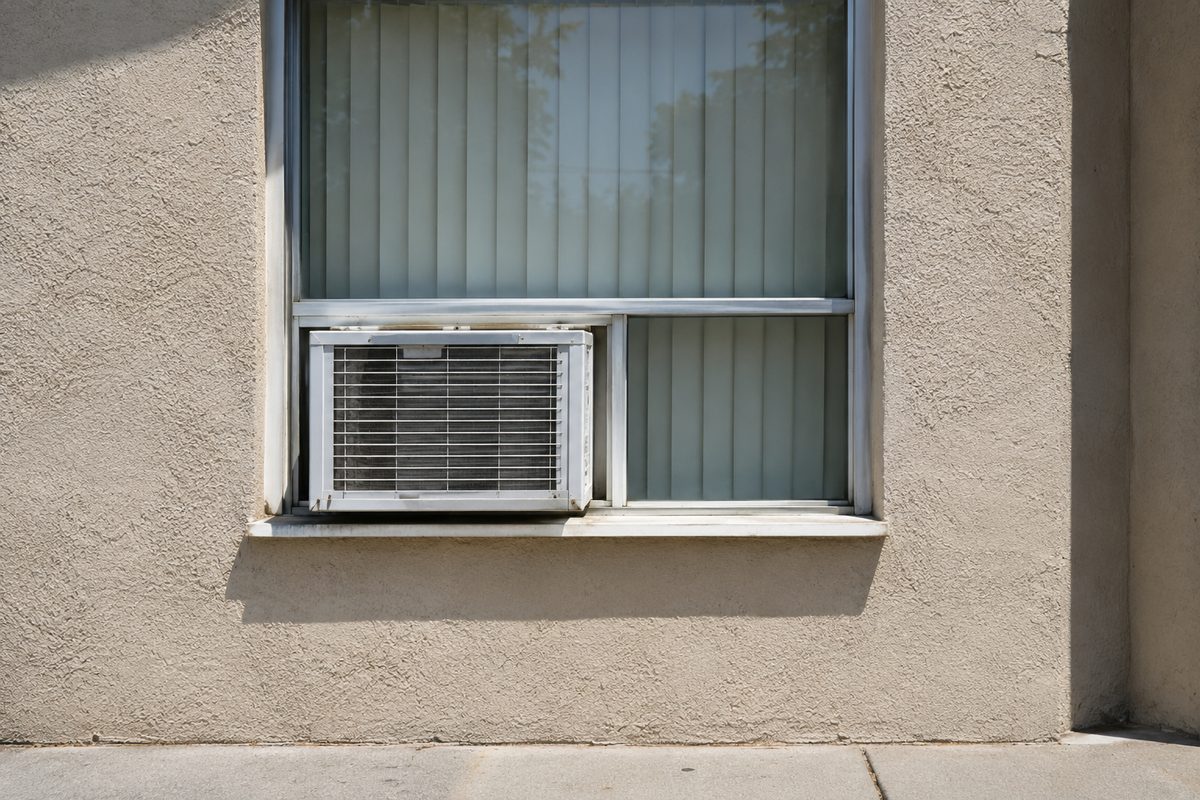
California law says the heater in your apartment has to be able to hold 70 degrees, measured three feet above the floor. It says nothing at all about a ceiling. Los Angeles County set one last year — 82 degrees, measured from the same three feet — and then put the enforcement date almost seventeen months out, in a slice of the county where about one resident in ten lives.
That gap is why the answer to whether your landlord has to cool your apartment is still, for most Angelenos, no. It is also why the answer is changing, unevenly, in a way that turns on which side of a city line your building sits on and how many units your landlord owns.
We read the ordinance the Board of Supervisors approved, the board letter that carried it, the county's own report back on how it intends to pay for it, the state habitability statute and the regulation under it, and the Los Angeles city council file that was supposed to answer the county. Nobody at this desk called an agency. Every date, section number and dollar figure below comes from a document we opened on September 6, 2026, and the links go to the documents themselves.
1. The state's floor is heat. There is no state ceiling.
California decides whether a rental is legally livable through a list in Civil Code section 1941.1, which declares a dwelling untenantable if it substantially lacks any of eleven things. Item four is heating facilities that met the law when they were installed and are kept, in the statute's words, in good working order. Cooling is not item five, or item eleven, or anywhere else in the section.
The number attached to the heater lives one layer down, in title 25, section 34 of the California Code of Regulations: heating facilities capable of maintaining a minimum room temperature of 70 degrees, measured at a point three feet above the floor in all habitable rooms. Where the tenant doesn't control the heat, the owner has to supply that 70 degrees 24 hours a day.
The list is not frozen, either. The Legislature added two items to it that reach leases entered into, amended or extended on or after January 1, 2026: a stove that works and can safely make heat for cooking, and a refrigerator that works and can safely store food. A rental in California now has to come with a refrigerator. Cooling still isn't on the list.
2. The county's number is 82, and it was recommended to the state first
Assembly Bill 209 of 2022 ordered the Department of Housing and Community Development to tell the Legislature what a safe maximum indoor temperature would be. Its 2025 report answers in one sentence: the state should consider "a general maximum safe indoor air temperature of 82 degrees Fahrenheit" for residential dwelling units. It names the asymmetry a few pages later: California's building standards have long required new homes to be able to hold a minimum indoor temperature, and set no maximum at all. HCD counted 14.3 million residential dwelling units in California as of 2021.
It is a recommendation, and the Legislature has not written it into law: section 1941.1 still lists heating and not cooling. Los Angeles County took the number anyway.
3. What the county ordinance actually requires
The Board of Supervisors approved an ordinance amending Chapter 11.20 of the county's Health and Safety code — the county's Public Health department dates the approval to August 5, 2025, and so does the Internal Services Department in its own report back. The text adds a new section 11.20.475, and it is short enough to read in five minutes.
Every rental housing unit has to be able to hold no more than 82 degrees in every habitable room, and the landlord has to supply a safe, code-compliant method of getting there. A method is not an air conditioner. The board letter that carried the ordinance puts passive cooling first and says mechanical cooling comes up only once a landlord has exhausted the passive options without reaching the threshold.
Measurement is section G: three feet above the floor, in the center of the room. The same height as the 70-degree heating rule, which is a small courtesy to anyone who ends up arguing about both in the same week.
4. It covers the unincorporated county, and the City of Los Angeles is not that
The ordinance applies in the unincorporated areas of Los Angeles County — East Los Angeles, Florence-Firestone, Hacienda Heights, Altadena, Willowbrook, View Park-Windsor Hills and the hundred-odd others the county lists — and, under section L, inside any city that adopts the whole thing into its own municipal code. Adoption is a choice each city makes for itself, and the City of Los Angeles has not made it.
That geography is the whole story of who this rule reaches. County Planning puts it in one sentence: the unincorporated areas are two-thirds of the county's land and a tenth of its people, about a million residents. That tenth is not in one place, either: the county counts roughly 120 unincorporated areas, some of them a few blocks wide.
If you don't know which one you're in, the county publishes a lookup for exactly this question: the Public Works Service Locator takes an address and tells you whether it sits in a city or in unincorporated county. Check it before you read further; almost everything below turns on the answer.
5. The date is January 1, 2027, and it has two ways of moving
Section K defers enforcement of the temperature standard to January 1, 2027 — or to whenever the board approves the cost-recovery fee that pays for the inspections, whichever comes later. The fee has to clear the Auditor-Controller and come back to the board; the board letter estimates the new work at an added $7.77 per covered unit, on top of the $86 a year per unit the county already charges landlords for routine habitability inspections, half of which a landlord may recover from the tenant at $3.58 a month.
The second way the date moves is section M. A landlord who can't comply with portable or passive cooling may apply in writing for an extension of up to two more years past January 1, 2027. And the board letter promises "an education-first approach" when complaints start arriving, which is a phrase worth remembering if you file one in the first week of 2027.
6. Small landlords get one room until 2032, and "small" is about ownership
A Small Property Landlord has to hold 82 degrees in "at least one Habitable room" by January 1, 2027, and in all habitable rooms by January 1, 2032. That is a five-year gap, and it is the single biggest carve-out in the ordinance.
The definition comes from the county's rent stabilization chapter, and it counts owners rather than buildings. Per the county's own self-certification form, a Small Property Landlord is one who receives a homeowners' property tax exemption on the property, or controls a single rental property with no more than ten units, or controls no more than three rental properties with ten units between them — including properties outside Los Angeles County. Real estate investment trusts, corporations, corporate-controlled LLCs and corporate-controlled partnerships are excluded by name. So a duplex owned by a corporation is not small, and a ten-unit building owned by a person is.
7. The part that is already in force: your own air conditioner
This is the section renters can use now. Enforcement of the 82-degree standard waits for 2027; the tenant protections did not. The board letter puts them in force 30 days after final passage, which means they have been law since early September 2025.
Section D says a landlord "may not prohibit or restrict a Tenant from installing or using, at Tenant's own cost, a Portable Cooling Device" — or blackout curtains, window films or shades, which the section names too. Section 11.20.130 defines a portable cooling device broadly enough to cover the thing you would actually buy — portable air conditioners, evaporative coolers, window-mounted units, anything "temporarily affixed or mounted" that comes out again without permanent attachment.
Three conditions, and one deadline:
- It has to be legal and installed as the manufacturer says. No building-code violation, no ignoring the safety guidance in the box.
- You can't alter the unit to fit it. Section D bars any installation that requires the tenant to modify the rental unit.
- Five calendar days' written notice, in advance, to the landlord — by email or on paper. The one exception written into section E is a portable electric fan, which needs no notice at all.
What you install stays yours: section E says the device "shall remain the property of the Tenant," and also that you are responsible for any damage the installation or its use causes. The landlord can't retaliate or harass you for using the right, under section H, which borrows the remedies and penalties from the county's rent stabilization ordinance. The county's own renter-rights page, built by the Internal Services Department, puts it in one line: tenants may install their own cooling "without being evicted, charged extra, or punished."
8. Who pays for the cooling, and who can't charge you for it
Section F settles the portable case: installing a portable cooling device is not a capital improvement and cannot be passed through to tenants of fully covered rental units under the county's rent stabilization ordinance. A landlord may not turn your window unit into your rent increase.
The harder retrofits are a different arithmetic, and the board letter lays it out. A landlord who has to do real work can apply to the Department of Consumer and Business Affairs to pass through 50 percent of the capital improvement cost over an amortization period — inside annual rent caps of 3 percent for fully covered units, 4 percent for a Small Property Landlord and 5 percent for luxury units, with discretion to allow more if the department finds the landlord isn't getting a fair return.
The public money behind all this is smaller than the mandate. In its March 9, 2026 report back, the Internal Services Department told the board it had won $250,000 from the Clean Power Alliance's innovation fund for a "County Cool Homes project" handing portable heat-pump air conditioners to renters in low-income and disadvantaged communities who don't have cooling. The department's own count is around 300 heat-pump air conditioners for a little over 300 households, scheduled for the third quarter of 2026. Its own verdict on that, in the next sentence, is that this is only a fraction of the need in the county. The larger technical-assistance program it proposed in the same report — roughly 1,000 buildings and 50,000 households between 2026 and 2028 — was still chasing grants when the report was written.
9. How the county finds out your apartment is over 82
Complaints go to the Rental Housing Habitability Program, the proactive inspection scheme the board created in April 2024 and Public Health's Environmental Health division runs. The program covers rental properties with two or more units and tenant-occupied single-family homes in the unincorporated areas, inspects every covered unit once every four years, and investigates complaints in between. Its published complaint clock: an inspector contacts the tenant within three days, schedules the inspection within seven, and after a violation is written the landlord gets 21 days from the compliance date, with a reinspection inside five business days of that. Habitability complaints go to Public Health's Environmental Health line, 888-700-9995; the county's FAQ says a number specific to the program "will be established" once it is fully implemented, so check the department's page before you dial.
Owner-occupied units, mobile homes and mobile home parks, short-term rentals, vacant units and properties already inspected by another agency are outside the program, and the ordinance carries the same exceptions.
10. The City of Los Angeles asked for a report. It was due August 16.
Three councilmembers — Eunisses Hernandez, Bob Blumenfield and Adrin Nazarian, seconded by Hugo Soto-Martínez — filed a motion on September 3, 2025 asking the city to take up the county's chapter. The motion notes that the city has no health department of its own and relies on the county's three health agencies, and that it has routinely conformed its health rules to the county's since adopting the county health code in the 1960s.
What the council actually adopted, on February 17, 2026, is the committee's five recommendations: instruct the Los Angeles Housing Department, City Planning and Building and Safety, with the City Attorney, "to report in 180 days with options for an ordinance to adopt Chapter 11.20"; direct those departments to run stakeholder engagement; ask the Department of Water and Power and the housing department to report on incentives that would help renters install efficient air conditioning; ask DWP about programs for building owners; and ask DWP for a grid capacity analysis "before adoption of an ordinance." Two amendments from the floor cut the grid study to 30 days and added an instruction to study putting a cooling apparatus on the list of items eligible for the city's rent-stabilization capital improvement program.
The councilmembers' own press release, dated the day of the vote, described the measure as one that "directs the City to adopt, and conform to LA County's newly passed ordinance." The instruction the council passed asks three departments for options and a report. That distinction matters to a renter in Van Nuys, because an option paper is not a temperature.
One hundred and eighty days from February 17 was August 16, 2026. The city clerk's record for council file 25-1036 lists its last file activity as "Council action final" on February 20, 2026, and carries no departmental report. The file expires February 13, 2028.
What is still arriving is mail. A renter wrote to the file at 6:46 p.m. on September 5, 2026, saying they live in a building without air conditioning and that their landlord "has been taking action to prevent tenants from using portable AC units." In unincorporated county that would be a violation of section D. In the City of Los Angeles there is no section D.
11. The state already regulates indoor heat at 82 degrees — at work
California does have an enforceable 82-degree indoor rule, and it is in the labor code rather than the housing code. Since July 23, 2024, Cal/OSHA's indoor heat illness standard has applied to most workplaces once the indoor temperature reaches 82 degrees, and it requires employers to provide a cool-down area kept below 82. The division of labor is deliberate: the county's board letter records that Public Health's own research concluded "workplace heat standards can only be set by the State," which is why the county wrote a rule for homes and left workplaces to Sacramento.
What to do about it this week
Check the address first, at the county's service locator. If it comes back unincorporated, the portable-cooling right is yours now: pick a unit that doesn't require modifying the apartment, send your landlord written notice five calendar days ahead, keep the email, and remember that a plug-in fan needs no notice and that the cost can't come back at you as a capital improvement. If the county's inspectors need to hear about a habitability problem, that is 888-700-9995. If it comes back City of Los Angeles, there is no maximum temperature to enforce, and the thing to watch is council file 25-1036.
Who acts next is named in the file: the Los Angeles Housing Department, City Planning and Building and Safety owe the council a report on options for adopting the county's chapter, with the City Attorney's help. It was due three weeks ago.
Section numbers, dates, fees and phone numbers above were checked on September 6, 2026 against the Los Angeles County ordinance amending Chapter 11.20 of Title 11 and the August 5, 2025 board letter that carried it, the Department of Public Health's Office of Environmental Justice and Climate Health page and Rental Housing Habitability Program FAQ, the Department of Consumer and Business Affairs' Small Property Landlord self-certification form, the Internal Services Department's March 9, 2026 report back, CoolHealthyHomes.org, California Civil Code section 1941.1 and title 25 section 34 of the California Code of Regulations, the Department of Housing and Community Development's AB 209 policy recommendations, Cal/OSHA's heat illness prevention page, and Los Angeles city council file 25-1036 and its documents. Rules change; the sources linked above win over this page, which is re-verified and updated in place at this address.
Comments 0