 ™
™L.A.'s Bus-Lane Cameras Brought In $19.6 Million. The Law Expires January 1.
Gov. Gavin Newsom has until September 30 to sign the bill that would keep Metro's cameras writing those tickets through 2033.
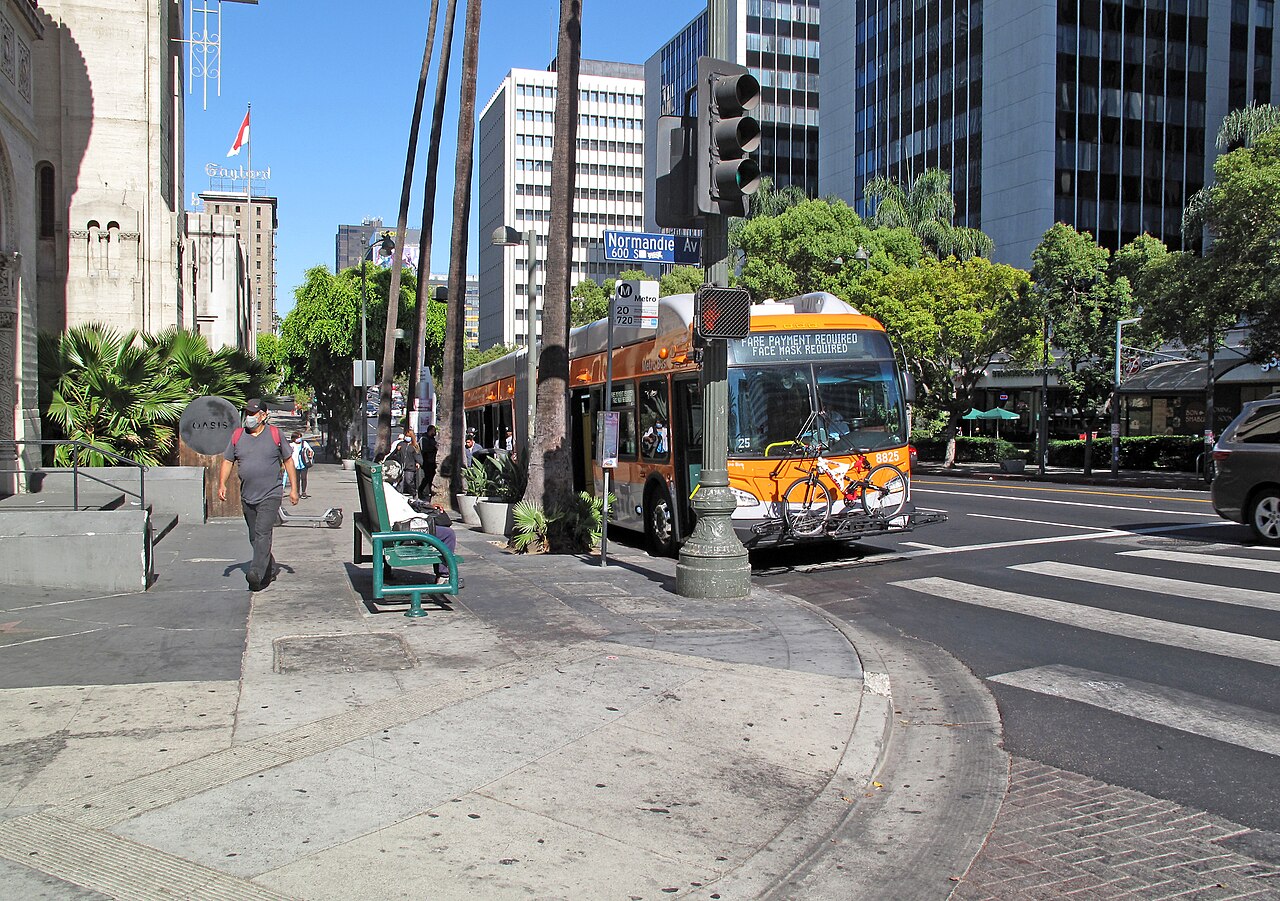
The cameras riding behind the windshields of Metro buses wrote 115,890 parking tickets in Los Angeles in 2025, and the citations brought in $19,603,937 in gross revenue, Streetsblog L.A. reported in April from a Los Angeles Department of Transportation memo. The section of the Vehicle Code that lets them do it repeals itself on January 1, 2027.
A bill that would push that date out to 2034 has been sitting with the governor since 4 p.m. on August 27, the Legislature's own bill record shows. Gov. Gavin Newsom doesn't have to sign it. Article IV, Section 10(b)(2) of the state constitution says a bill the Legislature passed before September 1, and left in his possession after it, becomes a statute if he doesn't return it by September 30. Doing nothing renews the cameras. Only a veto switches them off.
The bill is AB 1837, by Assemblymember Mark González. The Senate passed it 28-9 on August 19, and the Assembly agreed to the Senate's changes 64-8 the next day.
What the cameras are, and what they take in
The program belongs to Metro and the city together. Cameras from the vendor Hayden AI ride on the front of buses and flag cars stopped in a bus lane or at a bus stop; LADOT reviews the images and mails the ticket. Metro lists the enforced routes as Lines 70, 212, 720, 910 and 950, which it says carry more than 61,000 riders a day, plus a stretch of North La Brea Avenue in West Hollywood where citations began September 2, 2025. The 60-day warning period started in November 2024. The tickets started February 17, 2025.
A bus-lane citation is $293. Metro keeps 75 percent of it and the city takes the rest, LAist reported in April 2025. Before the cameras, officers were writing roughly 570 bus-lane tickets a month across Los Angeles. In the second month of camera enforcement the program wrote more than 9,700, the outlet found.
What the bill changes besides the date
The bill's text moves the repeal from January 1, 2027 to January 1, 2034 and closes the door on new programs after January 1, 2032. It also rewrites the terms. An operator would owe 60 days of warning notices for each new kind of violation it hasn't enforced by camera before, not only at the start of a program. Operators would have to report to legislative committees on whether the enforcement worked; the City and County of San Francisco, whose authority to run these cameras carries no expiration date at all, is exempted from that.
The rest is about the footage. The images would be confined to local agencies, barred from general law enforcement purposes, and barred from federal authorities without a court order. The bill also adds limits on running them through automated license plate recognition.
Waiting on the signature is an expansion. Metro plans cameras on roughly 300 more buses, up from about 100 now, and LADOT wants them on the city's DASH fleet, Streetsblog L.A. reported. None of it has anywhere to go if the section repeals in January.
Four more on the desk that land here
AB 1837 is not the only enrolled bill with a Los Angeles address. Four others sit under the same September 30 clock.
- Santa Monica's coastal deadline. AB 1740, by Assemblymember Rick Chavez Zbur, would give Santa Monica until January 1, 2029 to submit a complete local coastal program — the document that moves permitting authority from the Coastal Commission to the city — and give the commission six months to act on it, with a written list of the problems inside 45 days. Miss the six months and the commission owes the Legislature a quarterly explanation. The same bill exempts converting a car lane to a bus, bike or walking lane from the traffic study a coastal permit normally requires, and lets the permit be waived outright where the commission's executive director finds the change gives the public the same or better access to the water. It passed the Senate 39-0, cleared concurrence in the Assembly 76-0, and reached the governor August 31.
- A statewide list of every bus stop. AB 1599, by Assemblymember Patrick J. Ahrens, would have the Department of Transportation build a California Transit Stop Registry by June 1, 2027: one standardized record per stop, statewide, carrying the stop's name, its location, a permanent identifier, and whether it has a seat and a shelter. By January 1, 2028 operators would have to match their own stop names and locations to the registry and publish its identifiers in their data. The seat-and-shelter field is the one to watch here; the registry would be public and updated at least once a year. The Senate passed it 40-0, the Assembly concurred 79-0, and it went to the governor September 3.
- Who pays for a data center. AB 2383, also Zbur's, would make electric utilities file separate tariffs for very large new customers so that the cost of serving them doesn't spread across everyone else's bill. A participating customer would carry its own incremental generation costs for at least ten years, backed by upfront collateral and early-termination fees, and the threshold for the program couldn't be set above 25 megawatts. Community choice aggregators and other providers would adopt their own version by January 1, 2028. It is the cost question the Globe's Politics Desk argued yesterday nobody is running on. The Assembly concurred 67-2 on August 31, and the bill was enrolled September 4.
- Calls from inside a private detention facility. SB 423, by Sen. Lena Gonzalez, a Long Beach Democrat, adds a section to the Government Code that stops an agency from withholding, as an investigatory file, the recording or transcript of a call reporting an incident at a private detention facility — along with the written report of the incident and the records of the investigation that follows. An active investigation is a reason to withhold only where release would substantially interfere with it, and victims' names come out first. Its coauthors are Sens. Durazo, Menjivar and Pérez, plus Assemblymember Kalra. The Senate agreed to the Assembly's amendments 30-10, and the bill was enrolled September 4.
None of the five had been signed or vetoed as of Monday afternoon, according to each bill's own status page. The governor has 23 days. The cameras have 116.
Source: leginfo.legislature.ca.gov, retrieved September 7, 2026.
Comments 0