 ™
L.A. Gave Up $102.9 Million in Street Money for Want of 25 Workers
The state declined to consider the city's request for six more years on projects in Boyle Heights, Skid Row and Wilmington.
"We just don't have enough bodies," Shirley Lau, one of the leaders of the Bureau of Street Services, told staff from the mayor's office and other city executives in April, LAist reported. The report she presented put a number on it: 25 hires, needed right away.
Los Angeles never made them. By summer, $102.9 million in state grant money for streets and sidewalks was gone because those 25 jobs sat empty, Crosstown reported Wednesday. The city had two and a half years to fill them. That works out to about $4.1 million in lost state money for every job nobody took.
It's big money by the standard of the program it came from, too. Since California's Active Transportation Program started in 2013, L.A. has won $500 million for 46 projects, according to a June report from city transportation chief Laura Rubio-Cornejo that LAist cited. These three projects alone added up to roughly a fifth of it.
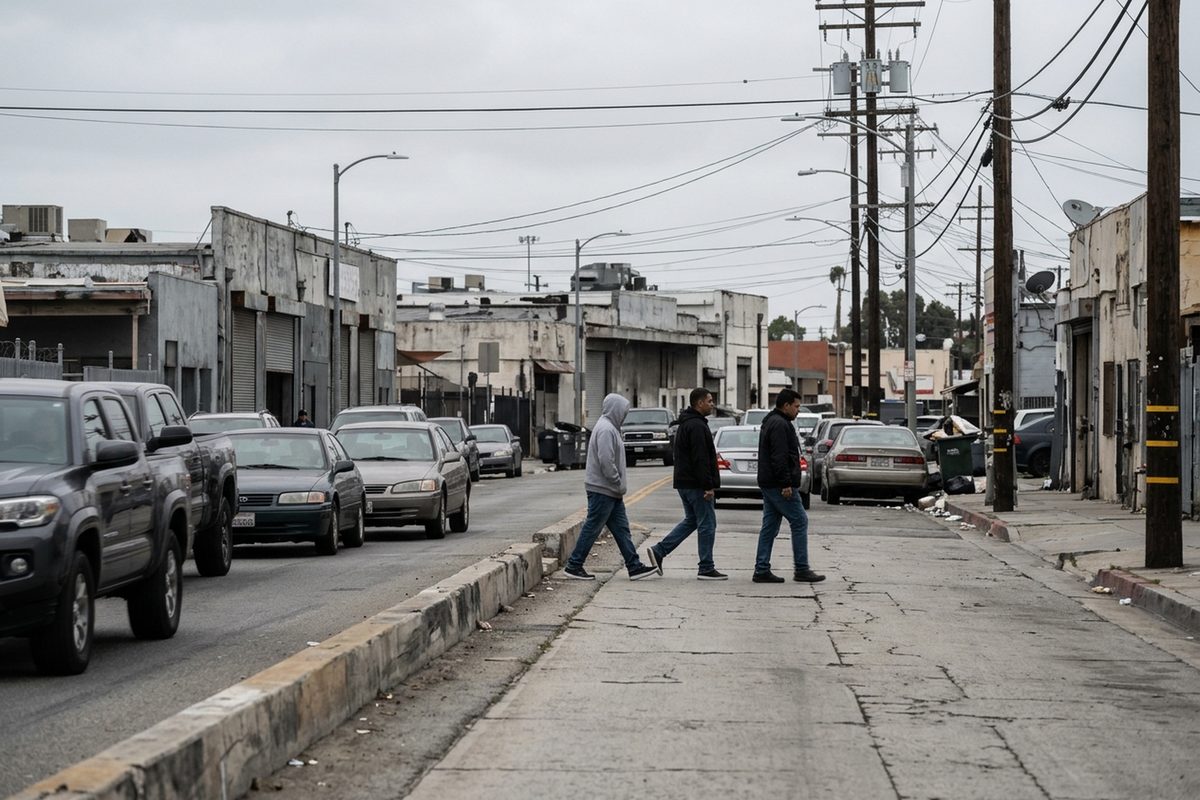
The money was meant for streets that are hard to walk or bike in Boyle Heights, Skid Row and Wilmington, all neighborhoods that have long gone without investment. The plans called for wider sidewalks, better lighting, tree shade, bike lanes and traffic calming. In Skid Row, the work included the corner of San Pedro and Second streets. In Wilmington, it included Anaheim Street at Banning Boulevard.
The city won the grants in 2022 and 2023. Early this year, Councilmembers Ysabel Jurado and Tim McOsker, whose districts hold the projects, first moved to cancel the funding, then switched to asking for more time. In April the city asked the California Transportation Commission for six more years, which would have pushed construction bids to 2032. Carlos Rios of the Department of Transportation warned at an April city meeting with the mayor's staff that missing the June agenda meant the money for that phase was gone: "There's no coming back from it."
The commission left the request off its June agenda. Justin Behrens, a spokesman, told LAist the city had asked for more time than the program's guidelines allow. Without an extension, the state's money for design and environmental review expired when June did.
The 25 hires didn't stall for no reason. Under the city's civil service rules, the personnel department must first define the job, then hold an exam, then rank whoever passes, a sequence that typically runs past seven months, Crosstown found. A 2018 report from then-City Controller Ron Galperin put the average wait to bring on a single employee at seven and a half months, while qualified people walked away to work somewhere else. Eight years later, it's about as slow. Only 12 of StreetsLA's 26 pothole trucks have the crews to go out regularly.
Crosstown sets the lost grants inside a bigger pattern. Over five years, the city's budget rose 34% and the count of sidewalks it fixed dropped 33%. Rick Cole, a former deputy controller now advising Nithya Raman's mayoral campaign, put it this way in his farewell speech at City Hall in June: "Beneath the broken sidewalks is a broken system."
Raman and Mayor Karen Bass both have infrastructure plans, and neither campaign answered Crosstown's questions about how it would fix this. Measure LA, on the Nov. 3 ballot, would make capital infrastructure plans mandatory and add a public works director to deliver them. City reports warned that missing grant deadlines could hurt L.A.'s chances at future awards.
The city has already applied again. In June, the month the money slipped away, L.A. submitted its bid for the next round of the same state program, including an extension of the LA RiverWay bike path and work on Huntington Drive. The city said it had held back its plans because of "staff resource limitations and the city's existing grant commitments."
Source: xtown.la, retrieved October 29, 2026. Other sources: LAist, LAist (2).
Comments 0