 ™
™
L.A. Diners Are Paying Extra for Protein. Small Kitchens Say They Aren't Keeping the Extra Money.
Protein and modifier sales are up 300% to 400% at Fountain Grains & Greens in East Hollywood while its chicken costs 15% more, the Los Angeles Times reported on August 22, 2026.
Protein and modifier sales at one East Hollywood bowl counter have climbed 300% to 400% in about two years, according to one of its owners. Arda Jooharian, co-owner of Fountain Grains & Greens, gave that figure to the Los Angeles Times, which published it on August 22, 2026, in a report on “proteinmaxxing.” The Times doesn't put a number on what those add-ons leave behind after costs, and the owners it interviewed suggest the answer is thin.
My take: a menu engineered around a macro is a menu engineered against the small kitchen. The check goes up. The invoice from the distributor goes up faster, and an independent operator buying a few cases a week has almost nothing to negotiate with.
The receipts
Chicken costs Fountain Grains & Greens 15% more than it did when the restaurant opened in 2024, the Times reported. Steak costs 25% more. Jooharian told the outlet the shop hasn't raised its protein prices since opening, and pointed to supply chain disruption and fertilizer costs landing on farmers.
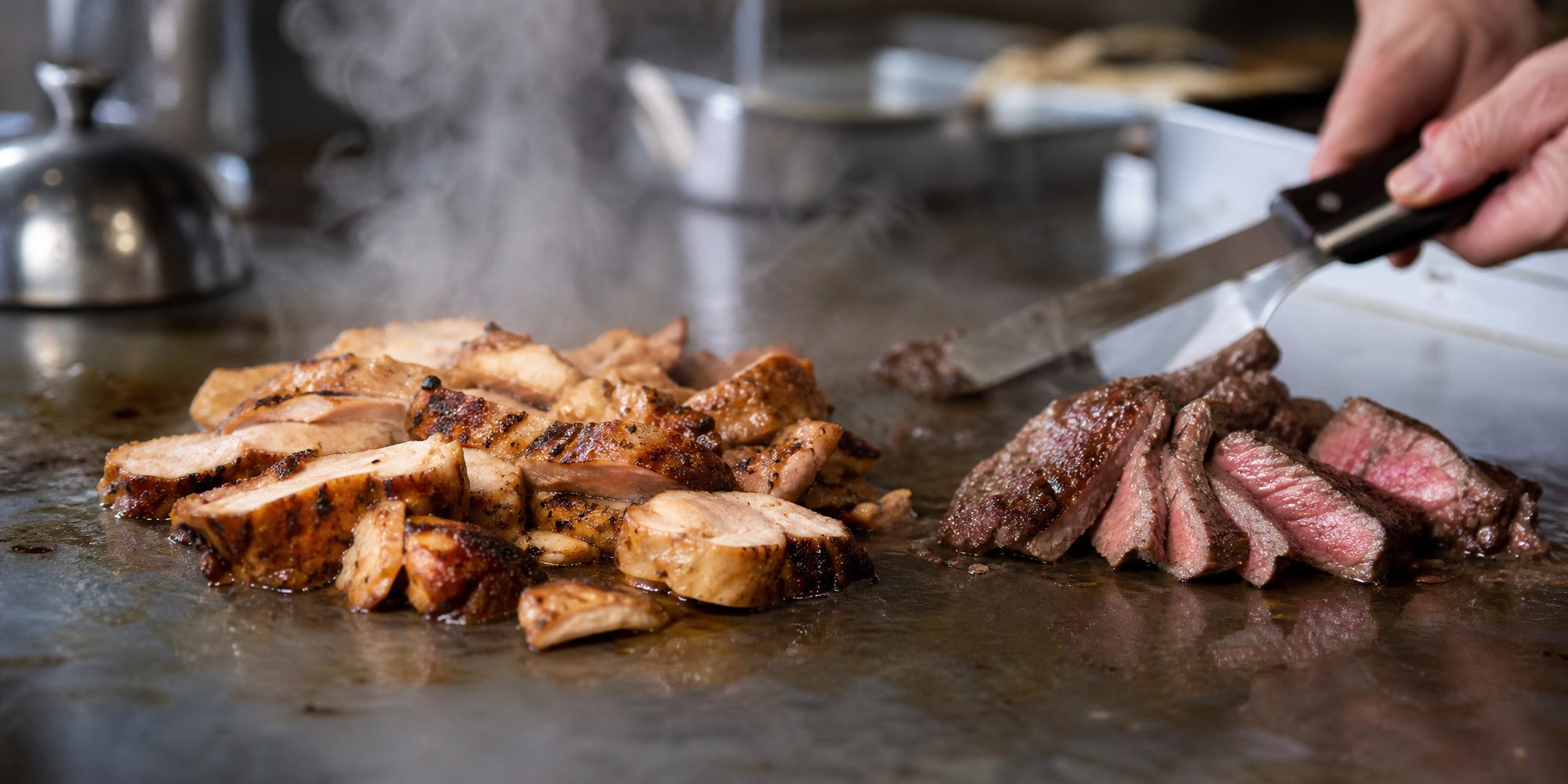
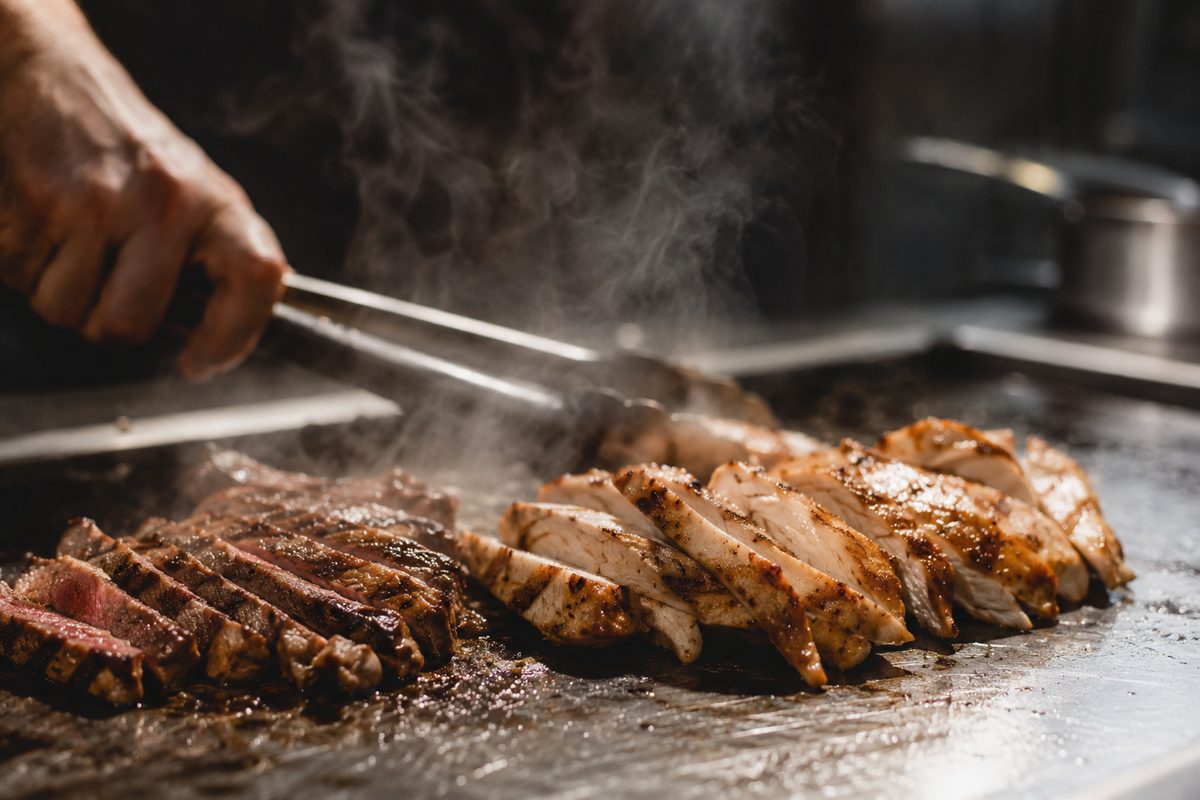
The posted range the Times printed runs $16 to $36 for a bowl, with add-ons from $4 to $18. The top of that range is the kimchi bowl rebuilt with a five-ounce charcoal-grilled hanger steak in place of the usual chicken thigh. Co-owner Andrew Pettingell told the Times the steak is the single biggest cost on the line.
“We don't make money off [the steak], but ... it's not always about that.” — Andrew Pettingell, to the Los Angeles Times
Pettingell also told the outlet the rice comes from a regenerative farm in Chico and the chickens arrive whole, then get butchered and brined in-house. That's a supply chain designed for a small volume of carefully sourced food. It's now absorbing customers who swap a three-ounce portion of chicken for a full eight-ounce breast.
Carson, same squeeze, different menu
In Carson, Jinell Singletary of Urban Comfort Foods moved her beef and lamb orders to a new distributor, the Los Angeles Times reported. What her customers are ordering is why she made the change, she told the outlet. Her signature and build-your-own bowls run $12.50 to $19.50. Full-size protein sides cost $7 to $10, with two- and four-ounce add-ons at $2 and $4. She also said she'd had to write a policy charging for protein add-ons, because the volume wasn't something she'd planned for.
“It doesn't matter how much we've gone viral. We're not the big guys, so they don't see the value in us getting those discounts.” — Jinell Singletary, to the Los Angeles Times
That sentence is the whole story of who this trend pays. The chains are moving in the same direction with better terms: the Times notes Sweetgreen briefly sold a Protein Max Protein Bowl advertised at 106 grams of protein and still runs a protein-plate section, and that Chipotle now carries a high-protein menu.
The strongest thing the other side says
People are buying what they want, and nobody engineered them into it. Fair. But the demand didn't arrive from nowhere. The Times reports the federal recommended daily allowance for protein was raised this year to 1.2 to 1.6 grams per kilogram — 80 to 110 grams for a 150-pound adult — up from a longstanding 0.8 grams per kilogram, and Health and Human Services Secretary Robert F. Kennedy Jr. framed the change as ending a war on protein. A 2026 Gallup poll cited by the outlet found 11% of U.S. adults taking GLP-1 medications for weight loss, up from 3% in 2024.
The American Medical Assn. and some nutrition experts warn that too much protein can bring digestive problems, weight gain and gout, per the Times. Kacie Carter, a nutritionist and founder of Honey Hi in Echo Park, told the outlet she isn't inclined to maximize anything.
So the customer is sincere and the kitchen is squeezed, both at once. The number to watch isn't the grams on the menu board. It's the gap between a check that grew and a wholesale price that grew more.
Source: latimes.com, retrieved September 1, 2026.
Comments 0