 ™
L.A. County Offers 30 Free Carts to Vendors Who Cook Raw Meat
The raw-to-cooked carts bring the free-cart pool L.A. County runs with the city of Los Angeles to 341.
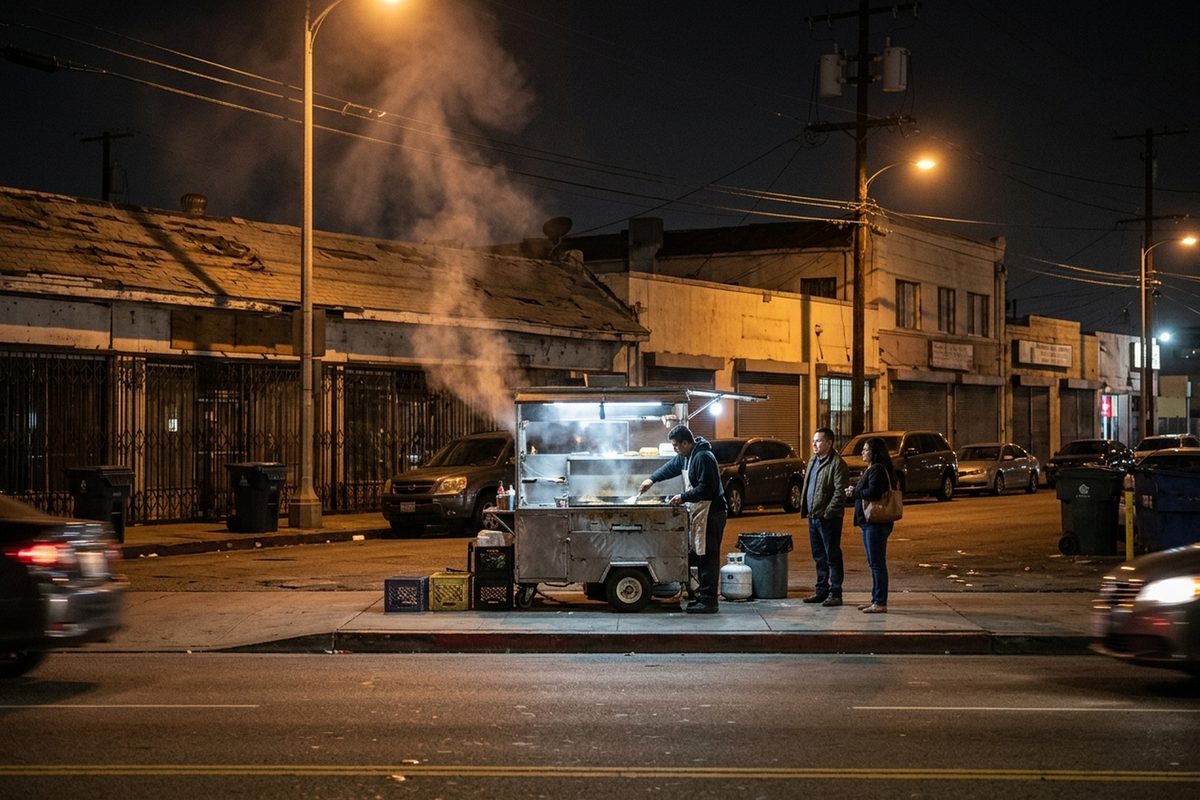
Los Angeles County's free grill cart for sidewalk vendors can warm meat up. It can't start from raw. The county's cart program page says anything on that grill has to be cooked first in a permitted kitchen or commissary.
Now there's a cart that can. On Friday, the county's Department of Economic Opportunity announced on lacounty.gov that it's taking applications for a raw-to-cooked cart. "Until today, vendors who cook from raw ingredients couldn't get a health permit because there was no approved cart for them to use," Supervisor Holly J. Mitchell said in the county's announcement.
The number that matters is 30. In January, the county and the City of Los Angeles said $2.8 million would pay for more than 280 free carts plus permitting help. The 30 raw-to-cooked carts lift that pool to 341. Neither Friday's announcement nor the program page gives a count of carts handed out so far.
Friday's announcement says the program and its grants serve vendors who've worked unincorporated county areas for at least 12 months. The cart page still lists city vendors as eligible for the program overall. Applicants must be 18 or older, live in the county, own the business alone and earn no more than $75,000 a year as a household. It's one cart per household.
The money has a wrinkle. Unincorporated-area vendors who win any of the four older carts get screened for a $5,000 grant toward permits, commissary space and equipment. Raw-to-cooked winners are left out of that one. They get a "small grant" instead, a figure the announcement doesn't give.
That grant matters because the permit is the real prize. A county ordinance in effect since August 2024 requires every sidewalk vendor in unincorporated areas, stationary or roaming, to register with the department, and food vendors also need a compact mobile food operation permit from the Department of Public Health. Supervisors waived the $604 registration fee for two years and agreed to cover 75% of the health permit.
The new cart is built for that inspection. The cart page lists upgraded ventilation, tight temperature controls and a way to wash hands and dishes, so raw protein can be stored, handled and cooked on site. Public Health still signs off on every menu.
And the cart isn't yours on day one. Winners get a conditional award and must line up their permits, food handler card and a commissary or permitted home kitchen before they take ownership. Miss the county's deadline and the cart goes back in the pool. The program page puts the whole trip, from application to pickup, at up to eight weeks.
Then comes the sorting. Applications in by the end of each month are scored for that month's carts, with priority for vendors further along on compliance and, the January release said, for high-need areas on the county's Equity Explorer Map. When tied scores outnumber carts, a lottery picks. Everyone else rolls into next month's pile, until the last cart is gone.
Source: Los Angeles County, retrieved October 19, 2026. Other sources: Los Angeles County (2), Los Angeles County (3), Los Angeles County (4).
Comments 0