 ™
™L.A. County Has Tied Its Rabid Bat Record, and Peak Season Isn't Over
Public Health has confirmed 69 so far and says a bat near someone sleeping should be treated as a possible exposure.
Los Angeles County has confirmed 69 rabid bats this year, tying last year's record, and the late-summer peak isn't over, county health officials said.
The Department of Public Health released the count on Sept. 28, World Rabies Day. The department calls it the most rabid bats the county has ever recorded, and says detections have been climbing for more than a decade.
Here's why it matters in your house. A bat bite is tiny. It can feel like a pinprick, and the county says someone asleep may never notice it.
So if you wake up and there's a bat in the room, the county wants you to treat it as a possible rabies exposure, even with no mark on anyone.
Where they're turning up
Everywhere. The county says rabid bats have been found from the San Fernando Valley to downtown Los Angeles, inside office buildings, schools, parks, businesses and backyards. About a third of the times people run into bats, it happens indoors, where the risk is higher.
August was the worst stretch. The department confirmed 24 rabid bats that month alone, and 32 percent of the bats residents turned in for testing came back positive.
The Santa Clarita Valley carries most of the load: 68 percent of this year's rabid bats were found there, most of them canyon bats. The county says that points to rabies moving more intensely through that local population. It also credits years of outreach there, started in 2018, with getting more residents to report bats, and says the high numbers are a real concern anyway.
What to do if a bat gets in your house
These steps come from the county's Sept. 28 guidance.
- Don't touch it. Not with bare hands, not with a gloved hand you're pretty sure about. Keep kids and pets away from it.
- Cover it if you safely can. Put a box or container over it.
- Don't let it go. The county wants the bat caught so it can be tested. Releasing it throws away the one thing that tells you whether you need treatment.
- Call your local animal control right away for pickup and testing. Do the same for a bat outside that's on the ground, out in daylight, can't fly or is dead.
- Call your doctor or Public Health right away if anyone might have had contact. That means a bite, a scratch, or bat saliva or tissue reaching a wound, mouth, nose or eyes. It also means a bat found near a sleeping person, a child or a pet.
- Ask about PEP. Post-exposure prophylaxis is a series of vaccines. Given in time, it prevents rabies.
Time matters because of what happens if you wait. The disease is almost always fatal once symptoms start.
"If you find a bat indoors or think you may have had contact with one, contact your medical provider or Public Health right away," said Dr. Muntu Davis, the county health officer.
Your pets
The county says rabies kills every animal that shows symptoms and that vaccination prevents it completely. That includes cats that never go outside and older pets you may have stopped taking in for shots. Don't let pets play with bats or any wild animal.
Sealing up the house
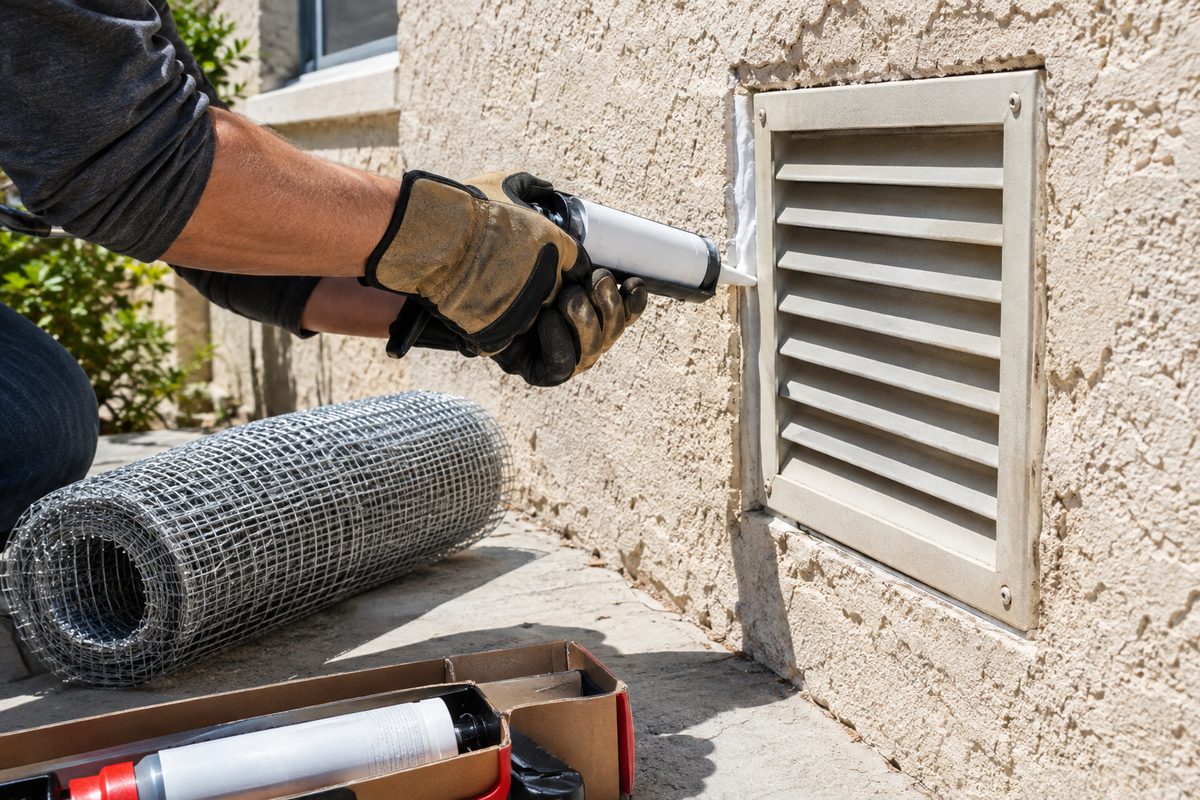
A bat doesn't need much room. The county says to look for any opening a quarter inch by a half inch or bigger, including gaps around electrical and plumbing lines, and caulk it. Put heavy-duty wire mesh over vents, make sure outside doors shut tight, and use window screens, chimney caps and draft guards under attic doors.
The county's bat fact sheet and rabies guidance are posted at ph.lacounty.gov/rabies. If one shows up tonight: box it, keep it, call.
Source: lacounty.gov, retrieved September 30, 2026.
Comments 0