 ™
™L.A. Council Pauses LAPD Plan for License Plate Scanners on Streetlights
The 10-4 vote sends Axon's AI camera pilot to committee, while a separate $235-million LAPD deal stays out of reach, the council says.
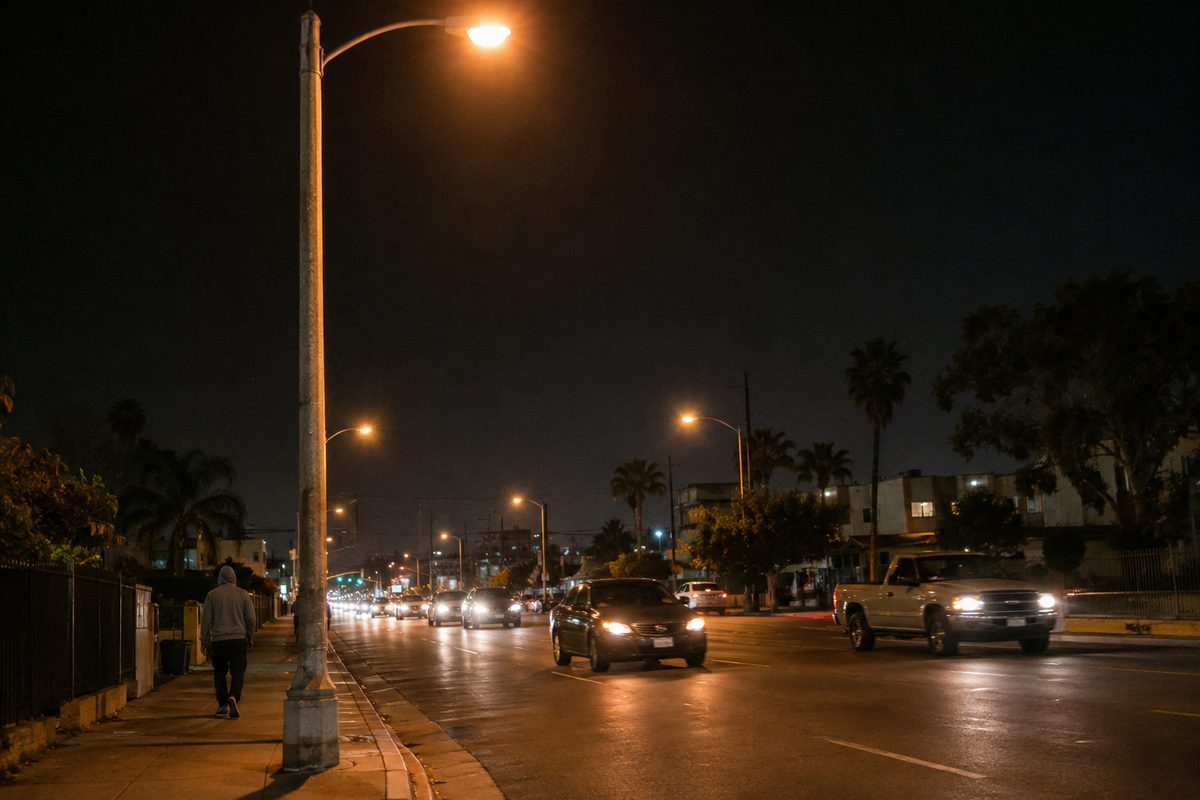
Hundreds of streetlights across Los Angeles were in line for a second shift: scanning the license plates of the cars passing under them.
On Tuesday the City Council voted 10-4 to overrule the Police Commission's approval of that pilot program from Axon Enterprise and sent it to the council's public safety committee, the Los Angeles Times reported. The point of the delay, according to the Times, is to hold off the cameras until city officials are convinced the LAPD will use them responsibly.
This wouldn't be an ordinary plate reader. The Axon scanners would use AI to pick out more than cars and plates. They'd also spot pedestrians and objects on the street and the sidewalk.
The pilot is the piece the council could reach. Members said they were also uneasy about a separate 10-year, $235-million contract between the LAPD and Axon, which covers replacement body cameras, new Tasers, cloud video storage and an AI program that helps officers write reports. They also said they had no authority to stop it.
The vote lands on a department that's already short one plate-reader vendor. This summer the LAPD paused its relationship with Flock Safety over concerns that the Trump administration was using Flock's data to find immigrants for deportation. Police say they can no longer get into Flock's cameras, many of which belong to HOAs and other private owners, though they've said they'd still like to work out a fresh agreement with the company.
So the Axon pitch was built around what Flock lacked. Last month Dean Gialamas, the LAPD's technology chief, told the Police Commission that Axon had agreed to let the department own all the data and to share none of it with federal authorities. He said searches would be limited to criminal investigations, missing persons and other serious public safety cases, and never run solely because of a protest. He also promised shorter data retention and audits to flag officers who search too often or too strangely.
Gialamas reached back to the early arguments over forensic DNA testing. Then as now, he said, the fix was to build safeguards around the tool, not to throw it out.
The safeguards the city has now don't inspire much confidence. A report last month from the LAPD inspector general found numerous gaps in the department's current agreements with its three plate-reader vendors, Flock, Motorola and Axon itself. Among them was no clear language on how long data is kept or who else gets it.
The fight on the floor followed a round of angry public comment against the readers. Councilmember Traci Park, a firm backer of the technology, said the city urgently needed the devices "up and running." Councilmember Eunisses Hernandez called that irresponsible. She cited news reports of officers using plate readers to stalk romantic partners and to follow women seeking reproductive health care.
Hernandez's sharper point was about the word "pilot." She noted that the LAPD's robot dog, sent in when suspects barricade themselves, slid from pilot to permanent program without the council weighing in. Councilmember Hugo Soto-Martínez said the delay gives the public and the council time to read the guardrails in the department's draft agreement with Axon.
Council President Marqueece Harris-Dawson put both sides in a single breath. He credited plate readers along the Figueroa corridor with helping rescue dozens of juvenile sex trafficking victims. Then he admitted, "if I'm honest I don't know what else the cameras are doing," according to the Times.
The public safety committee is likely to take up the pilot at its Oct. 20 meeting, with the full council voting later that week. That gives the LAPD about two weeks to answer the council president's question.
Source: Los Angeles Times, retrieved October 7, 2026.
Comments 0