 ™
How to Request Homeless Outreach for Someone in L.A. County
LAHSA's online LA-HOP form sends a street outreach team to someone living outside, and it can take a few days.
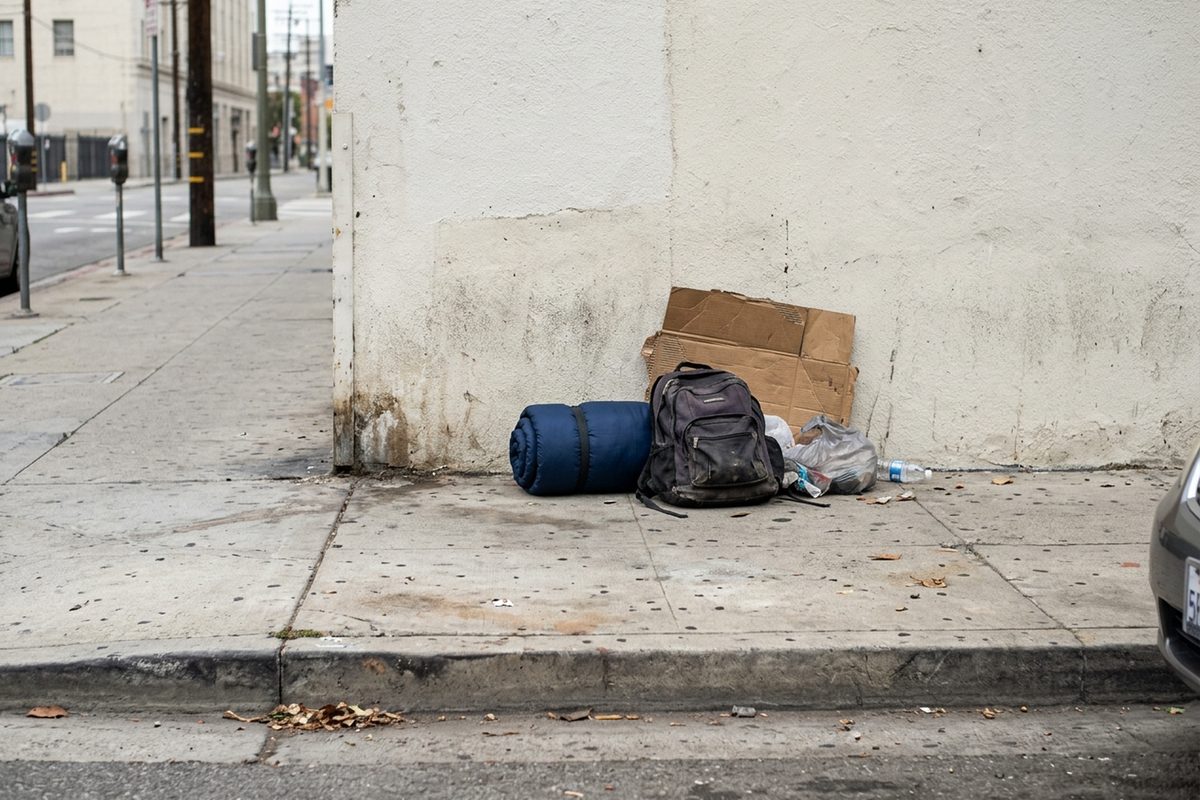
Someone's sleeping on the sidewalk near your place, and they don't look well. Anywhere in Los Angeles County, you can ask for a homeless outreach team to go check on them. You do it through LA-HOP, an online form run by the Los Angeles Homeless Services Authority.
It isn't a fast lane. Demand is high, so a team can take a few days to go out, and people with the most serious medical or mental health needs may be seen first, LAHSA says on its request page. If someone's in danger right now, the form is the wrong tool. Call 911.
The teams work on the street. They serve people LAHSA calls "literally homeless," a federal housing department term for someone whose main place to sleep at night is "not meant for human habitation."
That leaves some people out. Teams can't serve someone who's couch surfing, staying with friends or relatives for now, at risk of losing housing or already in a shelter, and they don't go into facilities. Families with kids under 18 go somewhere else: the parents should dial 211 and request the Coordinated Entry System for Families.
LA-HOP also isn't for complaints. Crime goes to your local police. Graffiti, illegal dumping and big-item pickups are city services, so call your city. LAHSA says the portal doesn't replace encampment reporting either, so encampment reports go to your city too. Elected officials, and people who work in their offices, are pointed to the Emergency Centralized Response Center instead.
Here's the request, in order.
- Open the request page and choose Make a Request. Have your email open. The form sends you a code, and you have to enter it before you can go any further.
- Give the location. A street address works, and so does an intersection. The form's own examples include 707 Wilshire Blvd, Los Angeles 90017, and Wilshire Blvd and Figueroa St, Los Angeles.
- Describe the person or people. LAHSA wants as much detail as you can give, and it asks you to mention any specific worries about their health or well-being. That's the part that counts, because serious medical and mental health needs can move a request up.
- Send it. A thank-you screen tells you the request has been received and will be referred to an outreach team for follow-up.
You don't have to know which city or team covers that corner. When the county and LAHSA launched the portal in July 2018 with money from the Measure H sales tax, the county said each region has an outreach coordinator who works as an "air traffic controller," sending the team that fits best. Those coordinators also decide who gets seen first, and the county said they'd put the most vulnerable people ahead.
Teams mostly work in daylight, LAHSA says. That's partly for safety and partly because daytime lets them connect people to services like the DMV and the Department of Public Social Services. Some teams carry their own professionals in medical care, mental health and addiction.
The first job is earning trust, and that can take a long time with some people. The help can be as simple as getting someone an ID card or as big as their medical care. LAHSA says the move indoors goes slower than it wants, and it ties that to too few shelter beds and too little affordable permanent housing.
Don't expect to hear how the story ends. If you leave an email, LAHSA will tell you it got the request and when it was fulfilled. It won't tell you what happened to the person, because privacy law bars it from sharing updates unless the client says yes.
The last step is the one you control. If you said a team could contact you, answer when it does. LAHSA says it may reach out with questions that help its workers find the person you saw.
Source: lahsa.org, retrieved November 10, 2026. Other sources: lahsa.org (2), Los Angeles County.
Comments 0