 ™
™A 1987 State Law Lets LA Landlords Reset Commercial Rents — and a York Boulevard Block Just Got 60 Days
Four businesses on one Highland Park block were told to vacate after a building sold for $5.1 million. The gap that allowed it is 39 years old, and a City Council motion to study a fix is still in committee.
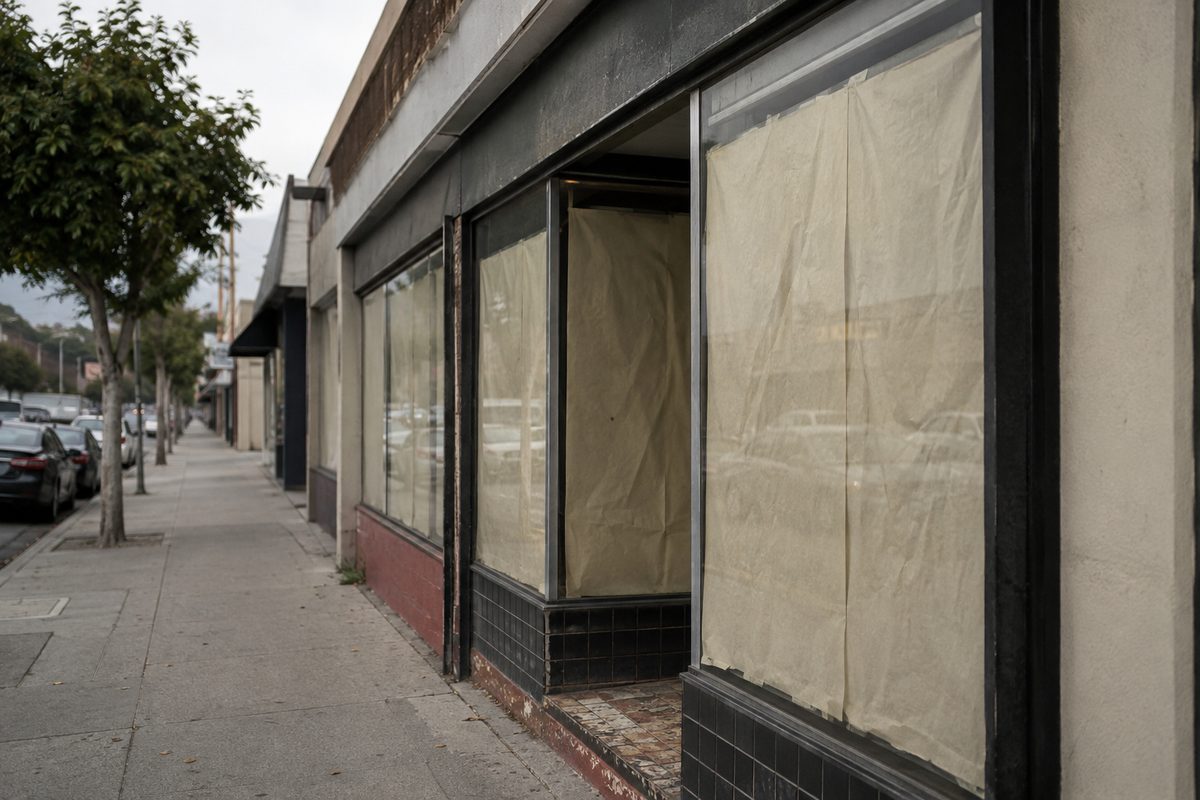
PJ Roden had been month-to-month at her York Boulevard storefront, Sip Snack, for seven years when her landlord called in April to say someone was coming to measure the building. She asked him whether he was selling, she told The LA Local, in reporting republished by LAist. He said he was, for around $4 million. The building sold within a few weeks for $5.1 million in cash.
A few weeks after that, a law firm representing the new owners sent tenants on the block a letter giving them 60 days to vacate.
“Nobody will talk to us. There’s no communication. We don’t get to negotiate — we’re just being kicked out,” Roden told The LA Local. “That’s devastating for a small business. I put my life savings into Sip Snack, close to $100,000, building out the space, the equipment, the liquor license to sell wine, and now I have to start all over again.” She said regaining a wine license could take up to a year, if the city grants one, and that she is still paying off investments made five years ago.
What the 1987 provision actually does
The mechanism here is state law, not a city rule. Per LAist's account, the Costa-Knee-Seymour Commercial Property Investment Act of 1987 bars California cities from capping commercial rent increases. California also has no just-cause eviction standard for commercial tenants, so a new owner can raise rent or end a tenancy with few restrictions — protections residential renters do have.
“Mom-and-pop landlords in L.A. give you a one-year lease and then never give you another one,” Roden said. “They want you month-to-month because that way, if they sell the building, they can raise the rent by a lot, or kick you out.” She said she asked for a lease before the sale closed and was told not to worry, that her rent would probably just be raised.
Roden was not the only one noticed on that block. So were Two Sons, a shop her friend Annika had expanded into the building two years earlier; Junior’s, a 99-cent party-supply store run by Sylvia Flores; and Crazy Scissors, a salon whose owner had been there 25 years. “He has no place to go,” Roden said. “It’s not easy to move a hair salon.”
The 2025 law, and what it leaves out
Senate Bill 1103, the Commercial Tenant Protection Act, took effect in January 2025. It requires 90 days’ notice to “qualified” microbusinesses before a rent increase above 10%, and 60 days’ notice before terminating a lease. It sets no ceiling on the size of an increase, and it generally covers only businesses with five or fewer employees, restaurants with up to 10 and small nonprofits up to 20. Los Angeles County has more than 236,000 businesses with nine or fewer employees, per 2021 Census data cited by LAist.
Judith Goldstein, co-owner of Luca Essentials in Highland Park and also pushed out of her space, called SB 1103 “a farce.” Bell Gardens locksmith Ernesto Torres called it “lukewarm”: “If a 30% rent increase happens and the tenant can’t pay, the eviction notice arrives.” Public Counsel attorney Ritu Mahajan told The LA Local her organization has represented commercial tenants whose rent rose as much as 200% in a single year.
The fix, still in committee
On April 22, 2026, Councilmember Ysabel Jurado — a former tenant rights attorney — joined Eunisses Hernandez and Heather Hutt in introducing a motion to study a Commercial Tenant Anti-Harassment Ordinance modeled on the city’s residential version, with enforcement mechanisms and a private right of action. “Small businesses should not be forced out simply because they lack the power to fight back,” Jurado’s office said in a press release. The measure remains in committee; the Council is on summer break.
One thing the reporting does not establish: how many commercial tenants across the county have been noticed this way. Roden and Goldstein both relocated — a block down York, and across the street — because a nearby space happened to open at the right time.
Comments 0