 ™
™16 Felony Counts, 122 Recordings: The LAPD Whistleblower Case Testing California's Consent Law
Officer Daniel Flores says he recorded racist and sexist remarks by colleagues to report them. DA Nathan Hochman charged him with eavesdropping — and the mayor says that message will reach other officers.
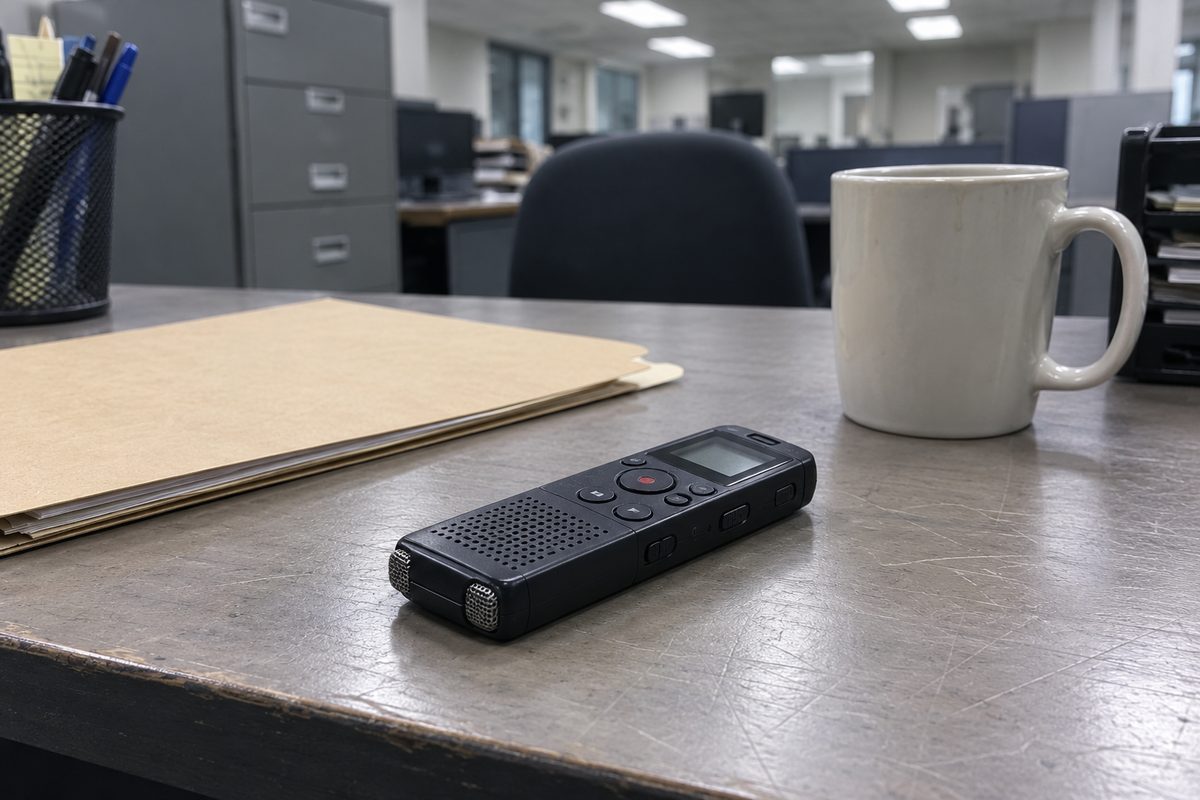
An LAPD officer who says he secretly recorded colleagues making racist, sexist and homophobic remarks is now facing 16 felony counts, and the question hanging over the case is what other officers inside the department will conclude from it.
Officer Daniel Flores, 43, worked in the LAPD's Recruitment and Employment Division. According to LAist, Flores sued the department in June, claiming a hostile workplace, and said in that lawsuit that he made the recordings as part of what he believed was a “lawful investigation as a police officer.” The suit says the conduct began when a new supervisor took over the recruitment division and “repeatedly made derogatory statements and fostered an environment in which other employees were encouraged to do the same.”
Flores submitted complaints to LAPD Internal Affairs and the Los Angeles Police Commission in January 2025. He turned over 122 recordings. Los Angeles County District Attorney Nathan Hochman charged him on July 31 with 16 felony counts of eavesdropping or recording confidential communications. Flores pleaded not guilty Monday and remains free on his own recognizance. He could face up to 13 years in state prison if convicted.
The internal investigation his complaint started
Police Chief Jim McDonnell said Friday that Flores' complaint triggered an internal investigation into 18 other officers, and that 17 of them faced disciplinary complaints. McDonnell declined to say what discipline, if any, those officers received — which leaves the central comparison in this story unresolved. The public record described by LAist does not say whether any officer was fired, suspended or cleared.
Hochman's position is that the ends do not license the means. “We are going to enforce the laws to prevent police officers from using illegal means to achieve their goals, even if that goal in that individual’s mind is to root out bigotry,” he said at a news conference last week, according to LAist. He said Flores “had a number of legitimate avenues to go through,” and framed the charge as a limit that protects everyone: “We want to make sure nobody cuts corners and decides they want to go ahead and record a conversation when they come over to your home, when they come over to your workplace, when they come over to a social setting.”
What the law allows, and where the line sits
California requires all parties to a conversation to consent before it is recorded, unless a court order permits otherwise. There are exceptions for officers conducting official investigations, and the defense has argued Flores is covered by the California Invasion of Privacy Act. LAist reached out to Flores' attorney and did not receive a response.
UCLA law professor Eugene Volokh told LAist the exception is real but bounded. “Obviously, we know that there are recordings done by police officers in various kinds of investigations,” he said. “But it's not unlimited latitude. It’s not enough that the police officer be well motivated. He has to be acting within his scope of his authority as a police officer.” Volokh also said all-party consent rules “interfere with people's ability to gather information, including information that might be seen as misconduct by the people that they are recording — this is what I sometimes call the dark side of privacy.”
The prosecution's read on motive
In a 27-page brief filed Monday, prosecutors argued Flores' motives were not altruistic, alleging he “manipulated conversations by initiating or participating in discussions about a particular topic before activating the recording device, then ceasing his own participation,” and that he edited the recordings to remove his own racist, sexist and homophobic remarks. Per LAist, that claim rests largely on what the recorded officers — the alleged victims in the criminal case — told detectives, including that Flores spoke of winning the “LAPD lottery,” a payout from his civil suit. The same brief described some of the officers' comments as “locker room talk.”
The reaction at City Hall
Mayor Karen Bass said in a statement that while recording colleagues without consent is a crime, “these charges certainly send the wrong message that calling out egregious behavior could land you in prison,” adding that she is worried it “will deter whistleblowers and discourage officers from using the appropriate reporting channels in the future.” Councilmember Hugo Soto-Martínez introduced a resolution Tuesday condemning Hochman and called for the charges to be dropped, saying that “dismissing racist, misogynistic and homophobic behavior as ‘locker room talk’ is unacceptable.” Melina Abdullah of Black Lives Matter L.A. said Hochman's intention is “to make sure he maintains that blue wall of silence.”
Hochman's answer to the chilling-effect argument is a slippery-slope one. He offered the example of an officer planting evidence to arrest a drug dealer, and asked: “If we don’t hold the line there, where does it next take us?”
Comments 0