 ™
™California's Zone 0 Rule Reaches L.A. Three Tasks Are Due the Day It Takes Effect.
Roof debris, the woodpile and branches near the chimney go first; everything else phases in over three to five years.
You're wondering whether this is the brush-clearance notice you already get every spring. It isn't. On August 19 the California Board of Forestry and Fire Protection adopted a rule governing a strip of ground most homeowners have never been asked to think about — the first five feet out from the wall, under the eaves, around the deck — and it reaches every house in a Very High Fire Hazard Severity Zone, the state's top hazard rating for land inside a city. The Board voted 8–0, according to California Public Policy Group, which follows state rulemaking; the rule now goes to the Office of Administrative Law for review and filing, expected around September, and roughly two million structures statewide sit inside its reach.
The five feet is called Zone 0, and it is new only as a regulation. Zones 1 and 2 — the 5 to 30 feet and the 30 to 100 feet — have been the shape of California defensible space for years. What the Legislature had never done was write down what happens inside the five feet where wind-blown embers actually land. Assembly Bill 3074 in 2020 ordered it, Senate Bill 504 in 2024 and Assembly Bill 1455 in 2025 kept it moving, and after the January 2025 fires here Governor Newsom's Executive Order N-18-25 told the Board to finish. The Board says so itself, in the first paragraphs of the summary it published with the August rule language.
We read that summary and its figure captions to pull the distances out, because the distances are the part people guess at. Note one honest limit before you measure anything: the version filed with the Office of Administrative Law is the version that governs, and the numbers below come from the Board's August document.
Step 1: Work out whether the rule reaches your address
Zone 0 applies in two places — State Responsibility Areas, where CAL FIRE is the fire agency, and Very High Fire Hazard Severity Zones inside Local Responsibility Areas, which is to say inside cities. The second one is what matters in Los Angeles, and the map underneath it was redrawn last year.
CAL FIRE published new Local Responsibility Area hazard maps for Southern California on March 24, 2025. LAist reported that land rated "very high" in L.A. County grew by more than 30 percent against the 2011 maps it replaced, pushing the rating north of Ventura Boulevard in parts of the San Fernando Valley, across San Vicente Boulevard farther into Santa Monica, south of Sunset Boulevard in West Hollywood, and deeper into Altadena and Pasadena. Fire has increased across the state over the past decade, CAL FIRE's Jim McDougald told LAist, and the new maps are "much more reflective of what we've been seeing."
If your address was outside the old map and inside the new one, Zone 0 is the second thing that changed for you, and the larger one. The Los Angeles Fire Department's own notice on the 2025 maps says the department is aligning the state's boundaries to city streets and property lines before public review, so the parcel-level answer for a City of L.A. address comes from LAFD, not from the state map.
Step 2: What is due the day the rule takes effect
Almost all of Zone 0 phases in over years. A short list does not. The Board's summary puts four things on the effective date itself, to keep the new rule aligned with existing state law and the California Wildland-Urban Interface building code — the construction standard for houses built at the edge of open country:
Roof debris. Leaves, needles and twigs off the roof and out of the gutters.
Firewood and stored wood. Out of the five feet — not stacked against the wall, not tucked under the eave.
Dead tree branches, and any branch within ten feet of a chimney. Ten feet is already the standard in state law; the rule carries it forward on day one rather than at year three.
No new trees planted in Zone 0. Existing ones may stay. New ones may not go in, from the effective date onward.
The three that matter
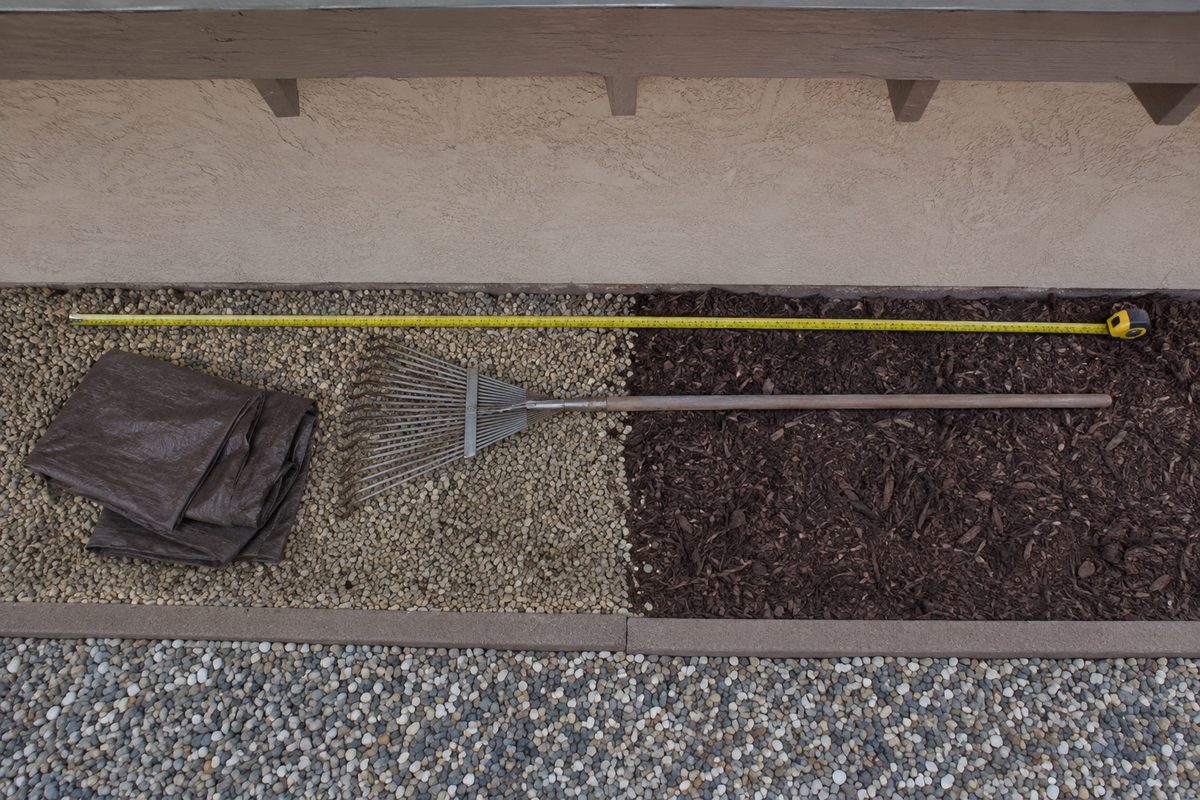
Of everything in the rule, three items decide most Los Angeles yards. The woodpile, because it is the most common combustible thing inside five feet of a wall and it is due immediately. The mulch, because the rule bans combustible mulches and wood chips inside the five feet outright, and Phase 1 gives three years to get them out. The eaves, because the width of your eave sets the width of the strip you will eventually have to keep clear of plants, and that number is different at every house.
Step 3: Year three — everything that burns, out of the five feet
Phase 1 runs three years from adoption, and the Board is explicit that inspectors are meant to spend it helping homeowners find problems rather than writing citations. Within those three years, per the summary: no combustible materials in Zone 0 — combustible mulches, fallen leaves and needles, wood chips, firewood, stored wood — and none on roofs or in gutters. Dead and dying plants come out. Trees get trimmed to the rule.
The tree standard is specific enough to act on. Branches five feet above the roof and kept clear of the eaves. Dead wood and the low branches that carry fire upward — ladder fuels — removed. Limbs off the bottom six feet on a large tree, or off the lower third on a smaller one, whichever is less. Which trees present enough risk to require more is left to the local defensible-space inspector, tree by tree.
Step 4: Year five — the safety zone that measures your eaves
Phase 2 is the part that changes how a yard looks, and local jurisdictions set its date, up to five years from the effective date. It creates a noncombustible "safety zone" hard against the building, under the eaves, and the Board sized it to the house rather than to a single number: twelve-inch eaves give a twelve-inch safety zone, thirty-six-inch eaves give a thirty-six-inch one. Where eaves are shallow, the zone is still at least one foot.
Inside Phase 2, the vegetation-free buffers are three measurements: within one foot of the structure or out to the edge of the eave, whichever is greater; within two feet of windows, glass doors and vents; and within five feet of attached decks, stairs and pergolas. A deck attached to the back of the house therefore carries the buffer out with it.
Fences and outbuildings land in the same phase. Where a fence attaches to the house, five feet of it must be noncombustible — swapping a wooden gate for a metal one is the example the Board uses. No new combustible fences or gates go in inside Zone 0, though repairs to existing ones are allowed. A shed or outbuilding standing in the five feet needs noncombustible exterior walls and roof.
Step 5: What you are still allowed to plant
The Board's summary says the drafting gave particular attention to trees and other living vegetation in this strip, and the answer it landed on is not bare gravel. Existing trees stay, maintained to the standard above. Outside the buffers but inside the five feet, the summary allows non-woody plants in spaced groupings and names them: bulbs, impatiens, begonias, petunias, poppies, yarrow, non-thatching succulents. Low ground covers are allowed, and the examples given are blue-star creeper, beach strawberry, creeping thyme and mosses. Lawn is allowed if it is mowed to the requirement. Potted plants are allowed in noncombustible pots that are easily moveable and no taller than a foot and a half.
The heights are in the Board's figure caption rather than the prose, which is where they are easy to miss: herbaceous plants up to 18 inches, lawn and other ground covers kept under 3 inches.
Step 6: What Los Angeles can change about it, and what it cannot
Local fire agencies may authorize alternative practices for local conditions — topography, fire risk, lot size, response resources, what a structure is built of. The ceiling on that flexibility is one phrase in the rule: an alternative must deliver "substantially similar practical effects." The agency has to make a finding saying so, and the governing body — a city council, a board of supervisors — has to approve it. A looser local rule is not one of the options on offer.
Los Angeles has been pushing at exactly that seam. MySafe:LA, the nonprofit that runs the Wildfire Los Angeles site, reported that Councilwoman Traci Park, whose district takes in Pacific Palisades and Brentwood, wrote the Board on August 17 arguing the August proposal was still too prescriptive for Southern California's urban-adjacent wildland edge, and pointing to neighborhoods where houses stand six feet apart and where an accessory dwelling unit can sit within five feet of a neighbor's structure. The Board approved the rule two days later.
Step 7: The clearance rule that already applies, Zone 0 or not
Nothing above replaces brush clearance, which is a separate obligation with its own inspectors and its own distances. LAFD's requirements for a property in a Very High Fire Hazard Severity Zone reach 200 feet from a structure: grass and native brush cut to three inches, the same within ten feet of a combustible fence or the roadside, trees limbed to a third of their height under 18 feet and to six feet of ground clearance above that, and no foliage within ten feet of a chimney outlet. LAFD calls vegetation management a year-round responsibility, not a spring one.
So the order is set by the calendar rather than by preference. Move the woodpile and the stored lumber out of the five feet, clear the roof and the gutters, and cut every branch back ten feet from the chimney outlet — that is the list that comes due the day the rule files. The bark mulch has three years. The eaves have five.
Comments 0