 ™
™
Every Hollywood Walk of Fame Star Comes With an $85,000 Bill
The Chamber's fine print says a nominee's sponsor pays it, and pays it to a separate charity.
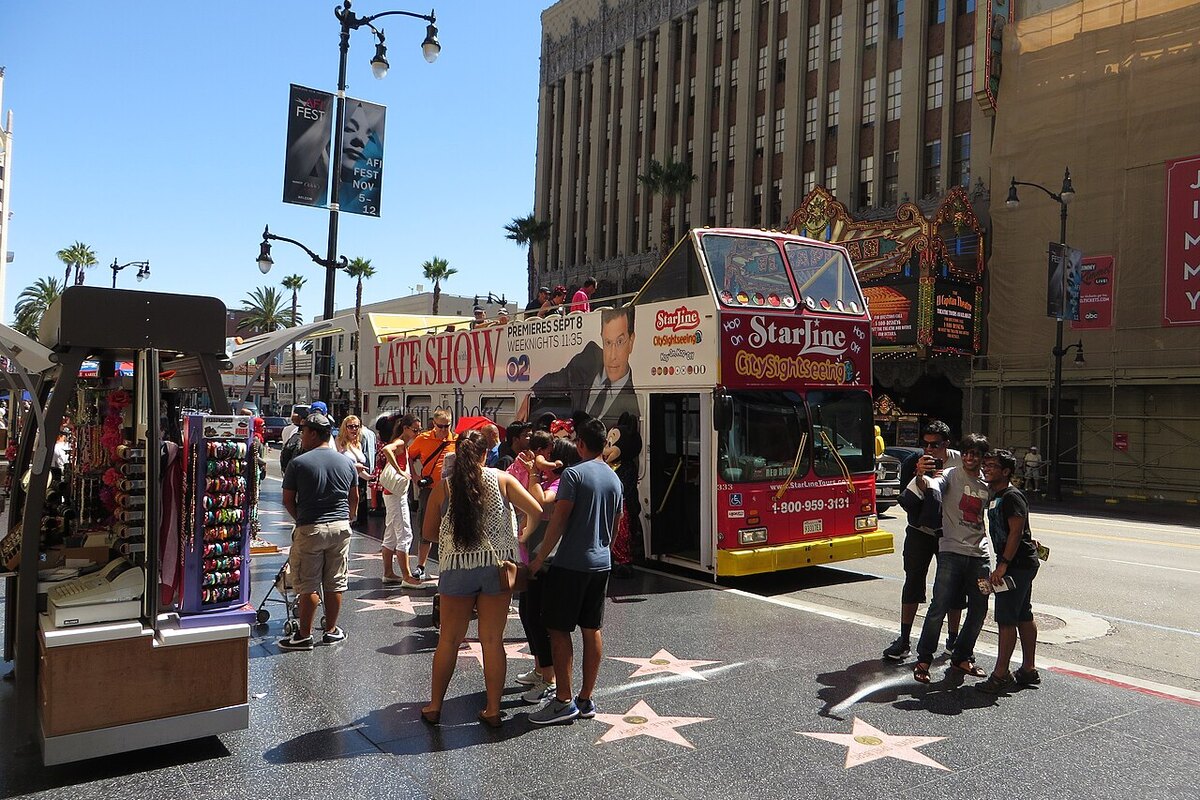
On Thursday at 11:30 in the morning, outside 6126 Hollywood Boulevard, Air Supply gets the 2,859th star on the Hollywood Walk of Fame. Anyone can stand there and watch it happen for nothing, because the Chamber's own rules promise “no paid admission or assigned seating at star ceremonies.” Somebody did pay, though. The posted figure is $85,000, and the most interesting thing about it is that the organization choosing the honorees is not the organization cashing the check.
The claim worth putting on trial is the cynical one everybody repeats: that a star on Hollywood Boulevard is a purchase dressed up as an honor. The Hollywood Chamber of Commerce publishes enough of its own paperwork to settle it, and the answer is better than either side wants.
$275 to ask, and anyone may ask
Start with the part that's genuinely admirable, because it is. The Chamber's nomination FAQ says a fan with no industry standing can nominate a celebrity, provided the celebrity or their management agrees in writing. It costs $275, the application stays live for two years, and a nominee the committee passes over can be refiled or reinstated on request. The procedure page is blunt that this is normal: a nominee sometimes needs several biennial tries before anything happens.
Then it narrows. The FAQ puts the committee's intake at an average of two hundred applications a year, and the procedure page says it picks roughly 24 to 30 names for the sidewalk. It has gone over that ceiling twice running: 35 honorees in the Class of 2026, and 32 in the Class of 2027, which the Chamber announced on July 23 of this year. Call it one applicant in six.
What the committee weighs is posted too, and the fourth item is the one to read twice. The procedure page lists the criteria as “professional achievement, longevity in the category of five years or more, contributions to the community and the guarantee that the celebrity will attend the dedication ceremony if selected.” Showing up ranks alongside the work itself.
The check doesn't go to the people who voted
The cynics come apart at the next step, where one Chamber page says far more than the other. The FAQ is the quiet one: it says only that “there is an $85,000 sponsorship fee upon selection,” covering the star, the inauguration and lifetime maintenance of the landmark, and leaves the payer unnamed. The nominations call spells it out: “the sponsor of the nominee accepts the responsibility for arranging for payment to the Hollywood Historic Trust, a 501(c)3 charitable foundation.”
Two things fall out of that sentence. The money is the sponsor's problem, not the honoree's — and the sponsor's standing is structural rather than ceremonial, because the procedure page says it's the sponsor who has to tell the Chamber if they don't want a second attempt, and the sponsor who must carry insurance naming the Chamber and the city when the honoree is a duo or a group. And the money lands at a charitable foundation that maintains the Walk, not in the account of the committee that voted. Both pages note the fee is subject to change.
We multiplied the Chamber's own posted figures, and the assumptions are worth stating. Thirty-two selectees in the Class of 2027 at $85,000 each is $2.72 million flowing to the Trust — assuming every one of those stars actually gets installed, which the Chamber's own expiry rule suggests some won't. Two hundred applications at $275 is $55,000 a year in filing fees, most of it from people who won't be chosen.
The city owns the sidewalk and gets the last vote
One step surprises people who assume Hollywood runs its own boulevard. Per the procedure page, the committee's picks go to the Chamber's board, and then the names go to the City of Los Angeles' Board of Public Works for final approval. A star is a hole cut in a public sidewalk, and the sidewalk belongs to the city rather than to the organization handing out the honor. That same page reserves the Chamber total discretion over all of it, and reserves the right to change the rules without notice.
The two-year fuse nobody mentions at the ceremony
Being selected doesn't get a star into the ground. The Class of 2026 announcement carries the line that proves it: “Recipients have two years to schedule star ceremonies from the date of selection before they expire.” Expire. Air Supply was selected on June 20, 2025, ratified by the board five days later and announced on July 2, which puts Thursday inside the window with roughly eight months to spare. The Chamber also announces ceremonies about ten days ahead, so nobody is planning a trip around one.
The posthumous rule, and the year it was two
The strictest line in the FAQ governs the dead: one posthumous award a year, a two-year wait after the death, and a family member has to accept it. The Class of 2026's Motion Pictures list alone carries two. One is Carlo Rambaldi, the Italian effects artist behind E.T. and Alien, who died at 86 on August 10, 2012, in his hometown of Lamezia Terme. UPI, which put his career at 32 pictures, called him an Oscar-winning special-effects wizard. The other is the director Tony Scott. The Class of 2027 is back to a single posthumous name, Waylon Jennings. Nothing the Chamber posts explains the year it was two.
The verdict: it's complicated, and the fight is over the word “buy”
Here's the call worth arguing with, and I'll defend it. Nobody buys a star. About two hundred people a year ask, a committee of existing Walk of Famers decides, the Chamber's board ratifies, and a city public-works department approves cutting the pavement — four gates, none of which takes a payment, and one of the four posted criteria is simply a promise to turn up. What $85,000 buys is terrazzo, brass, labor, a morning on the boulevard and the upkeep afterward, and it's bought by somebody else, from a foundation that isn't the body that voted.
A prize that doesn't arrive unless a sponsor writes a five-figure check is still a prize with a price, whatever the committee did first, and after two years it's nothing at all. That objection holds, and it lands somewhere more useful than fraud: it makes the Walk of Fame a sponsored honor rather than a purchased one. The distinction matters because it points at a different person. The honoree didn't pay. Somebody with an interest in that honoree's public standing did, and no page on walkoffame.com says who it was in any individual case.
Which is the one gap left in a set of documents that is otherwise unusually candid. The Chamber publishes its ceiling, its intake, its fee, its payee, its criteria and its own discretion to ignore all of it. What it never publishes is the name on any particular check.
Thursday morning is where the theory meets the sidewalk. 11:30 a.m., 6126 Hollywood Boulevard, the 2,859th star, no ticket and no assigned seat. The 2,860th follows on October 15 at 1611 Vine Street, for a man who has been dead fourteen years, and the Chamber's own rule says somebody in his family has to be standing there to take it.
Comments 0