 ™
U.S. Climate Pollution Jumped Last Year as the World's Barely Moved
U.S. emissions rose 131.5 million metric tons, the European Commission's EDGAR database says, as a UN report singled the country out.
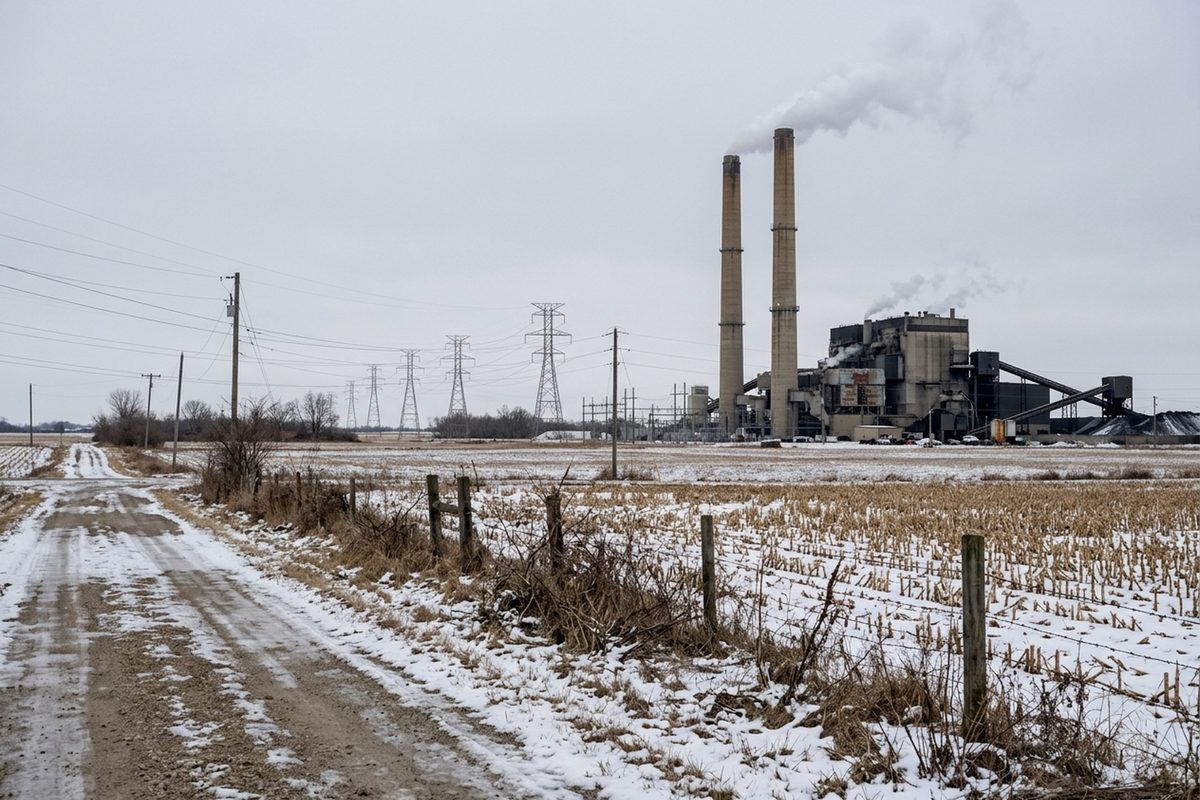
Last year the U.S. added about 131 million metric tons of greenhouse gases to its yearly total, five times China's and Indonesia's increases combined.
That number comes from EDGAR, the European Commission's emissions database, which put U.S. emissions at 6,018 million metric tons in 2025, up 2.2%. A United Nations report released Wednesday called the country the lone major economy whose planet-warming pollution jumped sharply last year, LAist reported.
Among the six biggest emitters, India, the European Union and Russia cut their emissions slightly. China's barely moved, up 0.1%, according to EDGAR's figures. Worldwide, emissions grew 0.7%, or about 380 million metric tons. That means the U.S. alone made up more than a third of the planet's added pollution.
The UN's own count, a separate tally, showed global emissions roughly flat at 58.4 billion metric tons. Anne Olhoff, the report's lead author, gave that figure for 2025, Scripps News reported. Either way, the U.S. went the other direction.
Count it by resident, and only Russia matches the U.S. among the heaviest-polluting nations, LAist reported. China puts out far more in total, but it has more than four times as many people.
The report blames rising demand for electricity, driven in part by data centers, Time reported, along with Trump administration policies that favor fossil fuels. According to LAist, the administration has ordered coal plants to keep running past their planned closing dates, rolled back vehicle fuel-efficiency rules and killed tax credits for wind and solar projects.
The jump also shows up in the forecast. Stick with today's policies, and the planet could warm by 2.8 degrees Celsius, roughly 5 degrees Fahrenheit, before this century is out, according to the UN Environment Programme. The agency says that's worse than last year's projection for two reasons: revised estimates of past emissions, and the U.S. withdrawal from the Paris Agreement.
Then there's the gap the report is named for. To bring warming back to 1.5 degrees Celsius by 2100, the report says, global emissions must fall 18% from 2025 levels by 2030. Countries' current climate plans, if fully carried out, would deliver 5% to 8%.
The U.S. answer is printed inside the report. A U.S. government statement there says the country "does not endorse or agree with its analysis or conclusions, and has not provided comments to this report." The State Department didn't respond to NPR's questions, LAist reported.
The administration is working to pull the U.S. out of all UN climate work, arguing the system puts unfair burdens on Americans, and it won't take part in the next round of global talks, according to LAist. That round, COP31, convenes next month in the Turkish city of Antalya, Scripps News reported.
At the launch, Inger Andersen, the head of the UN Environment Programme, said war-driven energy shocks have many governments leaning on fossil fuels again, and she had a question for them, according to Scripps News: "If you're leaning back, re-commissioning old coal, et cetera … what's the plan on renewable?"
Source: LAist, retrieved October 22, 2026. Other sources: edgar.jrc.ec.europa.eu, news5cleveland.com, time.com, unep.org.
Comments 0